Baelsar’s Wall Dungeon Guide (FFXIV Heavensward) – Boss Mechanics & Strategy
Duty Information
Expansion: Heavensward
Encounter: Baelsar's Wall
Players: 4 Players (1 Tank, 1 Healer, 2 DPS)
Duty Finder Type: Dungeon
Level: 60
Unlock Requirement: Griffin, Griffin on the Wall
Common Failure Points
- Standing near other players when Magitek Missile marks fire, causing shared explosion damage.
- Taking any action — including movement — during the Armored Weapon’s Dynamic Sensory Jammer debuff.
- Looking at The Griffin during Flash Powder and being stunned with reduced accuracy at a critical moment.
- Failing to kill the central massive sword during Lionshead before it detonates, triggering a high-damage room-wide explosion.
- Ignoring the Restraint Collar on the healer and leaving them locked out of action during a high-pressure phase.
Dungeon Overview
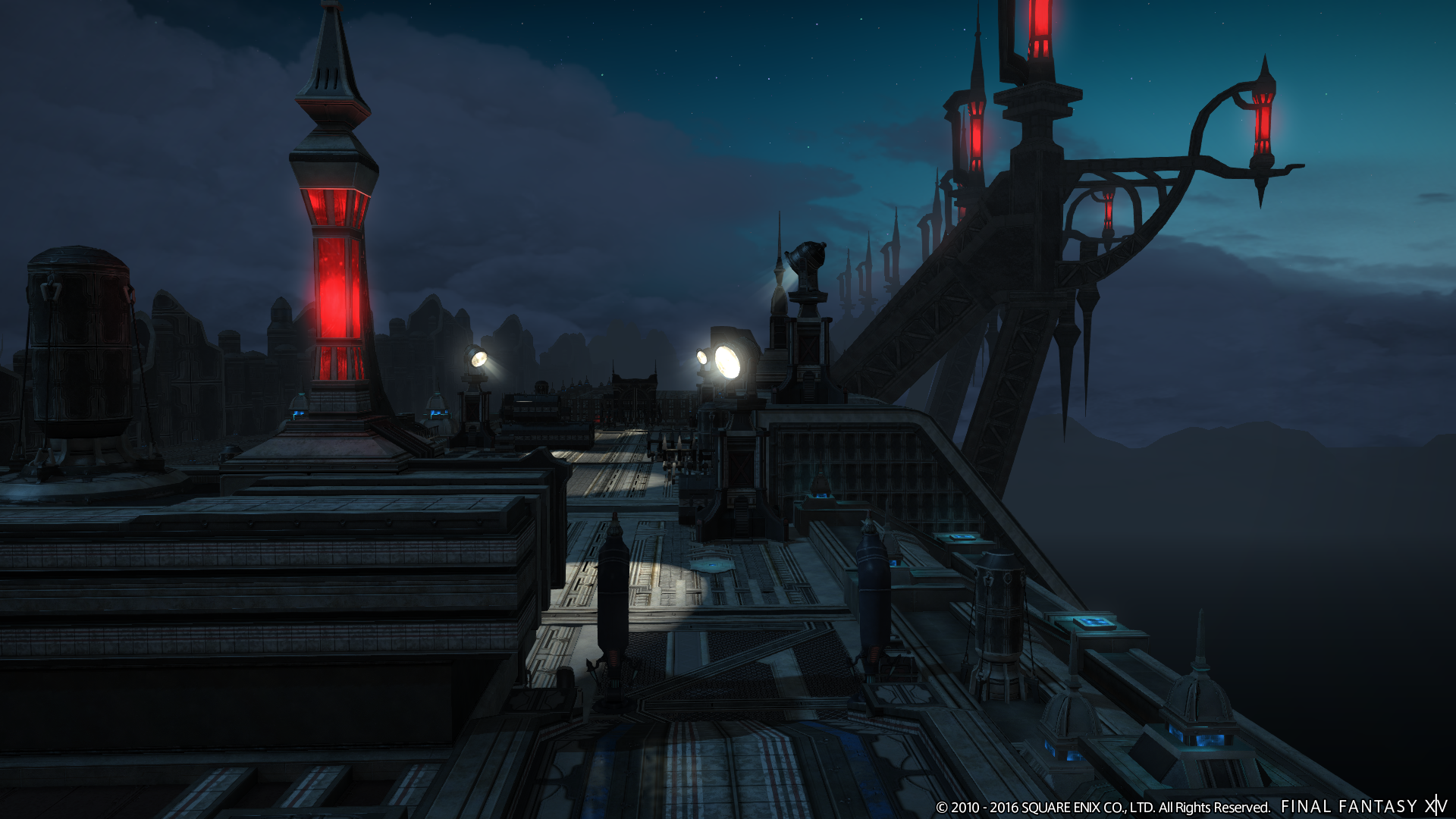
Baelsar’s Wall is a level 60 dungeon introduced in patch 3.5 with Heavensward, set atop the great fortified wall separating Gyr Abania from Eorzea. It is the final dungeon of the Heavensward expansion’s content sequence and serves as a narrative bridge toward Stormblood, featuring Garlean military opposition and culminating in a confrontation with the masked revolutionary known as the Griffin.
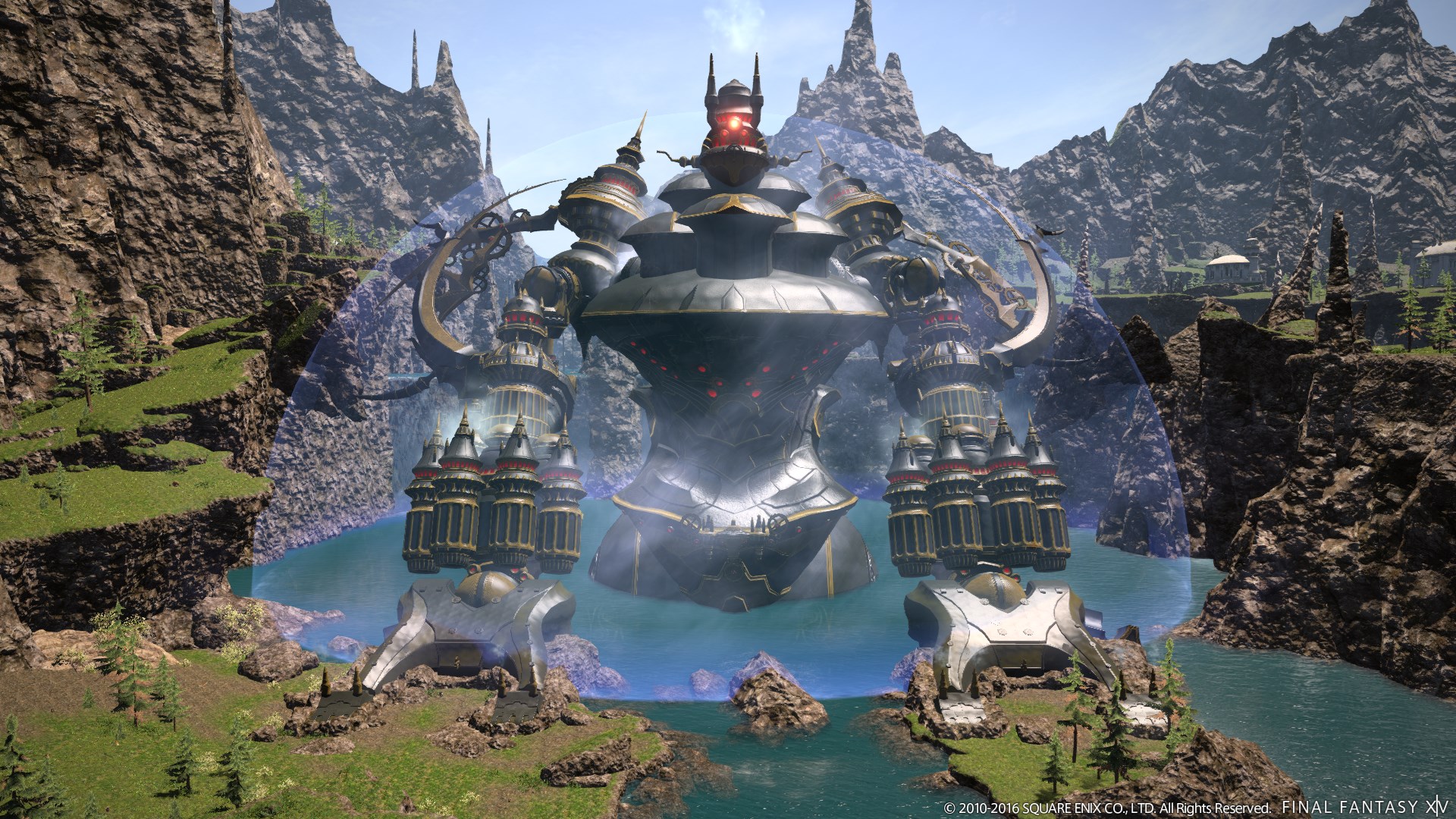
The Magitek Predator introduces spread markers and add management in a straightforward opening encounter. The Armored Weapon features a checkerboard AoE pattern and a debuff that punishes any action taken while active — including movement. The Griffin is the dungeon’s most demanding fight, combining a gaze mechanic, a side-cleave with a chase requirement, a priority kill add, and a healer lockdown that must be broken by the party.
Baelsar’s Wall supports the Duty Support system, making it accessible to solo players alongside Scion NPCs. The dungeon is a fitting capstone to Heavensward’s dungeon sequence — mechanically varied, narratively charged, and demanding clean execution on its final encounter.
Need the unlock path? See All FFXIV Dungeon Unlock Requirements.
Duty Support
Baelsar’s Wall supports the Duty Support system. Players can enter the dungeon solo accompanied by the following NPC companions:
- Scion Marauder (Marauder) — Tank
- Scion Conjurer (Conjurer) — Healer
- Scion Thaumaturge (Thaumaturge) — DPS
- Scion Lancer (Lancer) — DPS
Dungeon Objectives
- Collect imperial identification keys
- Clear all barricades
- Defeat the Magitek Predator
- Slay all the imperial defenders
- Defeat the Armored Weapon
- Clear the parapet
- Defeat the Griffin
Boss Encounters
Magitek Predator
Key Mechanics
- Magitek Claw — Targeted attack on the tank. Standard single-target hit requiring mitigation readiness.
- Magitek Ray — High-damage linear AoE. Move out of the line telegraph before it fires.
- Magitek Missile — Marks one or more players with a targeted high-damage explosion. Marked players must immediately move away from the rest of the party to prevent the explosion from hitting nearby allies.
- Adds — Adds spawn periodically during the fight. Kill them as soon as they appear.
Strategy Notes
The Magitek Predator is a straightforward opening encounter built around two core habits — spreading on Missile marks and maintaining add kill priority.
When Magitek Missile marks appear, the marked players must move away from the group immediately. The explosion deals high damage and will clip nearby allies if the marked player stays in position. Move to open space, absorb the hit, and return to the group once it resolves.
Adds that spawn during the fight are a priority kill target. They are not individually threatening, but their presence creates ongoing damage that compounds alongside the boss’s own attacks. Switch to them on spawn and clean them up before returning to the Predator.
Magitek Ray is a linear AoE with a visible telegraph — step out of the line before it fires.
Failure Points
Missile marks clipping nearby players due to slow separation is the primary source of avoidable group damage. Move immediately and decisively on the mark — do not wait to see if others are also marked before reacting.
Armored Weapon
Key Mechanics
- Launcher — Group-wide AoE that reduces every player’s current HP by 50%. Not a fixed damage value — it always cuts current health in half. Maintain health before this fires.
- Dynamic Sensory Jammer — Applies a debuff to all players. Any action taken while this debuff is active — including movement — deals damage to the afflicted player. Stop all inputs completely until the debuff expires. Do not move, do not attack, do not use abilities.
- Magitek Bit — Summons Bits around the room that create a checkerboard AoE pattern before disappearing. Identify and stand in a safe square during the pattern.
- Distress Beacon — Summons a large number of low-HP adds simultaneously. The quantity of adds makes tank damage significant due to the number of auto-attacks landing. Healers should be ready with sustained healing output; DPS should switch to AoE damage immediately to burn adds down quickly.
Strategy Notes
The Armored Weapon is a fight with two mechanics that require complete behavioral changes from their usual combat habits — standing still during Dynamic Sensory Jammer and switching to AoE during Distress Beacon.
Launcher’s percentage-based damage means its danger scales with how high the party’s current HP is — it is most punishing immediately after a healing window. Keep health topped before the cast resolves so the 50% reduction does not drop anyone into a critically low range.
Dynamic Sensory Jammer is the fight’s defining mechanic. The moment the debuff applies, every player must stop completely — no attacks, no abilities, no movement. Even stepping sideways deals self-inflicted damage. Hold position until the debuff expires, then resume normally. Players who reflexively continue attacking or adjust position out of habit will take progressive self-damage throughout the debuff window. The cast bar for this mechanic is a clear warning — recognize it and prepare to go completely still.
The checkerboard pattern from Magitek Bits requires quick identification of safe squares. Read the pattern as it forms and step into a clear square before the AoEs resolve.
During Distress Beacon, the healer should immediately begin sustained healing on the tank — the sheer number of adds means auto-attack damage accumulates rapidly. DPS should switch to AoE abilities and burn the adds down as fast as possible.
Failure Points
Players who take any action during Dynamic Sensory Jammer are the primary source of avoidable self-damage on this boss. The instinct to keep attacking or reposition is strong — override it completely when the debuff applies. The Distress Beacon add wave can also overwhelm healers who are not prepared for the spike in incoming tank damage if adds are not killed quickly.
The Griffin
Key Mechanics
- Beak of the Griffin — Room-wide AoE dealing significant damage. Unavoidable; heal through it.
- Flash Powder — Players must turn away from the boss before this resolves. Looking at The Griffin when Flash Powder fires stuns the player and reduces their accuracy. Turn your back to the boss as soon as the cast begins.
- Sanguine Blade — The Griffin leaps to one side of the room and cleaves the entire area in front of him for high damage. Chase the boss to his new position and stand behind or beside him to avoid the cleave.
- Lionshead — Multiple swords rain down around the arena, damaging nearby players on landing. After the cast completes, the boss fires a room-wide AoE and the swords become targetable and begin channeling Corruption. Left alive, swords eventually explode — but their explosions can be dodged. The massive central sword is the critical priority target — if it is not destroyed before its cast completes, it detonates in a high-damage room-wide explosion. Kill the central sword immediately, then stand in the space it vacated to avoid the smaller sword AoEs around the arena.
- Big Foot — Marks a player and pushes them back after the cast resolves. Anticipate the knockback direction and ensure the affected player is not pushed into a hazardous position.
- Restraint Collar — Places the party’s healer in restraints, preventing all actions. The collar must be attacked and destroyed by the party to release the healer. This is a priority kill — a healer locked out of action during Beak of the Griffin or a Lionshead phase is a serious healing deficit.
- Claw of the Griffin — High-damage tankbuster. Use mitigation.
Strategy Notes
The Griffin is the most demanding fight in the dungeon, layering multiple simultaneous responsibilities across the party. Several mechanics require specific individual actions that the rest of the party cannot compensate for — Flash Powder must be turned away from, the Restraint Collar must be broken, and the central Lionshead sword must be killed on a tight window.
Flash Powder is a gaze mechanic with a clear cast bar. As soon as the cast begins, every player must turn away from The Griffin and hold that position until it resolves. A stunned player during a Sanguine Blade or Lionshead sequence is not just inconvenient — it can mean a missed sword kill or a failed Restraint Collar break.
Sanguine Blade requires the whole party to identify which side The Griffin leaps to and chase him. The cleave covers everything in front of him — standing at his previous position or anywhere in the forward arc results in heavy damage. Move to his flank or behind him as he lands.
When Lionshead fires, the central massive sword is the only priority target. Switch to it immediately and kill it before it completes its detonation cast. Once it is down, move into the cleared center space — the surrounding smaller swords’ AoEs cover the outer arena, and the center is the safest available position. The smaller swords will eventually explode, but those explosions have visible telegraphs and can be dodged.
The Restraint Collar on the healer must be treated as an immediate party-wide priority whenever it appears. A locked healer during Beak of the Griffin or a Lionshead phase creates a healing gap that can quickly become unrecoverable. Switch to the collar the moment it appears and destroy it before returning to the boss.
Failure Points
Three mechanics define the fight’s failure patterns: looking at The Griffin during Flash Powder and losing a stun window at a critical moment, failing to kill the central Lionshead sword in time and taking the room-wide detonation, and leaving the Restraint Collar on the healer too long during a heavy-damage phase. All three are resolved by maintaining clear mechanic awareness and treating each as an immediate priority when it appears — Flash Powder is a reflexive turn, the central sword is a kill-on-sight target, and the collar is always a higher priority than the boss.
Difficulty Assessment
Baelsar’s Wall is a well-constructed final Heavensward dungeon that escalates cleanly from the Magitek Predator’s accessible opening through the Armored Weapon’s counterintuitive stillness mechanic to The Griffin’s multi-layered closing encounter. Each fight contributes something distinct to the dungeon’s mechanical vocabulary, and The Griffin in particular is a strong capstone boss that demands coordination across the entire party simultaneously.
The dungeon emphasizes:
- Spread discipline and add priority management
- Complete action suppression under a debuff condition
- Gaze avoidance and positional chase mechanics under sustained pressure
- Simultaneous priority switching between adds, swords, and collars
Groups who communicate Griffin responsibilities — particularly sword kill priority and collar break timing — will find Baelsar’s Wall a satisfying and well-paced conclusion to the Heavensward dungeon sequence. The wall itself may separate two worlds, but the mechanics within it demand a party that operates as one.
Previous Dungeon: The Great Gubal Library (Hard) | Next Dungeon: Sohm Al (Hard)
Guildmaster Notes
Baelsar’s Wall is a place built to keep two worlds apart. It does not care about the people on either side — it is infrastructure, pure and cold, maintained by a empire that has always preferred steel to conversation. Walking its length feels less like dungeon exploration and more like trespassing through history.
The Griffin is the Wall’s most honest expression. He is not a monster or an aberration — he is a man who looked at what the Wall represented and decided that the only answer was to tear it down, whatever the cost. Fighting him does not feel like defeating an enemy. It feels like an argument — one that neither side fully wins, even when the fighting stops. That ambiguity is what makes Baelsar’s Wall linger long after the last sword falls and the parapet goes quiet.