The Drowned City of Skalla Dungeon Guide (FFXIV Stormblood) – Boss Mechanics & Strategy
Duty Information
Expansion: Stormblood
Encounter: The Drowned City of Skalla
Players: 4 Players (1 Tank, 1 Healer, 2 DPS)
Duty Finder Type: Dungeon
Level: 70
Unlock Requirement: The Mad King's Trove
Common Failure Points
- Moving in the wrong direction during Kelpie’s Hydro Pull or Hydro Push and stepping off the platform edge into the damage zone.
- Failing to destroy all four Subservient adds quickly enough during The Old One’s first Order to Detonate, allowing the high-damage party hit to land.
- Spamming the Spriggan action ability aimlessly during Order to Detonate 2 rather than targeting adds, leaving some alive when the phase resolves.
- Failing to look away from Hrodric Poisontongue during Eye of the Fire and receiving the Confusion debuff at a moment when other mechanics are active.
- Standing still during Cross of Chaos or moving during Circle of Chaos, inverting the two mechanics and causing avoidable party damage.
Dungeon Overview
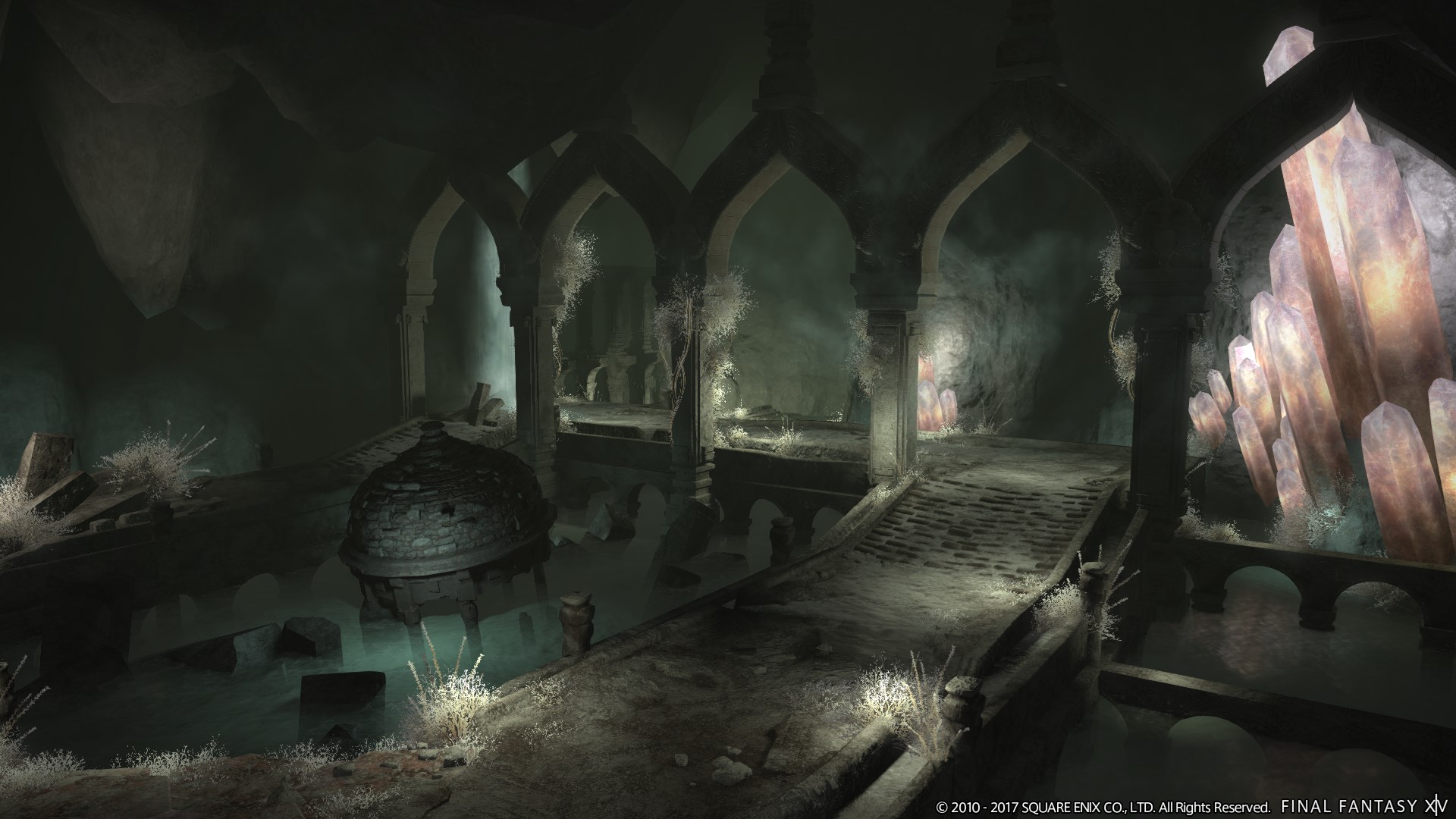
The Drowned City of Skalla is a level 70 dungeon introduced in Patch 4.1 with Stormblood. It is an optional dungeon set within the sunken ruins of a Fifth Astral Era city in the Lochs — a place of ancient history and accumulated strangeness, now home to creatures that have grown old alongside its waterlogged corridors. The dungeon’s atmosphere is distinctly different from the Stormblood main scenario dungeons that precede it: quieter, stranger, more interested in the texture of a place that has been forgotten than in the immediate stakes of liberation.
Kelpie opens the run with an arena-boundary fight built around two opposing knockback and pull mechanics that require the party to actively move toward or away from the boss depending on which is active. The Old One introduces one of Stormblood’s more inventive add-phase structures — a two-stage detonate sequence in which the second stage transforms players into Spriggans and tasks them with destroying adds using a unique action ability. Hrodric Poisontongue closes the dungeon with the expansion’s most unusual mechanic toolkit: a suite of untelegraphed physical attacks signalled only by text prompts, a gaze that inflicts Confusion, and two Chaos mechanics that invert each other’s movement requirements and will catch any player who applies the wrong response to the wrong cast.
Skalla has a distinctive quality among Stormblood’s optional dungeons — its mechanics are not especially fast, but several of them are genuinely unlike anything in the main scenario tier and require brief orientation before they become reliable. The dungeon supports Duty Support with a flexible three-person NPC lineup.
Need the unlock path? See All FFXIV Dungeon Unlock Requirements.
Duty Support
- Arenvald — Gladiator — Tank or DPS
- Alphinaud — Academician — Healer or DPS
- J’moldva — Lancer — DPS
Dungeon Objectives
- Arrive at the Green Screams
- Defeat Kelpie
- Arrive at a Door Unopened
- Defeat the Old One
- Arrive at the Golden Walls of Ruin
- Defeat Hrodric Poisontongue
Boss Encounters
Kelpie
Key Mechanics
- Torpedo — Moderate tankbuster. Cooldown and heal as needed.
- Rising Seas — Partywide AoE damage. Healers top up before and after.
- Hydro Pull — Pulls all players toward Kelpie. Move away from the boss to counteract the pull and avoid being dragged off the platform edge.
- Hydro Push — Pushes all players away from Kelpie. Move toward the boss before or during the cast to reduce the knockback distance and stay on the platform.
- Bloody Puddle — Targets players with AoEs and spawns tethered orbs that pursue them. Spread puddle AoEs to avoid overlapping damage, and kite orbs away from the party. Entering the AoE zone outside the platform deals damage and applies debuffs.
- Platform Edge — The area outside the arena platform deals damage and applies a debuff to any player who enters it. Active throughout the fight.
Strategy Notes
Kelpie’s fight is defined by two opposing displacement mechanics that take turns threatening to remove players from the arena platform. Hydro Pull drags everyone toward the boss; Hydro Push launches everyone away. In both cases, the danger is the platform boundary — players who do not counteract the displacement correctly will be pushed or pulled into the surrounding water, which deals damage and applies a debuff on contact. The correct response to each is the inverse of the other: move away from Kelpie when Pull fires to resist the drag, and move toward Kelpie before Push resolves to shorten the knockback distance.
Distinguishing between the two casts quickly is the core skill the fight demands. Both have readable cast names and the responses are simple and immediate — the failure mode is hesitating long enough to lose track of which is active, or instinctively moving in the wrong direction during the visual chaos of a simultaneous Bloody Puddle phase. Treat the cast name as the primary signal rather than the visual, build the correct directional response as a habit, and neither mechanic is difficult. The platform is large enough that a prompt correct response keeps everyone well clear of the edge.
Bloody Puddle creates two simultaneous demands: AoE spread to place the puddle detonations without overlapping a teammate, and orb kiting to keep the pursuing orbs away from the party. The spread requirement is modest — step away from the nearest player and hold until the AoE resolves — but the orbs require sustained movement to keep occupied. Tethered players should move toward the platform edge on their half of the arena to give the orb a direction to follow that does not cross into the party’s shared space, while staying clear of the water boundary. Kill the orb when possible rather than simply kiting indefinitely, and rejoin the party cleanly after.
When Bloody Puddle coincides with a Hydro Pull or Hydro Push cast — which it will in the later phases — the priority is the displacement response first. A player who correctly handles the push or pull but ends up in a slightly suboptimal puddle spread position is in a better state than one who places the puddle well but walks off the edge. The displacement mechanics interact directly with the platform boundary; the puddle does not.
Failure Points
The most common deaths in this fight come from players who apply the wrong response to Hydro Pull or Hydro Push — moving toward the boss during a Pull phase and being dragged further toward the edge, or moving away during a Push and accelerating their own knockback. The cast names are the only reliable anchor when visual effects are heavy. If the distinction between the two is causing repeated platform exits, focus on reading the cast name before committing to any movement.
Orbs from Bloody Puddle that are not kited away from the party become a sustained threat that compounds with subsequent displacement mechanics. A tethered player who stands still or moves toward the group will pull the orb through the party, triggering contact damage on multiple players at a moment when everyone is already repositioning for a push or pull. Kite proactively toward open platform space and treat the orb as a continuous positional responsibility rather than a brief inconvenience.
The Old One
Key Mechanics
- Mystic Light — Large frontal cone AoE aimed at a random player. Non-targeted players should move away from the cone telegraph; the targeted player can sidestep if positioned in melee range of the boss.
- Mystic Flame — Large circle AoE placed under random players. Move out of the indicator before it detonates.
- Order to Detonate 1 — The Old One becomes invulnerable and spawns four Subservient adds. All four must be destroyed before the timer expires or the party takes a heavy damage hit. Focus all damage on the adds immediately.
- Shifting Light — Transforms all players into Spriggans and grants access to an action ability. Leads directly into Order to Detonate 2.
- Order to Detonate 2 — Six adds spawn while players are in Spriggan form. The Spriggan action ability must be used to destroy the adds. Use the ability repeatedly and target adds as quickly as possible.
Strategy Notes
The Old One is a two-phase encounter structured around its two Order to Detonate add phases, with a standard AoE rotation between them. The base rotation is uncomplicated — Mystic Light fires a large frontal cone at a random player that everyone not in its path should simply avoid, and Mystic Flame places circle AoEs under random players who must move out promptly. Neither demands anything beyond reactive positional awareness, and the fight’s difficulty is concentrated entirely in the detonate phases.
When Order to Detonate 1 fires, the boss becomes invulnerable and four Subservient adds spawn across the arena. The entire party must switch to the adds immediately and kill all four before the detonation timer expires — if any remain when it resolves, the party takes a significant damage hit. The adds do not have large health pools, but allowing any player to continue attacking the immune boss while the others kill adds will extend the phase unnecessarily. Four targets, four players — if the group has the instinct to split targets efficiently rather than all clustering on the same add, the phase clears quickly. Call targets or establish a default pattern before the pull if the group tends to pile on.
Shifting Light transforms the entire party into Spriggans and grants each player an action ability. The transformation is temporary and leads directly into Order to Detonate 2, in which six adds spawn and must be destroyed using that ability rather than standard attacks. The ability is a targeted action — aim it at an add and use it, then immediately target the next. Six adds with four players is a tight ratio, so spam the ability without hesitation and prioritise any adds that are close to completing actions. The Spriggan form expires after the phase completes, returning players to their normal state automatically.
Failure Points
Order to Detonate 1 failing is almost always caused by a player continuing to attack the immune boss rather than switching to the adds, either through inattention or habit. The boss’s invulnerability is visually indicated but can be missed in the transition moment. If the adds are not dying fast enough, the party should confirm that all four players are on targets rather than investigating the adds’ health pools. Four players focusing four targets clear the phase comfortably; three players trying to split six adds while a fourth attacks an immune boss will frequently let the timer expire.
Order to Detonate 2 confusion arises primarily in groups encountering the Spriggan transformation for the first time. Players who do not realise the action ability is their primary tool during this phase and attempt to use normal attacks — which are unavailable or ineffective in Spriggan form — will contribute nothing to the add kill and leave the remaining players unable to cover six targets across four characters. Communicate before the pull that Order to Detonate 2 requires the Spriggan action, not standard damage, and the phase becomes a rapid button-press exercise rather than a source of confusion.
Hrodric Poisontongue
Key Mechanics
- Rusting Claw (no cast bar) — Hrodric raises his right arm and cleaves in front of him. Telegraphed only by the text message “Hrodric Poisontongue raises his claws!” Move away from his front before the strike lands.
- Tail Drive (no cast bar) — Hrodric raises his tail and strikes behind him. Telegraphed only by the text message “Hrodric Poisontongue raises his tail!” Move away from his rear before the strike lands.
- The Spin (no cast bar) — Hrodric moves to the centre of the arena and places a proximity marker there. Run to the edge of the arena to reduce damage taken.
- Ring of Chaos — Marks a selected player. That player must move to the boss, allowing the rest of the party to move to a safe area. Failure to comply traps the party inside the ring.
- Eye of the Fire — Gaze attack. Look away from Hrodric before the cast resolves to avoid Confusion.
- Cross of Chaos — Places a cross-shaped AoE on a marked player that fires outward from them. The marked player must stop moving completely and hold position so that the rest of the party can step out of the cross’s path.
- Circle of Chaos — Places a circular AoE on a marked player. The marked player must move away from the party immediately to avoid catching allies in the blast radius.
- Words of Woe — Hrodric faces a random player and fires a column AoE in their direction. The targeted player should move laterally out of the column path.
Strategy Notes
Hrodric Poisontongue is the most mechanically diverse encounter in the dungeon and operates on several conventions that are genuinely unusual within the dungeon tier. Three of its attacks have no cast bar and no AoE telegraph — Rusting Claw, Tail Drive, and The Spin are signalled exclusively through on-screen text prompts. Players who are not reading the chat log during the fight will be hit by these attacks with no other warning. The text cues are distinct and readable, but they require a different kind of attention than the cast-bar monitoring that most dungeon encounters demand. Build the habit of scanning the bottom of the screen as well as the arena floor during this fight.
Rusting Claw fires in front of Hrodric when the claws prompt appears; moving away from his front is sufficient. Tail Drive fires behind him when the tail prompt appears; anyone positioned at his rear — which is the standard melee safe zone for frontal cleave bosses — must move to the side when the tail prompt fires. The Spin sends Hrodric to the arena centre with a proximity marker; run to the edge immediately when this prompt appears and return to position after the proximity AoE resolves. All three attacks are survivable with the correct response to the text cue, and fatal to anyone standing in the wrong position who does not read the prompt.
Ring of Chaos marks one player and creates a ring that constrains the party’s movement. The marked player must walk toward Hrodric to open the ring and allow everyone else to step into the safe zone. A marked player who moves away from the boss — which is the instinct during most AoE-heavy phases — traps the party inside the ring and prevents them from reaching safety. When the Ring of Chaos marker appears, the marked player should identify themselves and move toward the boss without hesitation.
The two Chaos mechanics — Cross of Chaos and Circle of Chaos — are the encounter’s most important distinction to establish clearly before the pull because their correct responses are directly opposite to each other. Cross of Chaos marks a player and places a cross-shaped AoE that radiates outward from their position; the marked player must stop moving entirely and hold still so that the rest of the party can identify the cross’s axes and step out of them. Circle of Chaos marks a player with a circular blast radius centred on them; that player must move away from the party so the circle detonates in empty space. Cross requires stillness from the marked player; Circle requires movement. Players who apply the Circle response to Cross — moving through the party to reposition — will carry the cross arms through multiple allies. Players who apply the Cross response to Circle — holding still — will detonate the circle on top of anyone nearby. Read the cast name and execute the correct behaviour for that specific mark.
Eye of the Fire is a gaze attack that inflicts Confusion — the standard response applies here as elsewhere: turn away from Hrodric before the cast resolves and turn back immediately after. The gaze’s danger in this fight is that it shares cast time with other active mechanics, and a player who is focused on repositioning for a Chaos mark or a text-cue attack may miss the moment to turn. Build the habit of checking Hrodric’s cast bar as a background task even when other mechanics are demanding attention. Words of Woe targets a random player with a column AoE — the targeted player moves laterally out of the column path and the mechanic resolves cleanly.
Failure Points
The no-cast-bar attacks — Rusting Claw, Tail Drive, and The Spin — kill players who are not reading the text prompts. There is nothing else to react to. A group that understands this from the start and develops the habit of monitoring the text channel during the fight will find all three attacks avoidable and predictable; a group that does not will take repeated unexplained hits that the healer cannot anticipate. This is the fight’s most fundamental calibration shift compared to every other encounter in the dungeon tier, and it must be communicated before the pull.
Cross of Chaos and Circle of Chaos deaths almost always come from a marked player applying the wrong response — specifically, a Cross-marked player who moves to reposition, dragging the cross arms through the party. The two mechanics look similar at a glance and their names are the only reliable differentiator at the moment of the mark. If confusion between the two is causing repeated deaths, establish a clear verbal shorthand before pulling: Cross means freeze, Circle means flee. The behaviours are simple once the distinction is internalised, and the fight stops being confusing the moment both responses are reliably linked to their correct cast name.
Difficulty Assessment
The Drowned City of Skalla sits at a moderate difficulty level within Stormblood’s optional dungeon lineup, but it earns distinction through the originality of its mechanical design rather than the harshness of its punishment. None of its three encounters are especially punishing in terms of damage output, but all three ask something of the party that is genuinely unusual: opposing directional displacement management on Kelpie, a transformation-based add phase on The Old One, and a full suite of text-cue attacks, gaze mechanics, and inverted Chaos responses on Hrodric Poisontongue. Groups encountering the dungeon without preparation will be surprised by multiple mechanics that have no direct precedent in the main scenario tier.
- Directional displacement response discipline — Pull versus Push — during Kelpie
- Add phase focus and Spriggan action ability awareness during The Old One’s Order to Detonate phases
- Text-prompt attack reading during Hrodric Poisontongue’s no-cast-bar mechanics
- Cross of Chaos versus Circle of Chaos movement distinction under concurrent mechanic pressure
Groups that take a minute to explain Hrodric Poisontongue’s three text-prompt attacks and establish the Cross versus Circle distinction before the final pull will find the dungeon an enjoyable and inventive run. Kelpie and The Old One both reward fundamentals that Stormblood’s dungeon tier has been building throughout — platform awareness and add-kill priority — and neither encounter overstays its welcome. The Spriggan transformation in The Old One is a satisfying novelty that clears quickly once the party knows what the action ability is for.
Groups that do not prepare for the text-cue attacks will take repeated damage from Rusting Claw, Tail Drive, and The Spin with no understanding of why, and the healer will find themselves covering avoidable hits throughout the Hrodric encounter with no cast-bar warning to prepare against. The Cross and Circle of Chaos confusion is similarly invisible to a group that has not been told the distinction in advance — the two marks look similar enough that incorrect responses feel like bad luck rather than mechanical misreads. Both problems are solved entirely by a brief explanation before the pull, making Skalla one of the dungeons where pre-fight communication has the largest return on investment in the expansion.
Previous Dungeon: The Temple of the Fist | Next Dungeon: Hells’ Lid
Guildmaster Notes
Skalla does not feel like a ruin in the way most ruins do. Most sunken places have a quality of absence — the sense of something having departed, leaving only its shape behind. Skalla feels occupied. The water moved in, and whatever was already here accommodated it, adjusted, continued. The Old One did not die when the city drowned. It simply became something that lives in drowned places, which is a different thing entirely from being dead.
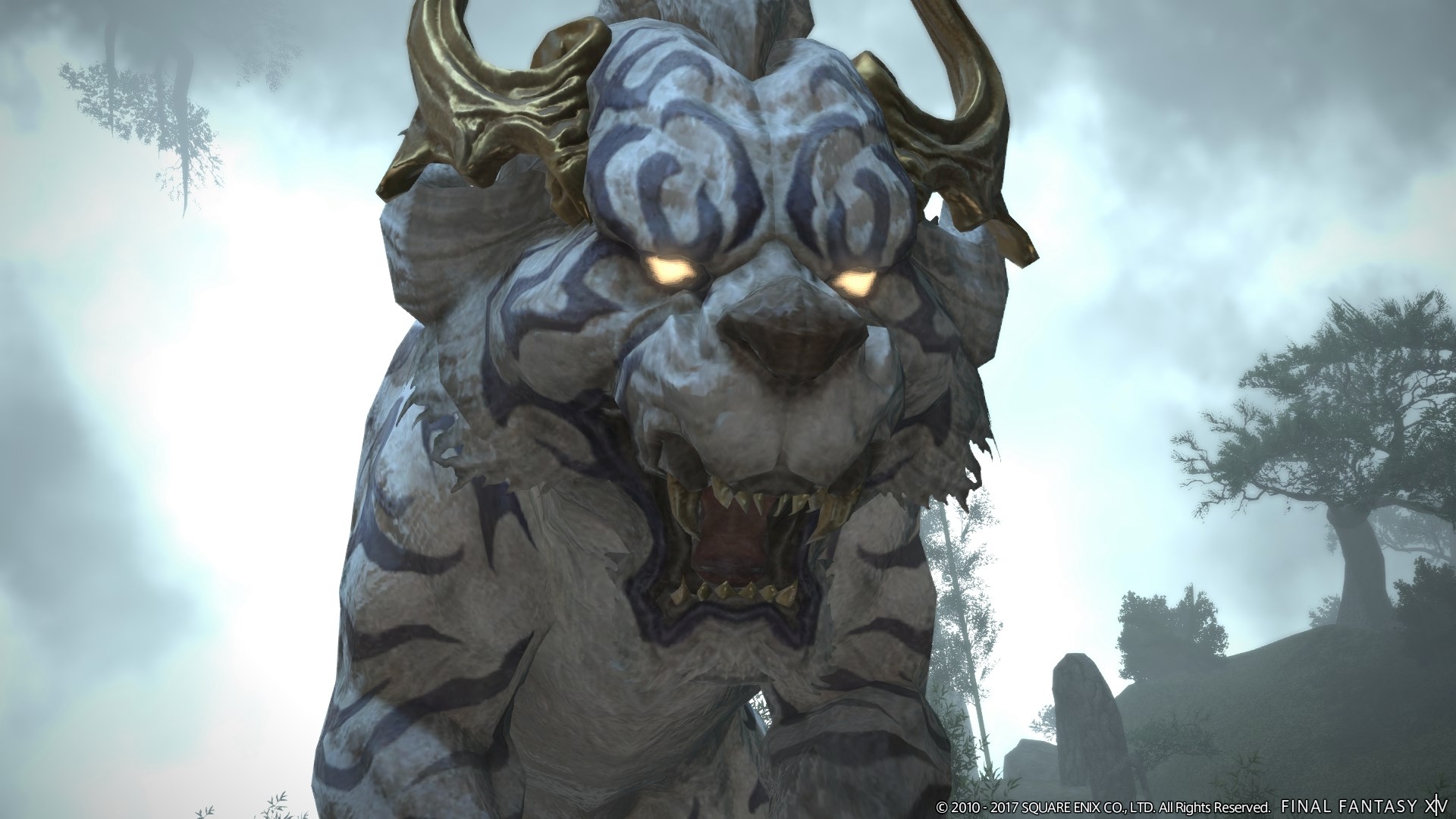
Hrodric Poisontongue is ancient in a way that makes the word feel insufficient. He does not speak in threats — he speaks in statements, in the patient language of something that has outlasted everything that ever frightened it. The Golden Walls of Ruin were built to hold something. They held it long enough for the world above to forget what it was. Coming down here and winning does not feel like triumph. It feels like an interruption in something that was, in its own terms, proceeding exactly as it intended.