Bardam’s Mettle Dungeon Guide (FFXIV Stormblood) – Boss Mechanics & Strategy
Duty Information
Expansion: Stormblood
Encounter: Bardam's Mettle
Players: 4 Players (1 Tank, 1 Healer, 2 DPS)
Duty Finder Type: Dungeon
Level: 65
Unlock Requirement: In the Footsteps of Bardam the Brave
Common Failure Points
- Failing to move far enough from Garula during Rush, taking unnecessary tether damage before the charge resolves.
- Mistiming the backward step during Bardam’s Travail (shockwave) and getting caught by the outer ring AoE.
- Missing tower soaks during Bardam’s Travail (lightning) phase, causing a fight reset when two or more towers go unfilled.
- Dropping Travail (firestorm) rings onto a teammate’s escape path by failing to spread and run clockwise.
- Standing in front of Yol’s unmarked edge line AoEs during the Corpsecleaner Eagle intermission, or failing to look away from Eye of the Fierce.
Dungeon Overview
Bardam’s Mettle is a level 65 dungeon introduced in Patch 4.0 with Stormblood. Set across the windswept hunting grounds of the Azim Steppe, it is the third dungeon of the expansion and one of its most structurally unusual. The dungeon draws on the traditions of the Xaela tribes — specifically the trial of Bardam, a rite of passage in which warriors must prove themselves worthy of riding the legendary stormbird Yol. That framing shapes the encounter design in ways that make this dungeon genuinely unlike anything before it in the Stormblood lineup.
Garula opens the run as a conventional but well-constructed fight, demanding awareness of the animal AoEs triggered by the boss’s Rush and War Cry cycle. The second boss, Bardam, is not a combat encounter at all — it is a multi-phase gauntlet of environmental mechanics that players must navigate rather than damage through, a design choice that Stormblood uses to put the emphasis squarely on movement literacy and execution. Yol closes the dungeon as a two-phase aerial encounter with a gaze mechanic, rotating AoEs, and a targetable-wing phase that tests add priority and arena discipline under persistent pressure.
Bardam’s Mettle is notable for the breadth of mechanical types it introduces in a single run. The Bardam encounter in particular — with its towers, spreading fire rings, meteor shelter, and shockwave sequencing — asks more of players than almost any other dungeon at this level range. Groups should expect to take the time to understand its phases before pulling. Yol, by contrast, rewards clean fundamentals and punishes passivity, especially in groups that allow the wing phase to drag.
The dungeon supports Duty Support, with Gosetsu, a Mol Youth, Hien, and Lyse available as NPC companions. Note that when playing with Duty Support, a player character failure during Bardam resets the fight regardless of NPC status.
Need the unlock path? See All FFXIV Dungeon Unlock Requirements.
Duty Support
- Gosetsu — Samurai — Tank
- Mol Youth — Shaman — Healer
- Hien — Samurai — DPS
- Lyse — Pugilist — DPS
Dungeon Objectives
- Arrive at Bardam’s Hunt
- Defeat Garula
- Arrive at the Rebirth of Bardam the Brave
- Defeat Bardam
- Arrive in the Voiceless Muse
- Defeat Yol
Boss Encounters
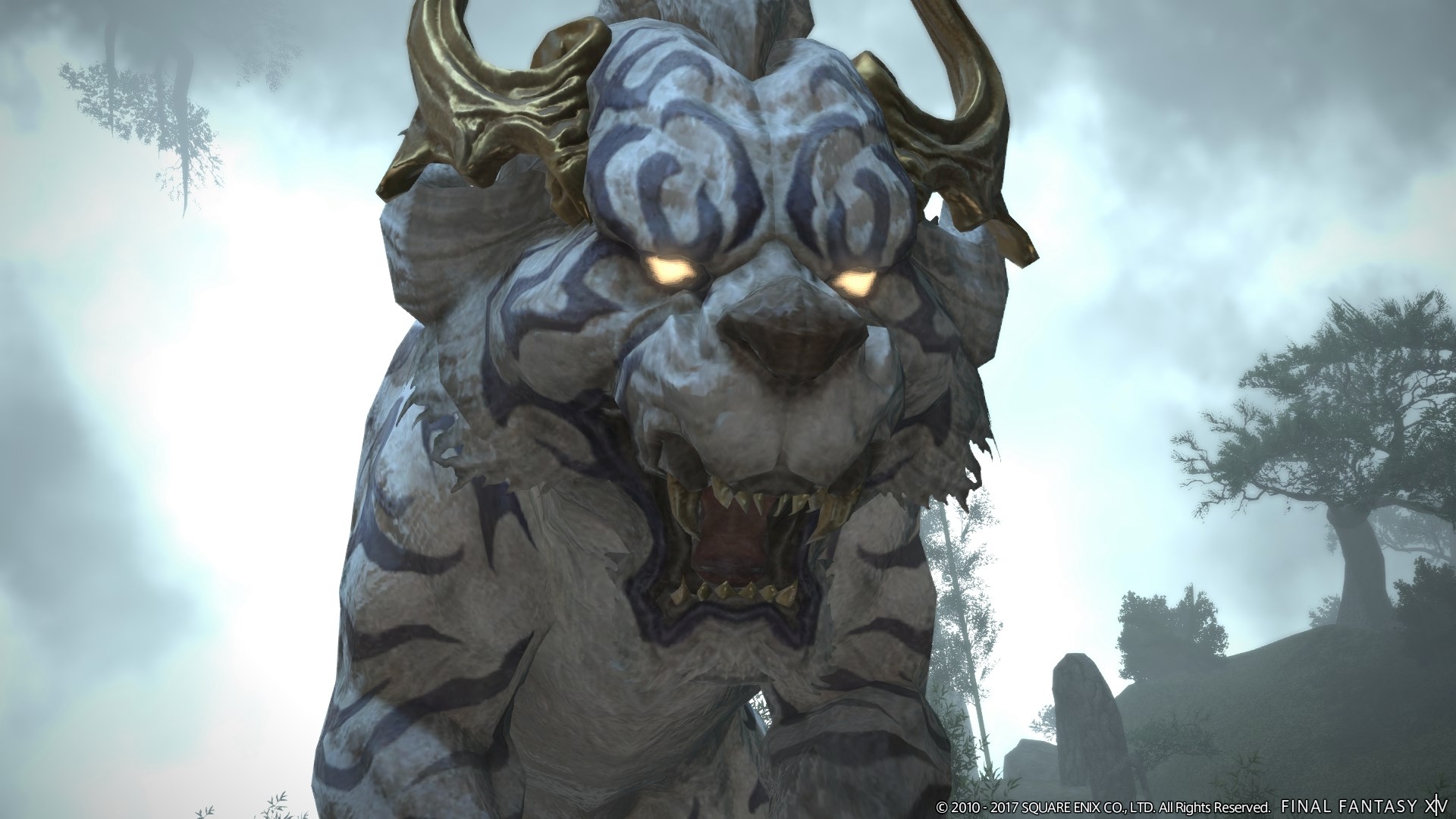
Garula
Key Mechanics
- Heave — Frontal cone AoE on the primary target. Tank sidestep as needed.
- Crumbling Crust — Four telegraphed AoEs appear around Garula in quick succession. Individually moderate, but overlapping casts stack damage. Melee players dodge as required.
- Rush — Garula tethers an off-aggro target and channels a straight-line charge. The tethered player should move away from the boss — the tether shifts from spiky pink to purple when sufficient distance has been reached. All other players should clear the charge path.
- War Cry — Immediate partywide damage after Rush resolves, followed by Earthquake, a second partywide hit that stuns all players. Animals in the pen marked with a ! begin charging AoEs during the stun. Occurs three times across the fight.
- Ram — Straight line AoE. Present in all three phases.
- Coeurl — Large frontal cone AoE. Appears after the second Rush.
- Kukurul — Small circular AoE. Appears after the third Rush.
Strategy Notes
Garula is a structured fight built around three Rush cycles, each of which escalates the complexity of the follow-up phase. For the first half of the encounter, the core rotation is readable and consistent: manage Heave and Crumbling Crust during the active phase, respond to Rush, survive the War Cry and Earthquake stun, then deal with whatever animal AoEs the pen generates during the stun window. The fight teaches its own rhythm before it starts adding new elements.
The Rush tether requires the marked player to actively create distance. The visual cue — the tether changing from spiky pink to a cleaner purple — confirms that enough range has been established and the charge damage will be reduced. Players who stay close when tethered take significantly more damage, and the tank should be aware that the charge path runs through the arena, clearing space for it before the rush resolves. Everyone not tethered should move laterally out of the line the moment Garula begins channelling.
The War Cry into Earthquake sequence locks the party in place while the pen animals charge their AoEs. During the stun, there is nothing to be done but wait — but the moment it breaks, the priority is reading which animal telegraphs are active and moving to safe ground before they resolve. Ram produces a line AoE manageable at range. After the second Rush, Coeurl adds a wide frontal cone that demands everyone not tanking to move to the sides. After the third Rush, Kukurul contributes a circular AoE that clutters the arena further. Each successive stun phase adds to the visual density, but the individual AoEs remain readable — the challenge is scanning all of them simultaneously rather than fixating on one.
Crumbling Crust is worth respecting in the later phases. The four AoEs appear in rapid sequence and can overlap if players are slow to move. Melees in particular should keep an eye on their positioning relative to the cast, since uptime pressure can cause players to clip the outer edge of a crust AoE without noticing. The damage is forgiving on its own, but stacked with War Cry and Earthquake healing pressure it adds up.
Failure Points
The most consistent source of avoidable damage in this fight is the Rush tether. Players who do not move away actively — waiting for the tether colour change before considering themselves safe — will take a significant hit on every Rush cast across all three phases. The mechanic explicitly rewards movement, and passivity is punished proportionally.
The third War Cry and Earthquake phase, with Ram, Coeurl, and Kukurul all potentially active simultaneously, is where groups with poor spatial awareness run into trouble. Each individual AoE is simple; the challenge is reading three concurrent telegraphs during a stun and repositioning the moment control returns. Groups that develop good scanning habits in the first two stun phases will handle the third without difficulty.
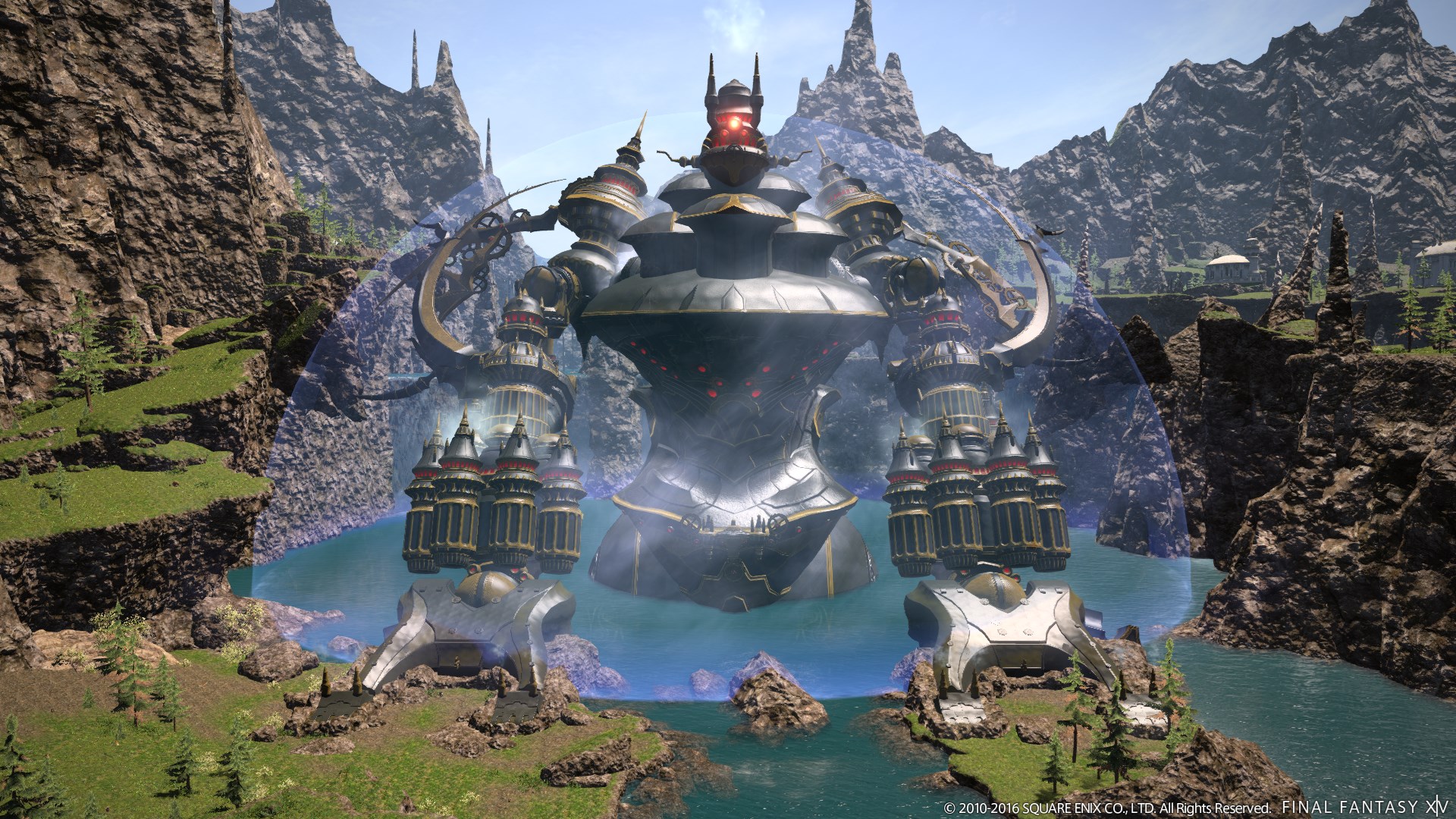
Bardam
Key Mechanics
Bardam is a non-combat encounter. There is no health bar to deplete — players must successfully navigate three distinct mechanical phases. Failing a mechanic twice in a single phase applies a Fetters debuff that lasts until the phase ends, at which point all debuffs are cleansed. At least one player must survive each phase to proceed. If the entire party fails, the encounter resets from the beginning. When using Duty Support, a failure by the player character resets the fight regardless of NPC status.
- Phase 1 — Magnetism / Travail (shockwave) / Charge / Empty Gaze
- Magnetism — Pulls all players to the centre of the room. Immediately followed by Travail (shockwave).
- Travail (shockwave) — A circle AoE appears at the centre, followed by a second AoE covering the entire outer ring. Stand just outside the inner AoE facing away from the Hunter of Bardam. When the inner AoE resolves, step backward immediately to avoid the outer ring.
- Charge — Throwing Spears appear at the arena edge and fire crisscrossing line AoEs across the floor. Navigate to a safe gap.
- Empty Gaze — Gaze attack that charges while Travail and Charge are active. Turn away before it resolves.
- Phase 2 — Travail (lightning) / Travail (firestorm) / Heavy Strike / Starfall
- Travail (lightning) — Three towers spawn at 120-degree intervals. Each player must soak a tower. One missed tower awards a strike per player; two or more missed towers reset the encounter.
- Travail (firestorm) — All players are marked and fire rings drop periodically over their positions. Rings persist briefly after landing. Players must spread out and run clockwise to avoid dropping rings on each other’s escape paths.
- Heavy Strike — 270-degree frontal cone. Safe zone is directly behind Bardam.
- Starfall — Spawns four large circular AoEs. Surviving safe spots are the arena centre and the outer edge. The AoEs leave behind Star Shards — rocks used as shelter in Phase 3.
- Phase 3 — Looming Shadow / Travail (summon warriors) / Combo / Meteor
- Looming Shadow — Spawns a large meteor circle with a long countdown before impact.
- Travail (summon warriors) — Destroys the east and west Star Shards with circle AoEs and summons two Warriors of Bardam at their locations.
- Magnetism + Tremblor + Heavy Strike + Shockwave combo — A multi-part AoE sequence. Safe zones are in the triangular regions formed by the intersection of two red telegraphs. After those resolve, move into the donut AoE as it appears. This sequence destroys one of the two remaining Star Shards. The meteor then lands — hide behind the last surviving Star Shard.
Strategy Notes
Bardam requires a different mode of attention than any conventional boss fight. There is no rotation to manage, no tank to position — only mechanics to read and navigate. The pressure is entirely individual: each player must execute correctly or accumulate Fetters debuffs, and a full-party failure sends everyone back to the start. Understanding each phase’s shape before the encounter begins is not optional; it is the primary preparation the encounter demands.
Phase 1 centres on the Travail (shockwave) timing. After Magnetism pulls the party to the centre, the sequence fires immediately — an inner circle AoE, then an outer ring. The correct response is to stand just outside the inner AoE radius, facing away from the Hunter of Bardam, and take one deliberate backward step the moment the inner AoE resolves. The window is short but not punishing if the positioning is established before the cast begins. Players using Legacy camera should use a combination of left strafe, right strafe, and backwards movement simultaneously to walk backward cleanly. Alongside the shockwave, Charge fills the arena with crisscrossing line AoEs from the Throwing Spears at the edge — identify a safe corridor and move into it. Empty Gaze charges during both of these, so every player must remember to turn away from the Hunter before the gaze resolves, even while navigating the other mechanics.
Phase 2 opens with Travail (lightning), the encounter’s harshest reset condition. Three towers appear at even intervals around the arena and each must be individually soaked. With four players and three towers, coverage is straightforward — but the party must spread to their towers without hesitation. Missing a single tower inflicts a strike on everyone; missing two triggers an immediate reset. Designate tower assignments before the encounter if the group is unfamiliar. After lightning, Travail (firestorm) marks every player with fire rings that drop periodically over their positions. The rings linger, so running forward in a straight line will carry players through their own previous drops. The solution is to spread generously and run clockwise as a group, ensuring that dropped rings fall behind each player and not across anyone else’s intended path. Heavy Strike is a wide frontal cone — move behind Bardam cleanly and hold. Starfall places four large circle AoEs across the arena; the safe zones are the centre and the far outer edge. The rocks left behind are critical — they are the shelter mechanic for Phase 3 and must not be stood in carelessly.
Phase 3 is the encounter’s most layered sequence. The meteor countdown from Looming Shadow begins immediately, and two of the four Star Shards are destroyed early by Travail (summon warriors) — the Warriors that spawn from them must be avoided but do not need to be engaged directly. The AoE combo that follows is the phase’s most demanding moment: find the triangular safe regions created where the two red telegraph lines intersect, hold position through those AoEs, then step into the donut zone as the shockwave resolves. This sequence destroys another Star Shard, leaving only one. When the meteor lands, every player must be behind that final rock. The rock’s shadow is the shelter — there is no other safe zone in the arena when the meteor impacts.
Failure Points
The Travail (lightning) tower phase is the most unforgiving moment in the encounter. A single missed tower is recoverable; two missed towers end the attempt immediately. Groups that have not assigned towers before entering Phase 2 will sometimes find two players converging on the same tower while a third goes uncovered. This is entirely preventable with a brief pre-fight discussion and is the most common cause of a Bardam reset in inexperienced groups.
The Phase 3 meteor shelter is the other frequent failure point. Players who lose track of which Star Shard survived the combo sequence — or who are slow to reach it — will be caught in the open when the meteor lands. The countdown gives ample time to position correctly, but the simultaneous Warriors and AoE combo can cause players to lose their spatial bearings. Keep the remaining rock in peripheral awareness throughout the phase and commit to its location before the meteor cast finalises.
Yol
Key Mechanics
- Feathercut — Frontal cleave tankbuster. Cooldown and heal as needed.
- Wind Unbound — Partywide AoE. Spawns orbs around the outer arena edge that periodically fire line AoEs inward.
- Flutterfall — Marks all players with orange spread markers. Players must separate to avoid overlapping splash damage.
- Eye of the Fierce — Gaze attack. Inflicts Confusion on any player facing Yol when it resolves. Turn away before the cast completes.
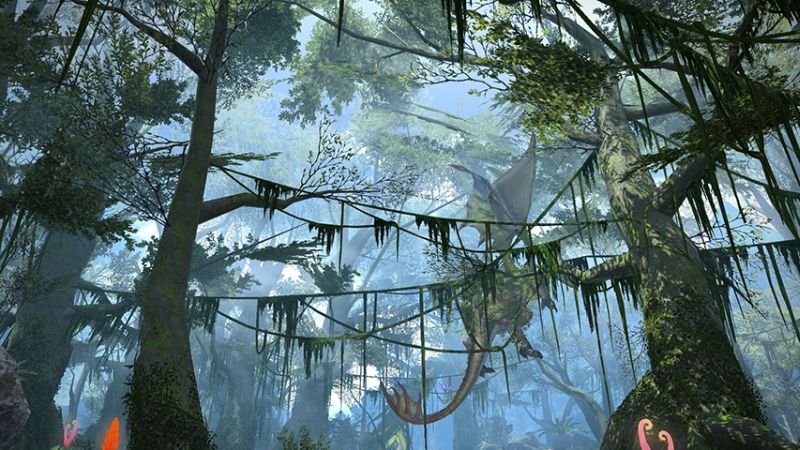
- Corpsecleaner Eagle intermission — Yol retreats and spawns two Corpsecleaner Eagles sequentially. While the eagles are active, Yol periodically appears at the arena edge and fires unmarked line AoEs. Move away from Yol’s position on the edge when it appears.
- Wingbeat (Phase 2) — Marks a player with a green marker and knocks them to the outer edge. That player must return to the centre immediately to avoid the outer AoEs.
- Left Wing / Right Wing (Phase 2) — At the start of Phase 2, Yol becomes untargetable and both wings become targetable. Both must be destroyed to resume the fight. During this phase, three circular AoEs rotate clockwise around the outer arena edge. Stay near the centre to avoid them.
Strategy Notes
Yol is a two-phase encounter with a clean structural progression, though the transition between phases introduces enough simultaneous pressure that groups unfamiliar with the fight will often lose players in the handoff. Phase 1 establishes the core mechanical vocabulary; Phase 2 applies it under tighter constraints.
The opening phase rotates through a reliable sequence of mechanics. Wind Unbound spawns edge orbs that fire inward — the party should drift toward the centre of the arena and track which orbs are active to avoid their lines. Flutterfall‘s spread markers require each player to separate before the cast resolves; clustering during any other mechanic should break apart immediately when the orange markers appear. Eye of the Fierce is the mechanic that catches passive players — the gaze inflicts Confusion, causing loss of directional control, which is dangerous during any subsequent movement-heavy mechanic. The gaze fires on a readable cast bar; simply turn away before it resolves and turn back immediately after. Building the habit of glancing at the cast bar after Flutterfall resolves — since Eye of the Fierce follows that mechanic in the rotation — makes the gaze consistently avoidable.
The Corpsecleaner Eagle intermission between phases demands arena awareness of a different kind. Yol itself retreats and is replaced by two eagles that must be killed sequentially. The critical detail is that Yol does not become idle — it continues to appear at the arena’s edge and fires unmarked line AoEs toward the centre. There is no telegraph for these, only the visual of Yol materialising at the edge. Whenever Yol appears, move out of the line directly in front of it. Groups that focus entirely on the eagles without watching the edge will take repeated unnecessary hits during this intermission.
Phase 2 begins when Yol returns from the intermission, provided its health is below the phase threshold. Yol immediately becomes untargetable and both Left Wing and Right Wing must be destroyed before the fight can resume. During this window, three rotating circle AoEs travel clockwise around the outer edge of the arena — staying close to the centre avoids them entirely. Split damage between the wings as evenly as possible to minimise the duration of the phase. Once both wings are destroyed, Yol resumes and the Phase 1 mechanic cycle repeats with Phase 2 additions layered in, including Wingbeat, which knocks a marked player to the outer edge. That player should return to the centre immediately, as the outer ring is dangerous during active Wind Unbound and rotating AoE phases.
It is worth noting that Phase 2 can be skipped entirely with a well-timed Limit Break before Yol’s retreat threshold is crossed. Yol’s retreat is typically preceded by a Wind Unbound cast — the sequence from Eye of the Fierce runs through Flutterfall and then Wind Unbound before Yol withdraws. If the party’s DPS is strong enough to push Yol below roughly six percent health, it will retreat immediately without the Wind Unbound cast. A coordinated Limit Break timed to this window bypasses the wing phase entirely and ends the fight cleanly.
Failure Points
Eye of the Fierce is the most punishing mechanic in Phase 1 not because the gaze itself is lethal, but because Confusion at the wrong moment — during a Flutterfall spread or while orb lines are active — carries players into avoidable damage they cannot correct while disoriented. The gaze is entirely preventable, and any death attributable to Confusion represents a lapse in habit rather than a difficult execution window.
The wing phase extends far longer than it should when the party does not split damage evenly or when players drift to the outer edge and clip the rotating AoEs. A drawn-out wing phase means more exposure to Wingbeat knockbacks and more opportunities for the outer ring to catch a displaced player. Committing to the centre of the arena and targeting wings together rather than focusing one at a time keeps the phase short and controlled.
Difficulty Assessment
Bardam’s Mettle is the most mechanically ambitious of Stormblood’s early dungeons, and the gap between it and Shisui of the Violet Tides is meaningful. Garula is a well-constructed conventional fight, but the dungeon’s middle encounter — Bardam — is unlike anything in the expansion to this point, and Yol’s two-phase structure with its gaze and intermission adds further complexity. The dungeon does not punish individual mechanics harshly, but it demands sustained attention across a run that introduces more novel concepts per encounter than any Stormblood dungeon preceding it.
- Rush tether management and staggered animal AoE reading during Garula
- Non-combat phase navigation across three mechanically distinct Bardam phases
- Tower assignment discipline and firestorm spread execution in Bardam Phase 2
- Gaze awareness, unmarked edge AoE tracking, and wing priority management during Yol
Groups that communicate before the Bardam encounter and assign tower responsibilities will find the dungeon’s difficulty manageable throughout. The Bardam fight in particular rewards players who treat it as a movement exercise rather than a combat check — once the phase shapes are understood, the execution is clean and satisfying. Yol rewards the same attentiveness applied to phase transitions, and groups that develop the habit of watching the arena edge during the eagle intermission will reach Phase 2 in good health.
Groups that enter Bardam without preparation will find the tower phase a reliable reset trigger and the Phase 3 meteor shelter a source of late-phase deaths that feel sudden but are entirely telegraphed. Yol will also punish parties that allow Confusion from Eye of the Fierce to go uncorrected, particularly if it coincides with Flutterfall or an active orb phase. This is a dungeon where a brief explanation before each pull converts a frustrating run into a fluent one — the mechanics are generous in their telegraphs, but only for players who know what to look for.
Previous Dungeon: Shisui of the Violet Tides | Next Dungeon: Doma Castle
Guildmaster Notes
The steppe does not offer its gifts easily. Bardam’s Mettle is not a dungeon about conquest — it is a trial, and it makes no apology for that distinction. The hunters of the Azim Steppe have walked this ground for generations, measuring themselves not against enemies but against the land itself, its storms, its silences, and the weight of what it means to be found worthy. That tradition is not ceremony. It is the shape of survival given form.
Yol does not fight out of malice. She is the steppe made airborne — wild, discerning, indifferent to reputation and unmoved by ambition. To stand in her presence and remain standing is the point. The riders who earned her trust did not do so by overpowering her. They did so by proving they could endure what she asked of them and still choose to return. There is a lesson in that, if one is willing to hear it from a bird.