O12S – Omega-M & Omega-F
Duty Information
Expansion: Stormblood
Series: Omega
Tier: Omega: Alphascape
Encounter: Alphascape V4.0 (Savage)
Players: 8 Players (2 Tanks, 2 Healer, 4 DPS)
Duty Finder Type: Raid (Savage)
Level: 70
Item Level: 380
Unlock Requirement: Interact with the Magitek Terminal after completing To Kweh under Distant Skies
Encounter Overview
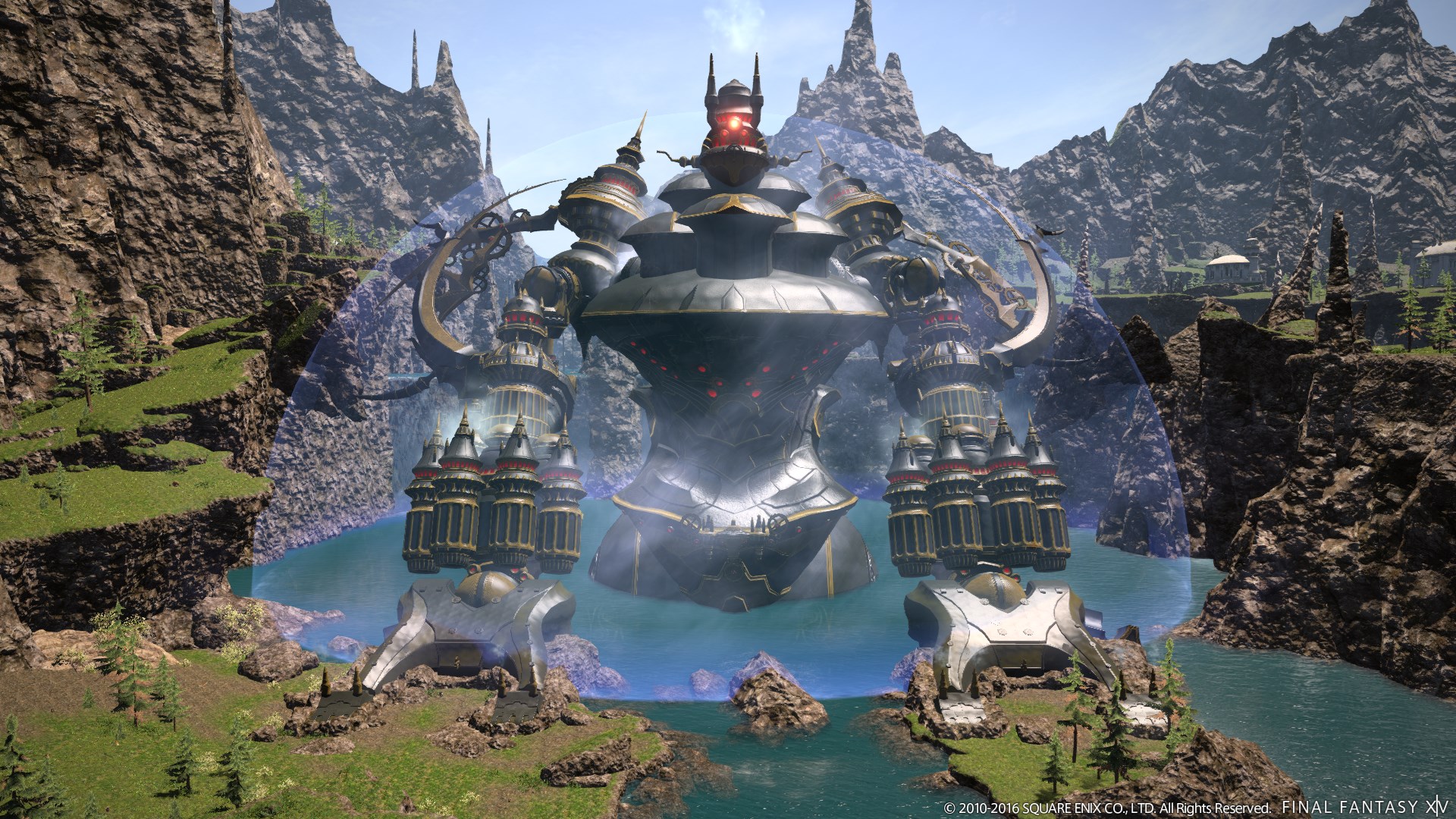
O12S – Omega is the final Savage encounter of the Omega raid series and one of the most system-heavy fights in Stormblood. The battle is split into two major phases. The first phase revolves around Omega-M and Omega-F, with Omega’s Eye participating from outside the arena and forcing the raid to manage external pressure at the same time as dual-boss mechanics. The second phase transitions into Omega’s final form, where the encounter shifts into a dense mechanical puzzle built around Patch tethers, Wave Cannons, Archive patterns, and the two Hello, World sequences.
Unlike lighter Savage encounters where success mainly comes from memorizing a sequence, O12S asks the raid to understand how mechanics interact. Spread and stack orders matter, debuff passing matters, where the bosses spawn matters, and even the timing of when the raid intentionally breaks tethers matters. This is a fight where the correct plan is just as important as the correct execution.
For a full breakdown of raid difficulty across all tiers, see the FFXIV Raid Rankings.
Arena Overview
The battle takes place on a circular platform with no edge protection. Falling from the arena results in death, so knockbacks and poor positioning are always threatening. During phase one, Omega’s Eye relocates around the outside of the platform and adds large-scale arena pressure that must be resolved while players are already handling Omega-M and Omega-F. During phase two, the arena itself stays visually simple, but the amount of mechanical layering increases dramatically, so positioning discipline becomes the real terrain mechanic.
Because several phase one mechanics let the raid partially control where Omega-M and Omega-F appear, the arena is not just a place where mechanics happen. It is also a setup tool. In the same way, phase two demands that the group use cardinals and intercardinals cleanly for debuff explosions, tower soaks, and beam baiting. This is one of those encounters where loose movement always feels worse than intentional movement.
Mechanic Archive
Omega’s Eye
Suppression causes Omega’s Eye to fire a massive straight-line AoE across the arena. The safe zones are the narrow side spaces outside the beam. Because the Eye relocates after firing, players should not only dodge the current beam, but also register where the next arena pressure will come from.
Advanced Suppression is the point-blank variant. Instead of a line through the arena, the Eye creates a large danger zone around itself and leaves the far crescent of the arena safe. This is easy to understand in isolation, but phase one often asks the raid to resolve Eye pressure while also handling spread, stack, dash, or number mechanics from Omega-M and Omega-F. The real trick is not simply finding the safe side, but maintaining enough formation that the next mechanic does not become chaotic.
Electric Slide and reformation control
Electric Slide is the reformation mechanic where Omega-M and Omega-F devolve into goop and both healers receive stack markers. Once those stacks resolve, the puddles leap to the marked locations and the bosses reform there. This means the raid has real control over where Omega-M and Omega-F return.
This matters because Omega-M always uses Efficient Bladework when he reforms, which is a point-blank AoE at his location, while Omega-F always uses Discharger, a knockback from her location. A clean raid uses the healer stacks to place the two bosses far enough apart that the group can stand near Omega-F to survive the knockback while staying out of Omega-M’s point-blank blast. This mechanic is not just damage sharing. It is arena setup.
Omega-M
Synthetic Shield marks Omega-M’s shield-oriented moveset and typically leads into a spread-then-stack sequence. Beyond Defense causes Omega-M to dash to a random player and inflict moderate AoE damage with Magic Vulnerability Up. Because Pile Pitch follows immediately afterward as a shared hit on another player, the correct response is to spread evenly inside the available safe zone, let Beyond Defense select and punish only one target, and then have everyone except that vulnerable player collapse quickly for the stack.
Beyond Strength is a large donut AoE with a safe zone directly inside Omega-M’s hitbox. It usually appears as a positional handoff mechanic in shield sequences. The raid moves into Omega-M’s hitbox to survive the donut, then immediately leaves because Efficient Bladework follows as a point-blank AoE. Omega-M’s toolkit repeatedly asks the raid to transition from spread to stack to center-safe to move-out without hesitation.
Solar Ray is the tankbuster that targets both tanks during dual-boss sections. It hits hard and splashes in a small radius, so tanks need separation from non-tanks even when the group is busy resolving unrelated mechanics nearby.
Omega-F
Synthetic Blades marks Omega-F’s blade-based sequence. Superliminal Motion is a 300-degree frontal cleave that leaves only a narrow safe zone behind her. This pushes the raid into a compressed formation, which then becomes dangerous when Optimized Fire III follows.
Optimized Fire III has no cast bar and no telegraph in Savage, so it has to be learned as a timing mechanic rather than a visual reaction mechanic. Players must already be in assigned spread positions when it resolves. Optimized Blizzard III adds a cross-shaped AoE based on Omega-F’s facing, so keeping her aligned to a cardinal direction dramatically improves readability. In practice, Omega-F’s mechanics are less about raw complexity and more about forcing the raid to respect exact positioning in very small windows.
Laser Shower is the raidwide that often punctuates these sequences. One cast is manageable. Repeated casts while the group is recovering from positioning mechanics become dangerous quickly, especially in long phase one sequences.
Firewall, Resonance, and Fundamental Synergy
Firewall divides the raid with Packet Filter debuffs so that one half can damage Omega-M and the other half can damage Omega-F. This is the mechanic that turns phase one from “two bosses on the field” into a true split-duty fight.
Resonance then determines how the tanks position the bosses. Local means they must be kept apart or both gain lethal damage buffs. Remote means they must be kept close instead. The first version is random, and the second is always the opposite. This forces tanks and melee to stay alert because the correct boss arrangement changes mid-fight.
Fundamental Synergy assigns blue or purple numbers one through four to each side of the raid. Omega-M and Omega-F dash in that order, and consecutive targets that are too close together take amplified damage. The practical solution is to send odd-numbered players far away so the bosses criss-cross larger distances. Every player should expect to take one resolved hit, but nobody can afford to overlap another player or take repeated collisions while already holding Magic Vulnerability Up.
Operational Synergy
The Shield version combines Omega-M’s spread-then-stack pattern with Omega-F’s Blizzard and Fire pressure. The raid first handles Beyond Defense + Optimized Blizzard III, then Pile Pitch + Optimized Fire III. After that, Omega-M uses Beyond Strength, forcing everyone into his hitbox, and then immediately follows with Efficient Bladework, making the raid leave that safe spot at once. Laser Shower punctuates the sequence, and then both bosses finish together with another raidwide.
The Blades version begins with Superliminal Steel, which creates side danger zones and leaves a central strip safe. That is followed by Optimized Blizzard III + Pile Pitch, so the group must stack in the correct safe lane. Then Superliminal Motion forces everyone behind Omega-F, only for Efficient Bladework to immediately punish staying there too long. While the raid is repositioning out, Optimized Fire III and Laser Shower pile on. Both versions test the same skill: not just knowing the answers, but transitioning between them cleanly.
Limit Break phase
Before phase one ends, Omega-M and Omega-F unleash their “optimized” Limit Break sequence. Optimized Meteor places a proximity marker on one tank and demands distance. Optimized Sagittarius Arrow marks the other tank for a line attack that must be aimed away from the group. Cosmo Memory is the heavy raidwide that follows, and Optimized Bladedance forces both tanks to survive physical burst damage after the raid has already taken significant pressure. These sequences are not individually complicated, but they arrive in a tight order and punish sloppy healing or late tank movement.
Phase 2 – Patch, Wave Cannons, and Hello, World
Target Analysis applies Magic Vulnerability Up to one of the two highest-enmity players, usually a tank, and then Savage Wave Cannon follows as a shareable tankbuster line. If the debuffed tank is sharing, they should stand behind the other tank so the non-debuffed tank takes the brunt of the hit.
Patch is the tether system that links each tank and healer to a random DPS with either Local or Remote Regression. Local tethers explode if the pair gets too close. Remote tethers explode if the pair gets too far apart. Each explosion deals raidwide damage and applies short Magic Vulnerability Up stacks. This means the raid cannot greedily pop every tether at once. They must be broken in a controlled cadence before Ion Efflux, which force-detonates any remaining tethers and instantly kills the linked players.
Diffuse Wave Cannon is read through the three visible orbs on Omega. The orbs indicate the safe side, not the danger side, which makes this easier once learned. Oversampled Wave Cannon uses monitor direction to determine who gets blasted; tanks deliberately stand in that direction and spread apart, while the rest of the raid avoids it.
Hello, World #1 is the first true systems check. Critical Overflow Bug creates a large transfer AoE. Critical Synchronization Bug creates smaller shared explosions. Latent Defect kills its victim if they do not take damage before expiry. Debugger prevents reapplication of specific bugs. The raid must use assigned explosion points, controlled soaking, and planned damage intake to move these debuffs safely without losing structure.
Archive Peripheral introduces rotating arm beams, and the safe spot must be identified by watching both current beam placement and rotational direction. Index & Archive Peripherals then tethers arms to random players while Omega uses Wave Cannon on the closest players. This is where the star pattern comes from: tethered players go to the outer edge opposite their arms, and non-tethered players bait Omega near the boss in the spaces between them.
Archive All is the arm destruction phase. The raid must identify which arm can be safely destroyed based on Omega’s upcoming Electric Slide direction and the rotation of the central beam, then kill that arm before Colossal Blow detonates. Delta Attack overlaps here with a stack marker, delayed circles, and fresh floor AoEs, which is why this section feels so cramped. The group has to move together first, resolve stack and spread second, and preserve enough uptime to kill the chosen arm on time.
Hello, World #2 raises the difficulty by adding Critical Underflow Bug and Cascading Latent Defect towers. Underflow can be passed by contact, and the towers require players with the right state to soak them while also managing the same Overflow, Synchronization, and Latent Defect structure from the first Hello, World. This is the point where the fight stops feeling like a boss encounter and starts feeling like a raid-wide operating procedure.
Encounter Timeline
Phase 1 Timeline
Synthetic Shield opens the fight. Omega’s Eye pressures the arena with Suppression. Omega-M uses Beyond Defense into Pile Pitch. Omega-M transforms into Omega-F, who opens with Discharger and then moves into Synthetic Blades and Superliminal Motion while Advanced Suppression overlaps from the Eye. Omega-F then uses Optimized Fire III before dissolving.
Electric Slide reforms both bosses from healer stacks. Omega-M uses Efficient Bladework on spawn while Omega-F knocks the raid back. Firewall splits the party, Resonance determines whether tanks separate or stack bosses, and Advanced Suppression overlaps with Fundamental Synergy. Laser Shower and Solar Ray follow. Then the fight enters Operational Synergy, using either the Shield or Blades version first. After that, Firewall and Resonance repeat with the opposite arrangement later, and the second Synergy pattern is the version that was not used the first time.
The phase ends with the Limit Break sequence: Optimized Meteor, Optimized Sagittarius Arrow, Cosmo Memory, Laser Shower, Bladedance, then a second pass of Meteor and Arrow under Eye pressure before a final Cosmo Memory enrage if the bosses are not defeated in time.
Phase 2 Timeline
Target Analysis into Savage Wave Cannon begins the phase. Patch tethers are applied and must be broken across Diffuse Wave Cannon and Oversampled Wave Cannon before Ion Efflux. Then Hello, World #1 begins, followed by Critical Error and Ion Efflux.
Archive Peripheral overlaps with a second tankbuster. Diffuse and Oversampled Wave Cannon return. Index & Archive Peripherals force the star pattern. Then Patch repeats, followed by another Diffuse / Oversampled sequence into Ion Efflux.
Archive All begins, Omega prepares Electric Slide, Delta Attack overlaps, the safe arm must die, and then Diffuse Wave Cannon follows. Hello, World #2 comes next, with Cascading Latent Defect towers added to the first Hello, World system. Critical Error and Ion Efflux follow, and Omega then loops the mechanics between the two Hello, World sequences until Program Omega begins its soft enrage through repeated Ion Efflux casts.
Encounter Flow
O12S begins as a dual-boss coordination fight where formation, role discipline, and boss placement are everything. It then transitions into a systems-heavy second phase where tether order, debuff passing, and beam management become the core challenge. What makes the encounter difficult is not just the amount of mechanics, but the requirement that the raid preserve structure while resolving them. Every mechanic asks a question, and the raid must answer without breaking formation for the next one.