Ala Mhigo Dungeon Guide (FFXIV Stormblood) – Boss Mechanics & Strategy
Duty Information
Expansion: Stormblood
Encounter: Ala Mhigo
Players: 4 Players (1 Tank, 1 Healer, 2 DPS)
Duty Finder Type: Dungeon
Level: 70
Unlock Requirement: Stormblood
Common Failure Points
- Dropping Target Search puddles in the centre of the arena during Magitek Scorpion, contaminating shared space for the rest of the fight.
- Rushing back to the physical body during Mindjack and running into a Prototype Death Claw or Bit line AoE, taking a stun at a critical moment.
- Standing too far from Zenos during Art of the Swell and being knocked into the outer ring, triggering stacking Damage Down debuffs.
- Stacking with another player during Art of the Sword, doubling the line AoE hits taken.
- Failing to destroy the three adds quickly enough during Zenos’s Aether Transfer phase, allowing his Ultima charge to complete.
Dungeon Overview
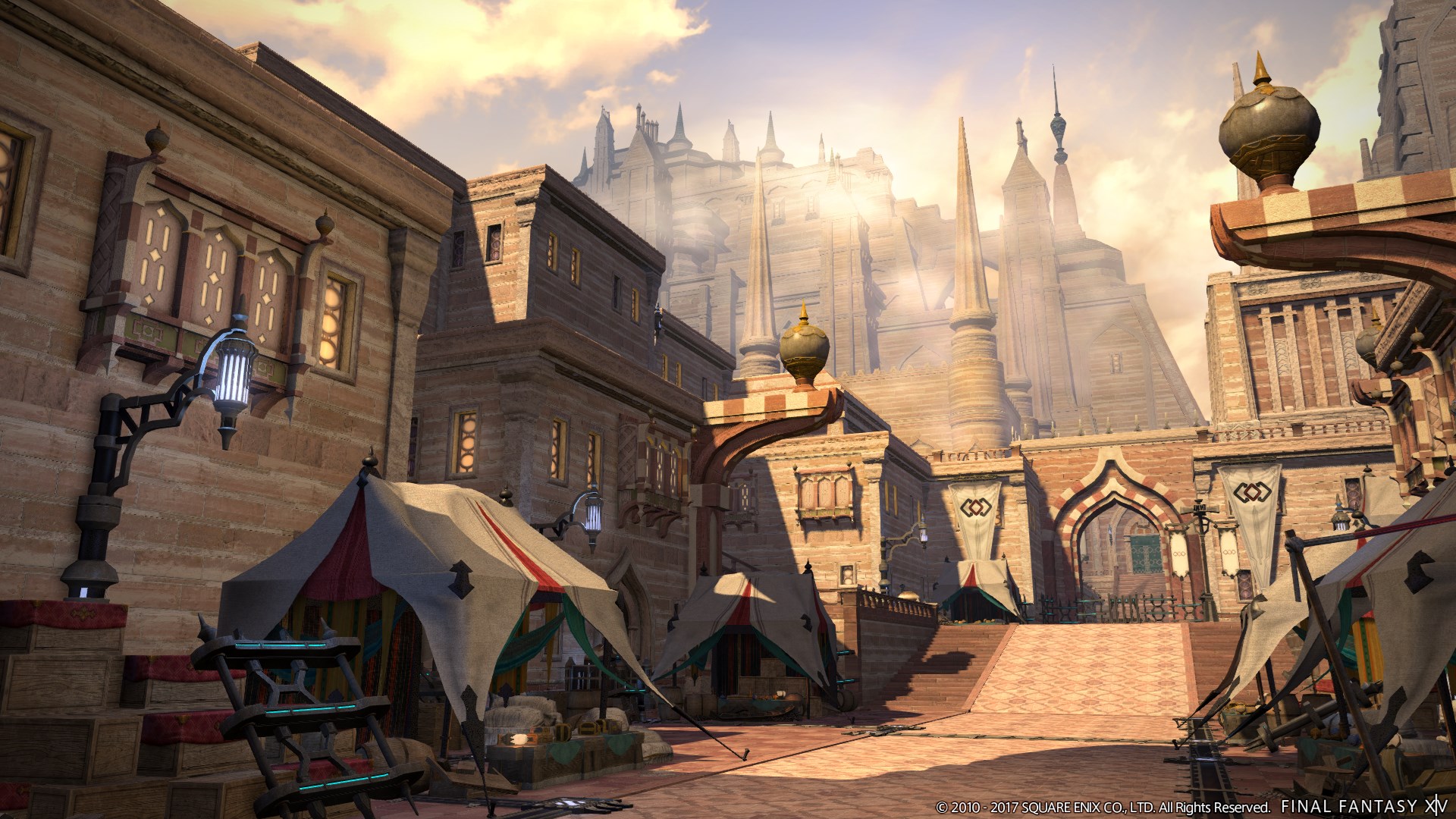
Ala Mhigo is a level 70 dungeon introduced in Patch 4.0 with Stormblood, serving as the expansion’s climactic final dungeon. It takes place within the titular city itself — the seat of Ala Mhigan identity that the entire expansion has been building toward reclaiming — and its three boss encounters carry the full weight of that context. This is the dungeon where Stormblood’s story pays off, and the encounter design matches the narrative stakes: each fight is the most mechanically demanding version of what the expansion’s dungeons have been building toward, culminating in a final confrontation that is among the most memorable in the main scenario tier.
Magitek Scorpion opens the run as a well-constructed arena management fight, demanding careful puddle placement discipline that will define the available space for the entire encounter. Aulus mal Asina introduces the dungeon’s most unusual mechanic — a full Out-of-Body sequence in which each player must navigate back to their physical form while managing pursuing Death Claws and Bit line AoEs simultaneously. The fight’s three-phase structure gives it a narrative shape that most dungeon bosses lack. Zenos yae Galvus closes the expansion’s dungeon tier as a high-pressure encounter with an untelegraphed tankbuster, persistent arena hazard boundaries, and a timed add-kill finale that applies real urgency to the final phase.
Ala Mhigo is the hardest dungeon in the Stormblood main scenario roster by a meaningful margin, and it earns that difficulty through the breadth and density of its demands rather than any single punishing moment. Aulus’s Mindjack sequence and Zenos’s boundary-aware knockback management are both mechanics that require individual discipline under simultaneous pressure. Groups arriving here from Castrum Abania should expect a further step up. Need the unlock path? See All FFXIV Dungeon Unlock Requirements.
Duty Support
- Arenvald — Gladiator — Tank
- Alphinaud — Academician — Healer
- Lyse — Pugilist — DPS
- Raubahn — Champion Gladiator — DPS
Dungeon Objectives
- Eliminate the imperials
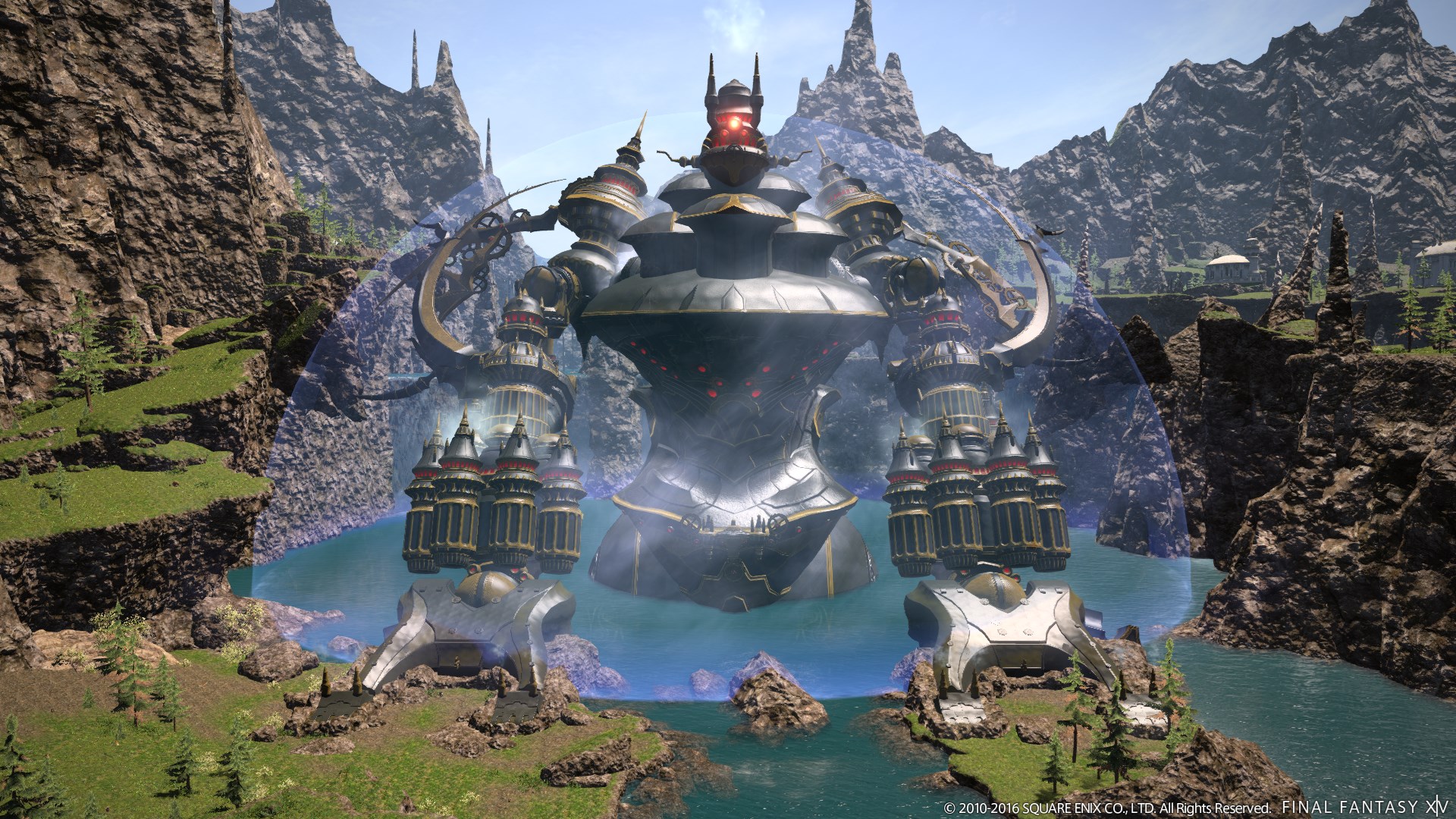
- Defeat the Magitek Scorpion
- Eliminate all obstacles
- Slay Aulus mal Asina
- Arrive in the Hall of the Griffin
- Defeat Zenos yae Galvus
Boss Encounters
Magitek Scorpion
Key Mechanics
- Electromagnetic Field — Partywide AoE damage. Healers top up as needed.
- Target Search — Places a circular marker beneath each player that slowly tracks their position for six seconds before detonating and leaving a persistent hazardous puddle. Players must bait their marker away from the centre of the arena and drop it in a safe, out-of-the-way location.
- Tail Laser — Line AoE stretching both in front of and behind the Magitek Scorpion along its axis. Move to the sides of the boss to avoid both vectors.
Strategy Notes
The Magitek Scorpion fight is built around puddle placement discipline. Target Search places a slow-tracking circular marker under each player that detonates after six seconds, leaving a persistent hazardous puddle exactly where the player was standing when it resolved. Every puddle placed in a poor location — the centre of the arena, near the tank’s position, along a corridor players need to use for future mechanics — makes the rest of the fight more cramped and more dangerous. The entire party must treat puddle placement as a deliberate act rather than an incidental one.
When Target Search markers appear, each player should immediately move toward the outer edge of the arena — toward a section of the perimeter that has not already been claimed by a previous puddle — and hold that position until the marker detonates. Moving in a consistent direction rather than drifting randomly prevents multiple players from contaminating the same section of the outer ring. After the puddle drops, move back into position for the next mechanic without stepping through any active puddles on the way in. Over the course of the fight, the available outer space will fill progressively, so players should mentally track which edge sections remain clean and route toward those areas on each successive Target Search cast.
Tail Laser fires in both directions along the boss’s axis simultaneously — in front and behind — which means the safe zone is lateral to the boss rather than at range behind it. The tank should maintain a stable boss position so that melee and ranged players alike can identify the safe corridor quickly. The cast is clearly telegraphed and the dodge window is generous; the primary hazard is a player who is already near the edge dealing with a puddle marker and loses track of the boss orientation. Keep the boss in peripheral awareness at all times during Target Search repositioning.
Failure Points
Puddle placement is the only mechanic in this fight that compounds across the entire encounter. A single poorly placed puddle is an inconvenience; three or four in central positions or near the tank’s holding area progressively eliminate clean repositioning routes for Tail Laser and subsequent Target Search baits. Groups that do not treat the outer edges as the mandatory drop zone from the first Target Search cast will find the arena increasingly hostile as the fight progresses, not because the mechanics escalate but because the available space has been eroded by earlier carelessness.
Tail Laser catches players mid-repositioning who lose track of the boss’s facing direction while carrying a puddle marker outward. The line fires in both directions with no safe zone directly ahead or behind the scorpion — a player at range directly behind the boss who has not moved laterally will take the full hit. Treat Tail Laser and Target Search as simultaneous demands: bait the puddle outward and to the side rather than directly back.
Aulus mal Asina
Key Mechanics
- Mana Burst — Partywide AoE damage. Healers top up as needed.
- Order to Charge / Order to Fire — Order to Charge places three drones in the arena; Order to Fire shortly follows, placing large AoE circles at those positions. Once those resolve, three larger overlapping circles appear — the safe zones are inside the overlapping coverage, not outside it.
- Magitek Disruptor — Stuns all players and pulls them toward the arena centre. Leads directly into Mindjack.
- Mindjack — Separates each player’s spirit from their body, applying Out of Body. Each player must walk their spirit back along a fiery tether to reach their physical body in the centre of the arena. Prototype Death Claws spawn and pursue each player, stunning on contact. Prototype Bits spawn around the arena and fire line AoEs that also stun on contact. Both hazards must be avoided throughout the return journey. After a player reunites with their body, they can assist in killing the Death Claws.
- Demimagicks — Places a marker and AoE beneath each player, then fires the overlapping circle pattern from Order to Fire across the arena to a larger extent simultaneously. Combines personal spread markers with the safe-inside zone logic of Order to Fire at increased scale.
Strategy Notes
Aulus mal Asina is a three-phase encounter structured around the Mindjack sequence at its centre. The first phase establishes the arena’s mechanics — Order to Charge and Order to Fire teach the overlapping-circles-safe-inside pattern that Demimagicks will later apply at greater scale — and the third phase tests whether the party can apply everything it has learned under pressure. The Mindjack phase itself is the encounter’s centrepiece, and understanding how to navigate it cleanly is the primary preparation required before this pull.
The Order to Charge into Order to Fire sequence has counterintuitive safe zones. The initial large AoE circles fire at the drone positions and should be avoided normally, but the second set of three larger, overlapping circles that follow immediately after have their safe zones inside the overlapping areas rather than outside them. Players who instinctively run to the outer edge of the arena during the second set will find themselves in the active coverage of all three circles. The overlap intersections in the interior of the arena are where the party should be. This logic must be internalised before Demimagicks applies it at larger scale with personal spread markers active simultaneously.
When Magitek Disruptor fires, all players are stunned and pulled to the centre. Do not fight this — the stun and pull are unavoidable, and resisting them wastes the brief moment of orientation before Mindjack begins. When Out of Body activates, each player’s spirit appears at a distance from their physical body, connected by a fiery tether. The goal is to walk the spirit along the tether back to the body at the arena centre. The critical rule of this phase is patience. Prototype Death Claws spawn and pursue each player’s spirit — if a Death Claw reaches contact range it stuns, interrupting the return journey. Prototype Bits fire crossing line AoEs from fixed positions around the arena that also stun on contact. Neither hazard is lethal on its own, but a stun at the wrong moment delays the return and extends exposure to both hazards simultaneously.
Navigate toward the body in a path that avoids both the pursuing Death Claws and the Bit lines — which means taking indirect routes when necessary rather than moving in a straight line. A player who rushes directly toward the body may run through an active Bit line or allow a Death Claw to close the gap during a moment of inattention. Move at a deliberate pace, watch both hazard types, and adjust course rather than sprint. Once a player reunites with their body, their Out of Body status clears and they can immediately help kill the Death Claws, which accelerates the phase for everyone still returning. Prioritise reaching the body cleanly over arriving first.
Demimagicks in the final phase combines the personal spread markers with the overlapping-circle safe-zone logic at a larger scale than Order to Fire used. Each player must place their personal AoE away from allies — spread out quickly — while simultaneously identifying which interior overlap zones remain safe as the larger pattern resolves around them. Players who have internalised the safe-inside logic from the first phase will navigate this without difficulty; players who are still running outward by instinct will find the late Demimagicks casts repeatedly punishing.
Failure Points
Stunned returns during Mindjack are the most common source of prolonged phase time and accumulated damage. A player who charges straight toward their body through Bit line AoEs will be stunned, slowed, and likely stunned again before they reach it — each stun allows the pursuing Death Claw to close the gap further, creating a compounding delay. The phase does not have an instant-kill timer that most groups will approach, but a prolonged phase means extended Death Claw pressure on multiple players simultaneously, which is a genuine healing burden. Take indirect paths, avoid the lines, and treat the stun prevention as the primary movement goal rather than speed.
Demimagicks failures in the final phase almost always trace back to the same misreading that caused Order to Fire failures earlier: the instinct to run outward when the overlapping circles appear. Players who do not have the safe-inside logic firmly established by Phase 1 will repeat the mistake under the added pressure of simultaneous personal spread markers. If the pattern is causing consistent deaths in the final phase, revisit how the party handled Order to Fire — the same misunderstanding is almost certainly responsible for both.
Zenos yae Galvus
Key Mechanics
- Art of the Storm — Large point-blank AoE centred on Zenos. Move away from the boss when this is cast.
- Art of the Swell — Partywide damage with a knockback component. Move close to Zenos before this resolves to reduce the knockback distance and avoid being pushed into the outer ring.
- Art of the Sword — Fires a line AoE targeted at each player individually. Players must spread away from each other — stacking causes multiple lines to hit the same target.
- Vein Splitter — Zenos places four copies of himself around the arena. A large point-blank AoE fires around Zenos himself, followed immediately by large point-blank AoEs around all four copies. The copy AoEs do not overlap near Zenos’s position. After the copy AoEs resolve, Zenos jumps to a random player, tethers to them, and after a brief delay casts Lightless Spark.
- Lightless Spark — Cone AoE directed at the tethered player. The tethered player should move away from the party so the cone fires into open space.
- Concentrativity — High-damage partywide AoE. Healers should prepare to burst-heal after this cast.
- Unmoving Troika — Untelegraphed tankbuster. The only warning is Zenos calling out “Kill!” a few moments before it lands. No AoE indicator appears. Tank must use mitigation immediately on hearing the vocal cue.
- Outer Ring — The arena boundary deals damage and applies a stacking Damage Down debuff to any player who touches it. Active throughout all phases.
- Aether Transfer / Adds — At approximately 15% HP, Zenos begins charging Ultima. Three adds spawn — Ame-no-Habakiri, The Swell, and The Storm — and must all be defeated before the Aether Transfer meter fills. The Swell periodically knocks players outward during this phase; stay aware of the ring boundary. There is no optimal kill order — destroy all three as quickly as possible.
Strategy Notes
Zenos yae Galvus is a fight defined by its arena boundary. The outer ring inflicts a stacking Damage Down debuff on any player who enters it, and several of Zenos’s mechanics are specifically designed to push or tempt players toward it. Every positioning decision in this encounter must be made with that boundary in mind — not as a secondary consideration, but as a primary constraint that shapes how each mechanic is resolved.
Art of the Swell is the mechanic that most directly weaponises the boundary. It deals partywide damage and applies a knockback — players at range when it resolves will be launched toward the outer ring and may enter it entirely. The counter is to move toward Zenos before the cast completes, reducing the effective knockback distance enough that the push carries players only to mid-arena rather than the edge. This feels counterintuitive alongside Art of the Storm, which requires moving away from the boss — distinguishing between the two cast names quickly is the core rotation skill this fight demands. Storm pushes out; Swell requires moving in.
Art of the Sword fires individual line AoEs at each player simultaneously, meaning the party must spread to avoid compounding hits. This is a clean, readable mechanic when the arena is uncluttered, but it must be resolved without any player drifting close to the outer ring while spreading. Move laterally within the interior of the arena, not radially outward. Vein Splitter fires Zenos’s point-blank AoE first and then detonates the copies in sequence — the interior space near Zenos is safe after his own AoE resolves, making it the natural haven when the copy AoEs sweep the outer portions of the arena. Move in after Zenos’s explosion, hold position as the copies detonate around the edge, then immediately move away from the tether target for Lightless Spark. The tethered player should step to one side of the arena so the cone fires away from the group.
Unmoving Troika is the encounter’s most demanding moment for the tank precisely because it provides no visual warning. The only cue is Zenos’s vocal line — “Kill!” — which precedes the hit by a short but usable window. The tank must treat that vocal cue as an immediate trigger for mitigation, without waiting to see an AoE indicator that will never appear. Healers should keep the tank topped throughout the fight to ensure any Troika that catches the tank with mitigation slightly mistimed is survivable.
When Zenos reaches roughly 15% HP and the Aether Transfer meter appears, the three adds — Ame-no-Habakiri, The Swell, and The Storm — must be killed before the meter fills. Each add uses the ability associated with its name: Ame-no-Habakiri fires individual line AoEs, The Storm fires point-blank AoEs, and The Swell knocks players back toward the ring boundary. There is no fixed priority kill order — burn all three with all available cooldowns and limit break if the meter is pressing. The Swell’s knockbacks are the most dangerous element of this phase; maintain boundary awareness throughout and move inward before its cast resolves, exactly as with Zenos’s own Art of the Swell.
Failure Points
Damage Down stacks from the outer ring are this fight’s most insidious attrition mechanic. No single contact is catastrophic, but a player who clips the ring on an Art of the Swell knockback, then clips it again during the add phase when The Swell fires, will carry stacking debuffs that amplify every subsequent source of damage they take. The debuff does not clear until the fight ends. Groups that treat the ring as a soft boundary they occasionally graze will find the final phase noticeably more dangerous than it should be — respect the edge from the first second of the pull.
Unmoving Troika kills tanks who are not listening for the vocal cue. It is not possible to react to Troika visually — the only option is the audio warning, and tanks who are not calibrated to respond to it will take the full hit without mitigation. This is particularly dangerous in the later stages of the fight when Concentrativity has already applied healing pressure and the adds phase is adding its own constant damage. The fight demands that the tank treats “Kill!” as a higher-priority signal than any AoE telegraph on the floor, and that discipline must be established in the first phase while the stakes are lower rather than learned the hard way at fifteen percent.
Difficulty Assessment
Ala Mhigo is the hardest dungeon in Stormblood’s main scenario tier and a fitting conclusion to the expansion’s mechanical progression. Its three encounters each represent the highest-complexity version of the themes Stormblood’s dungeons have been developing since The Sirensong Sea — arena contamination management, elemental pattern recognition, individual hazard navigation, and boundary-aware positioning all appear here in their most demanding forms. The dungeon does not introduce concepts that are entirely new, but it applies familiar ideas with less margin for error and more simultaneous demands than any preceding Stormblood dungeon.
- Deliberate arena puddle placement and lateral dodge discipline during Magitek Scorpion
- Mindjack navigation — stun avoidance and paced return routing — during Aulus mal Asina
- Counterintuitive safe-zone logic across Order to Fire, Mindjack, and Demimagicks
- Boundary management, untelegraphed tankbuster response, and timed add execution during Zenos yae Galvus
Groups that communicate before the Aulus pull — confirming the safe-inside logic for Order to Fire and establishing that Mindjack requires patience rather than speed — and that brief themselves on Unmoving Troika’s audio cue before Zenos will find the dungeon demanding but cleanly executable. The mechanics across all three encounters are well-telegraphed where warnings exist, and the only consistently unforgiving element is Troika’s absence of visual warning. Groups that have managed boundary awareness carefully through the Zenos fight will find the add phase a satisfying sprint rather than a desperate scramble.
Groups that rush Mindjack and run through Bit lines will lose the phase to accumulated stuns and Death Claw catches, and the same impatience applied to Zenos — drifting toward the ring during Art of the Swell rather than stepping in, spreading radially outward during Art of the Sword — will build Damage Down stacks that make the final phase significantly more dangerous than intended. Ala Mhigo is a dungeon that rewards the full set of habits Stormblood’s earlier dungeons were training. Groups that developed those habits will find it a strong and satisfying conclusion; groups that did not will encounter all of their accumulated gaps at once.
Previous Dungeon: Castrum Abania | Next Dungeon: Kugane Castle
Guildmaster Notes
There are places that carry the weight of everything that happened in them long after the fighting stops. Ala Mhigo is one of those places — a city that spent a generation under occupation, whose name became both wound and rallying cry, and whose Hall of the Griffin held the shape of what was lost even when no one was left to tend it. Walking through it during the liberation does not feel like progress. It feels like return. Like something that was always supposed to happen finally being permitted to.
Zenos does not fight for Garlemald, or for conquest, or for any reason that maps onto the politics around him. He fights because it is the only context in which he has ever felt present — the only place where the world’s texture reaches him. There is something in that which is more unsettling than cruelty. Cruelty has motives. What Zenos represents is emptiness that found the one thing capable of filling it, and mistook that feeling for meaning. The Hall of the Griffin deserved a better final battle. It got the one history provided.