The Burn Dungeon Guide (FFXIV Stormblood) – Boss Mechanics & Strategy
Duty Information
Expansion: Stormblood
Encounter: The Burn
Players: 4 Players (1 Tank, 1 Healer, 2 DPS)
Duty Finder Type: Dungeon
Level: 70
Unlock Requirement: Feel the Burn
Common Failure Points
- Failing to stand behind a crystal during Shardfall and then being caught by the immediately following Dissonance hitbox AoE with a Vulnerability Up stack already applied.
- Misidentifying the broken drone during Full Throttle and standing in the wrong lane, taking a full knockback into the burning arena walls.
- Being hit by the non-tank line component of Frost Breath and leaving an ice puddle in a high-traffic area that continues to inflict Frostbite throughout the remainder of the fight.
- Attacking the Mist Dragon during its Vaporize phase and triggering its counterattack, trapping the attacker in an ice block mid-mechanic.
- Failing to hug the arena edge during Deep Fog and missing the dragon’s telegraph entirely, taking a Vulnerability Up stack and Freeze at a critical phase transition.
Dungeon Overview
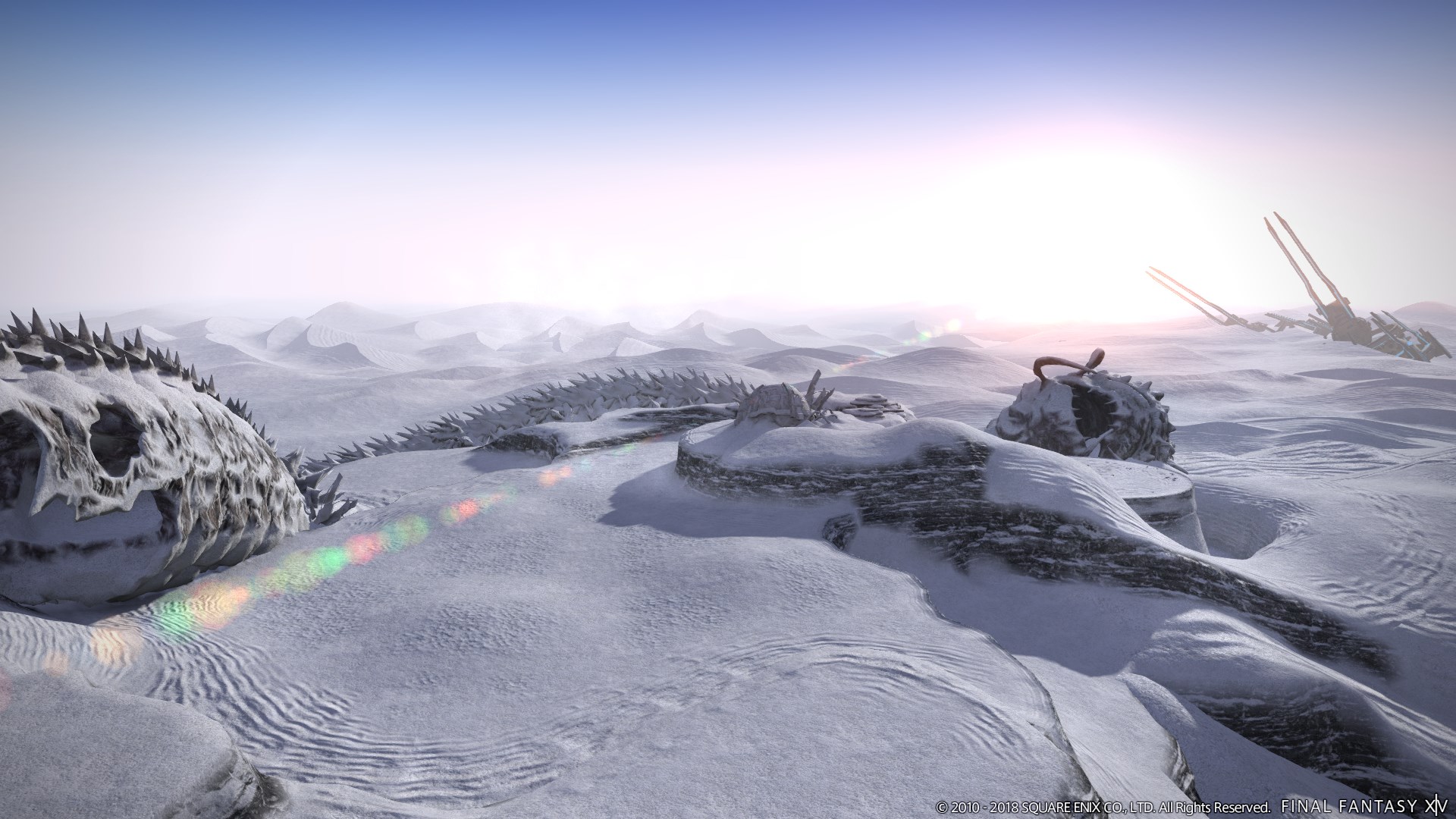
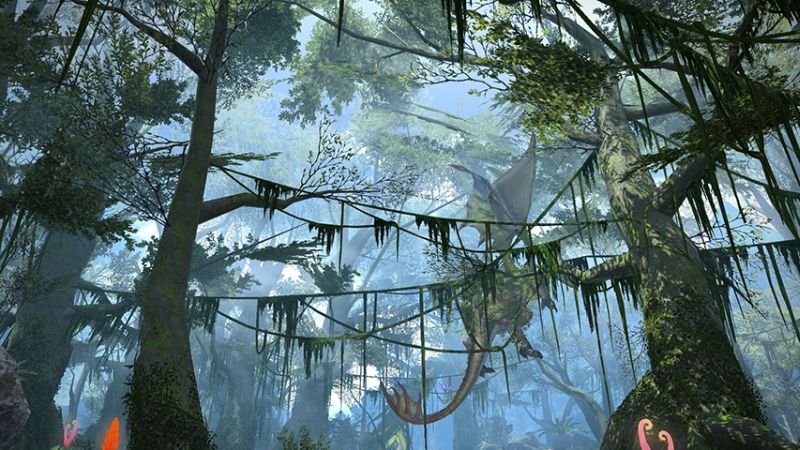
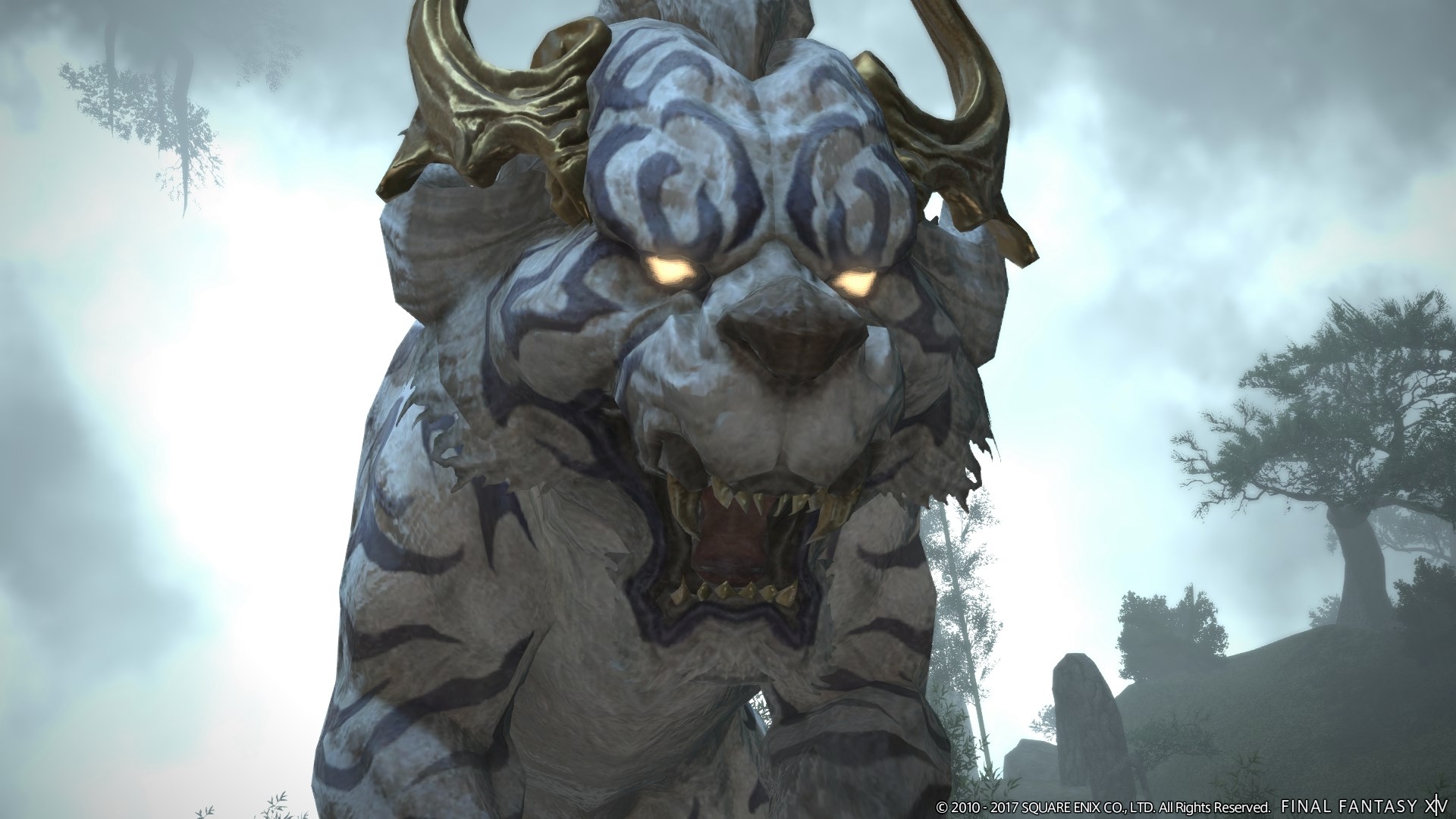
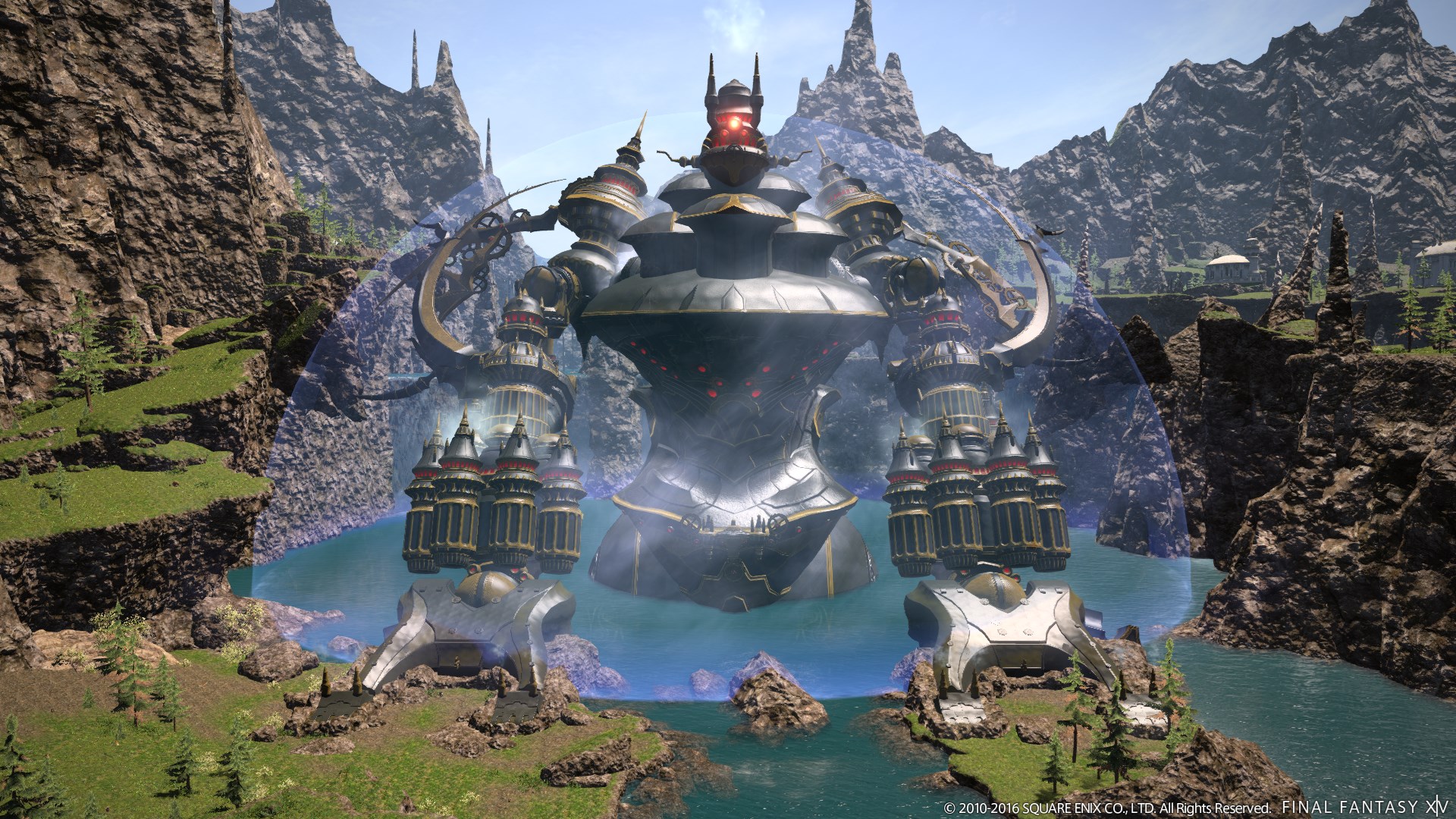
The Burn is a level 70 dungeon introduced in Patch 4.4 with Stormblood. It is a story dungeon set within the scorched, desolate remnants of a landscape ravaged by Garlean imperial activity — a wasteland dungeon that communicates its context entirely through environment and encounter design rather than ornate architecture. The Burn’s aesthetic is stark and deliberate, and its three bosses are among the most mechanically inventive encounters in the expansion’s dungeon roster.
Hedetet opens the run with a fight built around environmental interaction — four crystals serve as shields for otherwise lethal AoEs, and the party must use and manage them carefully across a fight that progressively destroys them and replaces them. The Defective Drone introduces the dungeon’s most puzzle-like encounter: a lane-reading mechanic during Full Throttle that requires the party to identify a single broken drone among five and position in its safe lane before the rush resolves. Mist Dragon closes the dungeon with the expansion’s most atmospheric final boss — a multi-phase encounter involving ice puddle management, a vulnerable-form add phase, a fog-covered arena with hidden sweeping attacks, and a proximity-marker landing that demands swift cross-arena repositioning.
The Burn is one of Stormblood’s most mechanically varied patch dungeons, with each boss operating on entirely different structural logic from the others. It supports Duty Support and is accessible as an optional dungeon after the relevant story unlock.
Need the unlock path? See All FFXIV Dungeon Unlock Requirements.
Duty Support
- Hien — Samurai — Tank
- Y’shtola — Archon — Healer
- Alisaie — Red Mage — DPS
- Yugiri — Ninja — DPS
Dungeon Objectives
- Arrive in the Scorpion’s Den
- Clear the Scorpion’s Den
- Arrive in the Gamma Segregate
- Clear the Gamma Segregate
- Arrive in the Aspersory
- Defeat the Mist Dragon
Boss Encounters
Hedetet
Key Mechanics
- Crystal Needle — Tankbuster. Apply mitigation and heal through as needed.
- Hailfire — Places a crosshair on a random player. After a short delay, Hedetet blasts sand in a line toward that player, damaging the first thing the attack hits. Standing behind a crystal blocks all damage. On all subsequent casts, Hedetet first jumps to a random arena position before targeting a player — the crystal used for cover must account for the new jump position, not the original boss location.
- Shardfall — Partywide AoE. Stand behind a crystal for protection. Immediately followed by Dissonance.
- Dissonance — Second partywide AoE cast directly after Shardfall. This time, the safe zone is inside Hedetet’s hitbox — the crystal is no longer safe. Players who remained behind the crystal through Shardfall must move inside the boss before Dissonance resolves. Deals high damage and inflicts Vulnerability Up on anyone caught outside the hitbox.
- Shardstrike — Places AoE markers on all players simultaneously. Players must spread to avoid overlap damage, and must not position their spread AoEs to hit any of the crystals.
- Crystals — Four white crystals stand in the arena and serve as shields. Each explodes when struck by one of Hedetet’s attacks. New crystals fall from the ceiling periodically to replace destroyed ones — players must avoid standing in their landing zones.
Strategy Notes
Hedetet is a fight built around environmental resource management. The four crystals in the arena are not decorative — they are the party’s only defence against two of the fight’s most damaging abilities, and their destruction and replacement is a constant background process that the party must track throughout the encounter. Understanding which attacks require crystal cover and which do not is the entire mechanical framework of the fight.
Hailfire fires a sand blast in a line from Hedetet toward a targeted player. The first thing the blast hits absorbs all damage — a crystal positioned between Hedetet and the targeted player will take the hit and block all damage to the player entirely. In the first cast, Hedetet fires from its current position, making crystal selection simple: stand behind whichever crystal is between yourself and the boss. From the second cast onward, Hedetet jumps to a random arena location before targeting — the player must identify the boss’s new position after the jump and get behind a crystal that is on the correct side of themselves relative to the new origin point. Moving early as the jump begins rather than waiting for the target marker to appear gives more time to identify and reach the correct crystal.
The Shardfall into Dissonance sequence is the fight’s sharpest execution window. Shardfall is safe behind a crystal and dangerous in the open; Dissonance immediately follows and inverts this — the safe zone is now inside Hedetet’s hitbox, and players behind the crystal will take the full hit. The party must shelter behind crystals for Shardfall, then immediately move inside the boss’s hitbox before Dissonance resolves. The window between the two casts is short, and any hesitation will result in taking Dissonance’s damage and Vulnerability Up debuff. Pre-position near a crystal that is close to the boss’s front rather than the arena edge — the shorter movement distance to the hitbox makes the transition faster.
When Shardstrike fires, all players receive simultaneous AoE markers. Spread apart to avoid overlapping blasts, but do so in directions that do not place any crystal in the AoE’s path. A crystal hit by Shardstrike is destroyed, reducing the resources available for the next Hailfire or Shardfall. With four players and four crystals, there is usually sufficient arena space to spread cleanly without threatening any crystal — the challenge is players who default to backing toward a crystal during a spread rather than stepping laterally. Move sideways away from allies, not backward toward the nearest obstacle.
Failure Points
The Shardfall into Dissonance transition is the most precise execution window in this encounter and the source of the majority of deaths. Players who are slow to recognise that Dissonance fires immediately after Shardfall — or who move from the crystal too late — will take the high-damage Vulnerability Up hit at a moment when the healer is still recovering from Shardfall. The key is treating the crystal shelter as a temporary position rather than a safe destination: get behind it for Shardfall, then immediately leave for the hitbox. Any player who settles into the crystal position is already late for the transition.
Post-jump Hailfire misreads occur when players identify a crystal relative to the boss’s original position rather than its new jump location. The jump is visible and the new position is established before the targeting occurs — players who track the jump rather than reacting to the target marker will have sufficient time to reassess their crystal choice. Players who are watching the floor for the target marker rather than the boss’s movement will often find themselves behind the wrong crystal with insufficient time to change.
Defective Drone
Key Mechanics
- Aetherochemical Flame — High partywide damage. Use mitigation and heal through.
- Aetherochemical Coil — Tankbuster with a frontal arc. Non-tank players should not stand in front of the boss when this fires.
- Sludge — Before Full Throttle, the Defective Drone launches a glob of sludge at a random player. Standing inside the sludge inflicts Leaden, which slows movement speed significantly.
- Full Throttle — The Defective Drone leaves the arena. Five smaller Mining Drones appear on one side of the arena, lined up in the arena’s five lanes. One drone is broken — it has no lights above it and visibly sparks. Move into the broken drone’s lane before the rush resolves. The functioning drones charge through their lanes dealing massive damage and a knockback guaranteed to push players into the burning arena walls. The broken drone does not charge.
- Rock Busters — Rock Biter chakrams appear on the arena’s sides and launch across in straight lines after a short delay. Do not stand in front of them when they activate.
- Burning Arena Walls — The left and right sides of the arena are permanently on fire, inflicting Burns while standing in them. Active throughout the fight.
- Repurposed Dreadnaught (add) — Spawns later in the fight with standard Dreadnaught abilities. Kill it promptly.
Strategy Notes
The Defective Drone is a fight constrained by its arena. The burning walls on both sides create a permanently reduced safe zone that punishes any knockback or careless lateral movement, and the lane-based Full Throttle mechanic is built entirely around the threat of those walls. The arena is narrow, the hazards are persistent, and the fight rewards players who respect the spatial restrictions from the first second of the pull rather than adjusting to them mid-encounter.
The base rotation between Full Throttle phases is manageable. Aetherochemical Flame is unavoidable partywide damage the healer should anticipate. Aetherochemical Coil is a frontal arc tankbuster — non-tank players should move to the sides rather than standing ahead of the boss during this cast. The sludge glob that precedes Full Throttle is the mechanic most likely to create compound problems: a player hit by sludge is Leaden, which slows their movement precisely when they need to reposition quickly for the lane read. When the sludge is incoming, move to a position that gives a clear line of sight to all five Mining Drones before it lands, so that the identification can happen without rushing.
Full Throttle is the fight’s core challenge and its most demanding execution window. When the Defective Drone retreats and five Mining Drones appear on one side, the party has a short window to identify the broken drone — the one without lights and with visible sparking — and move into its lane. The functioning drones rush through their lanes simultaneously, dealing massive damage and a knockback strong enough to push anyone hit directly into the burning walls. Being hit by a drone and knocked into fire applies Burns and potentially additional knockback from the wall contact, which is a difficult situation to recover from before the next mechanic arrives.
The identification process should begin the instant the drones appear. Scan across the row from one end to the other and locate the drone that is visually distinct — no light indicators, sparking effect. Move into that lane and hold position. Players who are still affected by Leaden from the sludge need to begin moving toward the correct lane as soon as they can identify it, accepting that their movement will be slower than usual and compensating with early identification rather than fast response. Rock Busters chakrams fire across the arena in straight lines on a short delay — identify which lanes they are in and ensure the chosen safe lane for Full Throttle does not intersect with an active chakram line. In most cases the broken drone’s lane and any active Rock Buster lanes will not overlap, but confirm before committing to position.
Failure Points
Full Throttle deaths almost always come from misidentifying the broken drone or from being Leaden when the drones appear and failing to reach the correct lane in time. The Leaden compound is the more dangerous of the two because it is invisible to players who did not notice the sludge hit — a sudden movement penalty during a lane-reading mechanic with a knockback-into-fire failure state is severe. The counter is proactive positioning: be standing somewhere that gives a clear drone view before the sludge glob resolves, regardless of whether it connects. Early identification converts the time penalty from Leaden into a manageable delay rather than a missed window.
Knockback from a functioning drone lane that carries a player into the burning walls is the fight’s highest single-hit damage scenario. Burns from the walls apply continuously while standing in them, and a player knocked into the wall during a Full Throttle phase has no safe movement option until they can move laterally back into the arena. The healer should watch for this scenario and prioritise that player immediately. It is recoverable but requires fast action, and it becomes significantly more dangerous if the Repurposed Dreadnaught add is also active when it occurs.
Mist Dragon
Key Mechanics
- Rime Wreath — High partywide damage. Use mitigation and heal through.
- Frost Breath — Two sequential attacks. First: a line AoE from the boss to a non-tank player, damaging everything in its path. Second: a wide arc targeted at the tank. Both hits leave persistent ice puddles in the areas struck, inflicting Frostbite on any player who stands in them. The attack itself inflicts a dispellable Frostbite debuff. Healers should dispel Frostbite from affected players promptly.
- Fog Plume — A star-shaped AoE placed toward the south of the arena. An initial circular AoE fires at the landing point, then four line AoEs extend outward from it. Being hit by any component inflicts a Vulnerability Up stack and traps the player in a block of ice called Mist for up to 10 seconds. While trapped, the player suffers Deep Freeze damage over time. Other players can attack the Mist block to free the trapped player. Later in the fight, two star-shaped AoEs appear simultaneously in a fixed but randomly rotated pattern.
- Vaporize — The Mist Dragon transforms into mist at the arena centre and becomes untargetable. Attacking it in this form triggers a counterattack that traps the attacker in an ice block. Three Draconic Regard adds spawn and tether to the dragon. The dragon’s Cold Fog AoE begins expanding from its position — killing all three Draconic Regard adds stops the expansion. The adds must be killed before the AoE covers too much of the arena.
- Deep Fog — The arena fills with thick fog that applies an indefinite Dropsy debuff. The Mist Dragon leaves the arena and sweeps through twice, firing a wide line of ice through the centre. Players must run along the arena edge — the dragon and its telegraph only become visible when a player is close enough to the edge. Being hit inflicts a Vulnerability Up stack and traps the player in an ice block.
- Touchdown — A proximity marker appears indicating where the Mist Dragon is about to land. Move to the opposite side of the arena as quickly as possible. Any players still trapped in Mist blocks should be freed before the landing resolves.
Strategy Notes
Mist Dragon is a multi-phase encounter that shifts its demands with each new mechanic introduced, and its later phases — particularly Deep Fog and the interaction between Vaporize and Cold Fog — require a completely different mode of play from the fight’s opening rotation. The encounter rewards groups that adapt their approach to each phase clearly rather than treating the fight as a single continuous mechanical challenge.
The opening phase establishes the fight’s two foundational management tasks: ice puddles from Frost Breath and ice blocks from Fog Plume. Frost Breath fires a line to a non-tank first, then an arc at the tank — both leave persistent puddles that inflict Frostbite on contact. The non-tank targeted by the line should move to a corner or edge position before the cast resolves to minimise where the puddle falls, and the tank should angle the arc toward an area already cleared of puddles from the first hit. The Frostbite debuff from the attack itself is dispellable — healers should remove it from affected players promptly, as accumulated Frostbite ticks add up significantly across multiple Frost Breath casts. Fog Plume places a star AoE at the southern arena — avoid both the central landing point and all four extending lines, and assist any trapped player immediately by attacking their ice block.
When Vaporize begins, stop attacking the Mist Dragon immediately. Its counterattack for being hit in mist form will trap the attacker in a Mist block, which is both a DPS loss and a potential hazard if it occurs at the start of the Draconic Regard phase. Switch to the three add tethers and kill them as quickly as possible — each surviving add allows the Cold Fog AoE to continue expanding from the dragon’s central position. The adds have moderate health and the available arena space shrinks with each second the Cold Fog grows. AoE abilities to hit multiple adds simultaneously are valuable here. Once all three adds are dead, the expansion stops and the arena stabilises, allowing the party to return to attacking the boss when it rematerialises.
The Deep Fog phase changes the fight’s entire structural logic. The arena fills with fog that gives everyone Dropsy indefinitely, and the Mist Dragon flies out of the arena and begins making sweeping passes through the centre. The dragon’s telegraph is only visible to players who are close to the arena edge — the correct response is to run around the edge of the arena continuously, watching for the dragon’s approach. When the telegraph becomes visible, the party will be near enough to see it in time to step out of its path. Players who stand in the centre will not see the telegraph until it is too late. Circle the edge, stay close to the wall, and react to the telegraph as it appears. The dragon makes two passes before the fog clears — maintain edge positioning for both.
Touchdown fires after Deep Fog and places a proximity marker on the ground indicating the dragon’s landing point. Move to the opposite side of the arena immediately — the further from the marker, the lower the proximity damage. Before moving, check for any players still trapped in Mist ice blocks from the Deep Fog sweeps and attack their blocks to free them. A trapped player who cannot reach the far side of the arena in time will take the proximity hit at close range, which is punishing. Free trapped allies first, then reposition together.
Failure Points
Attacking the Mist Dragon during Vaporize is the most counterproductive single action in the encounter. The counterattack ice block traps the attacker at the beginning of the Draconic Regard phase, removing their damage contribution at the exact moment the Cold Fog expansion needs to be stopped quickly. The habit of continuing to attack the boss must be actively suppressed the moment Vaporize’s cast begins — switch targets immediately and do not return to the dragon until it rematerialises.
Deep Fog disorients players who try to navigate from the centre of the arena. The telegraph only appears at short range, which means a player standing in the open will see it at the same moment it resolves, with no time to step aside. The edge-running instruction is not optional — it is the only way to get consistent advance warning of the sweep direction. Players who lose track of their position relative to the edge during the fog phase and drift inward will be hit by sweeps they had no means of avoiding. Keep the arena wall close and keep moving along it until the fog dissipates.
Difficulty Assessment
The Burn is one of the most mechanically varied dungeons in Stormblood’s patch lineup, with three encounters that each operate on entirely different structural logic. The difficulty is well-distributed rather than concentrated in any single encounter — Hedetet tests environmental awareness and a precise two-AoE transition, the Defective Drone tests lane reading under movement impairment, and the Mist Dragon tests phase adaptation across a four-stage fight that changes its demands at each transition. No individual mechanic is as punishing as the Fractal Continuum (Hard)’s primal phases, but the breadth of what the dungeon asks across three very different encounters makes it one of the more demanding optional dungeons in the expansion.
- Crystal positioning and Shardfall into Dissonance transition timing during Hedetet
- Broken drone identification under Leaden impairment and burning-wall knockback management during the Defective Drone
- Ice puddle placement and Frostbite management during the Mist Dragon’s opening phase
- Vaporize target discipline, Cold Fog add priority, and edge-navigation during Deep Fog
Groups that understand the Shardfall into Dissonance transition timing, communicate the Full Throttle identification process before the Defective Drone pull, and adapt cleanly to each of the Mist Dragon’s phase transitions will find The Burn a rewarding and memorable run. The Mist Dragon in particular is one of Stormblood’s most imaginative final boss designs — the Deep Fog phase creates a genuinely atmospheric and mechanically interesting challenge that feels unlike anything else in the expansion’s dungeon tier.
Groups that treat the crystal as a safe shelter to remain in through Dissonance will take the high-damage Vulnerability Up hit reliably, and groups that do not adjust their navigation approach during Deep Fog will take repeated unavoidable sweep hits from a telegraph they never saw coming. Both failures share the same root cause: applying a static response to a mechanic that explicitly requires a change in behaviour at a specific moment. The Burn is a dungeon that rewards players who read each phase transition as a genuine shift in how the fight works rather than a continuation of the same approach.
Previous Dungeon: The Swallow’s Compass | Next Dungeon: Saint Mocianne’s Arboretum (Hard)
Guildmaster Notes
The Burn does not ask for context. It simply is — scorched, silent, stripped of everything that was not essential enough to survive what happened here. Walking through it is not exploration. It is inventory. The land that remains is what the land could not lose, and there is something clarifying about that, in the way that extreme conditions always clarify. This is what is left when everything that could be removed has been.
The Mist Dragon is not a guardian and not a predator. It is a presence — something that belongs to weather and to water and to the particular quality of cold that settles into a burned place when the fires finally go out. Fighting it in the Aspersory feels less like combat and more like an argument with the climate. The Deep Fog does not lift because the dragon is defeated. It lifts because the encounter is complete, and those are not the same thing.