Mistwake Dungeon Guide (FFXIV Dawntrail) – Boss Mechanics & Strategy
Duty Information
Expansion: Dawntrail
Encounter: Mistwake
Players: 4 Players (1 Tank, 1 Healer, 2 DPS)
Duty Finder Type: Dungeon
Level: 100
Unlock Requirement: Beyond the Mountains
Common Failure Points
- Allowing too many rocks to be destroyed by Thunder II or Ray of Lightning during the Treno Catoblepas fight, making Bedeviling Light unavoidable and wiping the party.
- Failing to position behind a surviving rock before Bedeviling Light resolves and being instantly killed by the subsequent Earthquake.
- Standing in the path of exploding red poison bubbles after Galloping Thunder tramples them during the Amdusias fight.
- Misreading the open cone direction during Thunderclap Concerto and standing in the covered zone rather than the gap.
- Not spreading far enough during Thunder to avoid overlap before the coupled Thunderclap Concerto fires.
- Misreading the tendril line directions during Thundering Roar and standing in the covered majority of the arena rather than the safe gaps.
- Being caught by the knockback outside the dash line during Fulgurous Fall without knockback immunity and landing in an unsafe position.
- Losing track of the traveling lightning vortex during Storm Surge and treating it as a static orb when reading Thundering Roar tendril paths.

Dungeon Overview
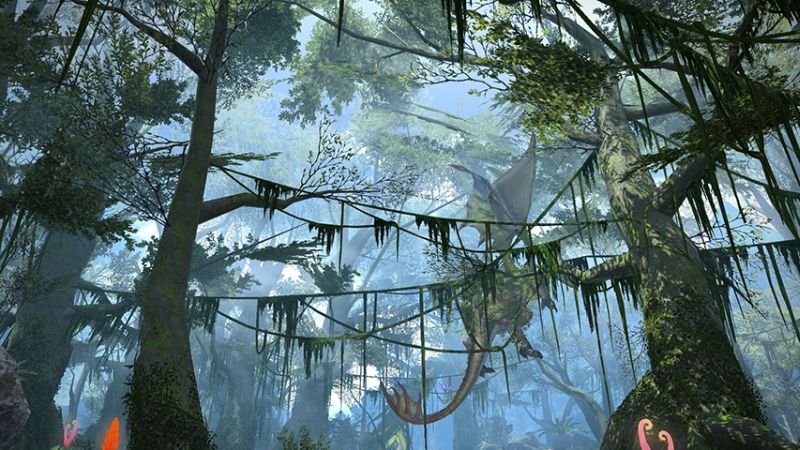
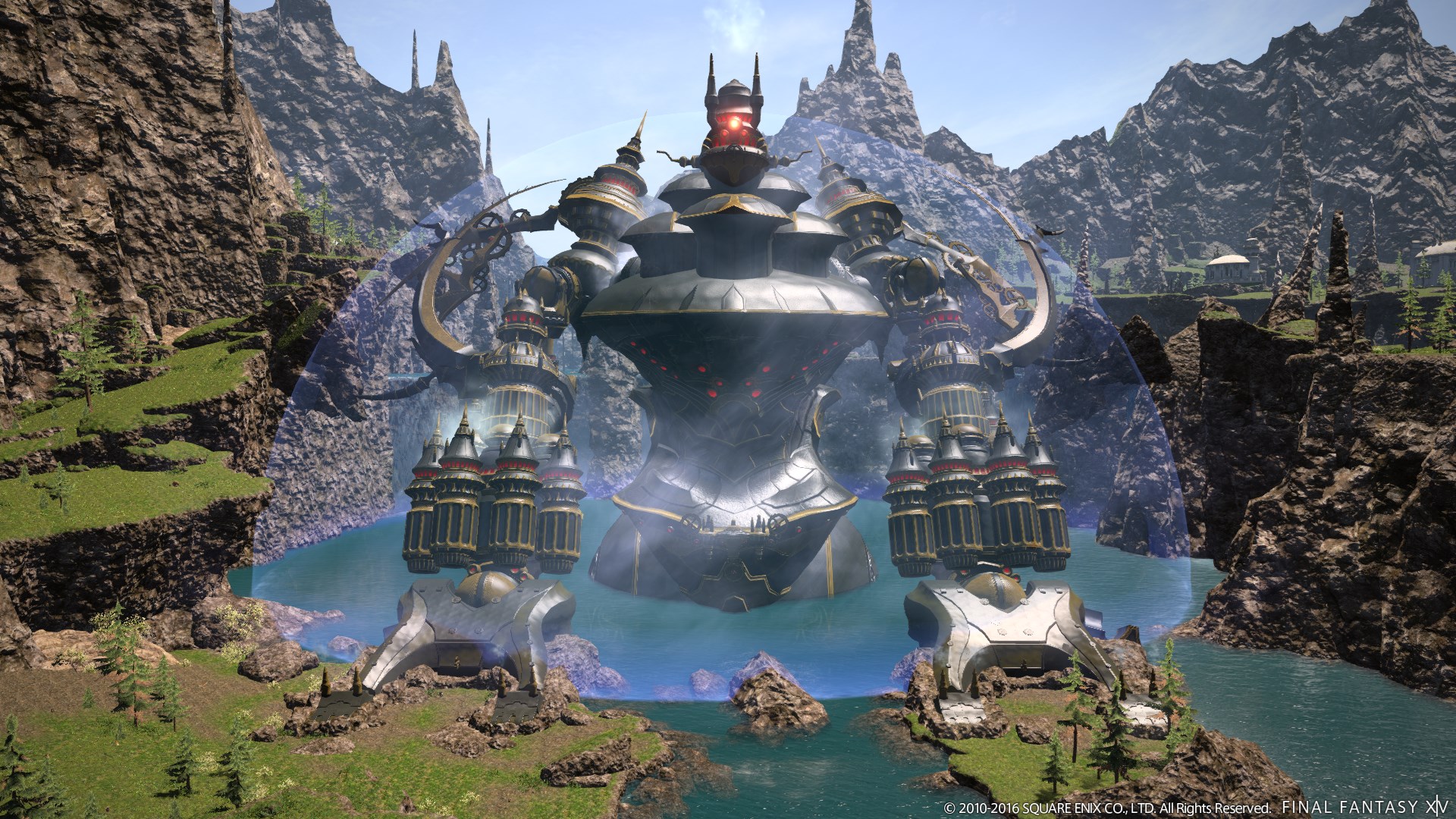
Mistwake is a level 100 dungeon introduced in patch 7.4 of Dawntrail and the final dungeon of the expansion’s content cycle. Set across caverns, lowlands, and the streets of Treno, its three encounters close out Dawntrail’s dungeon roster with a distinct mechanical identity for each fight. Treno Catoblepas introduces a persistent arena resource system — rocks that must be protected to keep a party wipe condition avoidable. Amdusias builds a fight around poison bubble management, where the boss’s own movement creates secondary hazards that chain into unavoidable explosions. Thundergust Griffin closes the dungeon with an escalating orb and tendril mechanic that introduces a moving vortex as an additional variable in its final phase.
The dungeon’s three encounters each ask players to manage the arena itself as a resource alongside the boss’s direct attacks. The rocks in the first fight are both shelter and a wipe-prevention requirement. The poison bubbles in the second fight are a passive threat that the boss actively converts into an active one. The lightning orbs in the third fight are fixed for most of the encounter but gain a mobile companion in the final phase that changes the geometry of every subsequent tendril resolution. Groups that treat the arena state as part of the fight rather than background noise will find Mistwake coherent and well-structured.
Looking for difficulty rankings? See the Dawntrail Dungeon Rankings.
Dungeon Objectives
- Traverse Quan Caverns
- Defeat the Treno Catoblepas
- Traverse the Treno lowlands
- Defeat Amdusias
- Traverse the streets of Treno
- Defeat the Thundergust Griffin
Walkthrough Highlights
Arena Resource Management
Treno Catoblepas introduces a mechanic type rare in dungeon content: a persistent arena element that degrades over the fight and must be actively preserved to prevent a wipe condition. The rocks around the arena are not decorative — they are the only cover against Bedeviling Light, and every lightning AoE that strikes one removes it permanently. Managing which rocks are exposed to lightning attacks and ensuring enough survive to provide cover for each Bedeviling Light cast is the fight’s defining challenge, sitting above any individual dodge requirement.
A Mobile Variable in a Fixed System
Thundergust Griffin’s Thundering Roar mechanic operates on a consistent logic throughout the fight — the boss and orbs project tendrils that mark line AoE coverage, and the gaps are safe. Storm Surge introduces a vortex that travels around the arena perimeter and acts as an additional orb in the final phase. The geometry of each Thundering Roar resolution changes depending on where the vortex currently is. Groups that understand the base mechanic cleanly before Storm Surge arrives will be able to account for the moving variable. Groups that are still reading the base mechanic reactively will find the addition of a mobile orb significantly more disorienting.
Need the unlock path? See All FFXIV Dungeon Unlock Requirements.
Boss Encounters
Note that failing any mechanics in these fights will result in the player who failed them receiving a 1 minute stacking Vulnerability Up debuff.
Treno Catoblepas
Key Mechanics
Earthquake — Unavoidable moderate physical damage to the entire party.
Thunder II — Small targeted lightning circle AoEs centered on each player, plus scattered random AoEs across the arena. Both sets can break the rock formations around the arena. Each broken rock is permanently removed.
Bedeviling Light — Arena-wide attack inflicting Stone Curse on all players not behind a surviving rock. Stone Curse prevents movement and actions and causes instant death if the player takes further damage. Always immediately followed by Earthquake, making Stone Curse lethal for anyone caught without cover.
Thunder III — Small circular magical tankbuster.
Ray of Lightning — Line stack marker on a random player. Also breaks any rocks along the line’s path.
Petribreath — The boss faces a random player and fires a late-telegraphed large cone AoE dealing damage and inflicting Stone Curse on anyone caught in it.
Strategy Notes
Rock preservation is the fight’s primary management challenge and runs parallel to every other mechanic throughout the encounter. Thunder II and Ray of Lightning both destroy rocks on contact — spread positioning during Thunder II should account for which rocks are nearby, and the stack position for Ray of Lightning should be chosen to minimize rock exposure along the line. Moving through or past rocks while dodging player-targeted circle AoEs can direct those AoEs away from rock positions.
Before each Bedeviling Light cast, identify which rocks are still standing and move behind one before the cast resolves. The subsequent Earthquake is unavoidable — Stone Curse into Earthquake is an instant kill. There is no recovery from being caught in the open. Treat each Bedeviling Light as a hard positional requirement and plan the preceding dodges with that endpoint in mind.
Petribreath targets a random player — the affected player must move out of the cone rather than staying still. Stone Curse from Petribreath leaves the player immobile and vulnerable to Earthquake damage, making it effectively lethal if not avoided. The cast is late-telegraphed, so begin moving laterally as soon as the boss faces your direction.
Failure Points
The most common wipe is rock depletion — too many rocks destroyed by Thunder II or Ray of Lightning across the fight, leaving insufficient cover for a Bedeviling Light cast. The second most common failure is being caught away from a rock when Bedeviling Light fires after a prior dodge displaced the player from their prepared shelter position.
Amdusias
Key Mechanics
Thunderclap Concerto (first and subsequent uses) — The boss positions at the arena center surrounded by seven lightning orbs, leaving either its front or rear open. The attack covers everywhere except a cone in the opening. Later uses are coupled with Thunder, placing targeted circle AoEs on each player that must be spread before the concerto resolves.
Bio II — Unavoidable arena-wide magical damage. Creates several poison bubbles around the arena.
Galloping Thunder — The boss telegraphs several sequential line AoEs then charges across the arena along those paths. Any poison bubbles the charge tramples turn red and explode as circle AoEs (Burst) after a short delay.
Thunder IV — Unavoidable partywide magical damage. Triggers all remaining poison bubbles to turn red and explode simultaneously.
Shockbolt — Single target magical tankbuster.
Thunder — Targeted circle AoEs on each player. Always coupled with Thunderclap Concerto after the first two solo uses of the concerto.
Thunder III — Stack marker dealing three successive hits of magical damage.
Strategy Notes
Galloping Thunder is the fight’s principal hazard chain. The boss’s charge path is telegraphed before it moves — identify the lines and stand clear of them. More importantly, note which poison bubbles are in the charge path, because those will turn red and detonate as circle AoEs after a short delay. Bubbles not in the charge path remain inert until Thunder IV converts all of them. After the charge resolves, move away from any red bubbles before they explode — they have a brief window between turning red and detonating.
For Thunder IV, all surviving poison bubbles convert to red and explode simultaneously. The fewer bubbles that survived to this point, the more manageable the explosion field. Players cannot directly control bubble placement, but Galloping Thunder’s charge naturally removes some — the Thunder IV explosion field is smaller after a charge that trampled multiple bubbles.
For Thunderclap Concerto, identify the open cone immediately when the boss begins positioning. The seven orbs leave one direction uncovered — move into that gap before the cast completes. In later uses combined with Thunder, spread away from other players first within the open cone zone, then hold position through the concerto resolution.
Failure Points
The most common failure is being caught by a red poison bubble explosion after Galloping Thunder, either from standing too close to a trampled bubble or not moving away quickly enough after it turns red. The second is misreading the open cone direction during Thunderclap Concerto and standing in the covered zone.
Survivor of Storms: Thundergust Griffin
Key Mechanics
Thunderspark — Unavoidable moderate partywide magical damage. The first cast also surrounds the arena with a persistent pool of lightning inflicting powerful Electrocution damage-over-time on contact.
High Volts — Targeted circle AoEs on each player plus three additional circle AoEs at random ground positions. After the attack resolves, the circle AoE locations become lightning orbs that persist on the arena.
Thundering Roar — The boss moves to the arena edge and gains Directional Disregard. Both the boss and the lightning orbs project tendrils toward each other, marking where line AoEs will appear and covering most of the arena. The boss then moves to another edge and repeats. The lightning orbs vanish after the second use.
Golden Talons — Single target physical tankbuster.
Fulgurous Fall — The boss moves to the arena edge and dashes across the center in a line, knocking back players outside the dash line. The knockback can be negated with immunity. After the first dash, four lightning orbs appear and the boss crashes down perpendicular to the initial dash. A single Thundering Roar from the center of the arena follows.
Storm Surge — The boss moves to the arena edge and casts a line AoE across the arena, creating a lightning vortex on the opposite side. The vortex travels around the arena perimeter and acts as an additional orb for the boss’s next two Thundering Roar casts. The vortex stops moving once Thundering Roar begins casting.
Thundering Roar (with vortex) — Identical to the standard use, but the traveling vortex is included as an additional tendril anchor point, changing the line AoE coverage pattern based on the vortex’s current position on the perimeter.
Strategy Notes
Thundering Roar is the fight’s central spatial mechanic. The tendrils between the boss and orbs mark AoE lines — the gaps between those lines are the safe zones. When the boss moves to a new edge and the tendrils redraw, the safe zones shift. Identify the current gap pattern before moving, then move into a safe position and hold until the cast resolves. The boss gains Directional Disregard at the arena edge — use the hitbox flank arrows rather than facing direction for positional reference.
For Fulgurous Fall, stand within the dash line to avoid the knockback, or use knockback immunity to hold position freely. After the perpendicular crash, the resulting four orbs establish the tendril anchors for the following Thundering Roar from center. Read the new orb positions immediately after the crash to identify safe zones before the cast begins.
Storm Surge is the fight’s escalating variable. After the line AoE creates the vortex, track its travel direction around the perimeter. When Thundering Roar begins casting, the vortex stops — its final position is the additional tendril anchor for that cast. Before Storm Surge fires, understand where the existing orbs are and which direction the vortex will travel, so that when Thundering Roar begins and the vortex stops, the full tendril pattern including the new anchor is immediately readable. Two consecutive Thundering Roar casts use the vortex as an anchor — the vortex position for each cast must be tracked separately.
Failure Points
The most common failure is misreading the tendril coverage during Thundering Roar and standing in a covered zone rather than a gap. The second is losing track of the vortex’s current position during Storm Surge and failing to account for it as a tendril anchor in the subsequent Thundering Roar, producing an incorrect safe zone read.
Difficulty Assessment
Mistwake sits at a moderate difficulty level for Dawntrail’s patch 7.4 content but carries genuine mechanical distinctiveness across all three encounters. The rock preservation system in the Treno Catoblepas fight is the most unusual persistent arena management mechanic in the expansion’s dungeon roster. Thundergust Griffin’s Storm Surge vortex is the tier’s clearest example of a fixed mechanic gaining a mobile variable in its final phase — a design pattern that rewards mastery of the base mechanic before the complexity escalates.
The dungeon emphasizes:
- persistent arena resource preservation to prevent a wipe condition (rock formations)
- secondary hazard chain management from trampled poison bubbles (Galloping Thunder)
- tendril line AoE gap reading across shifting orb and boss positions (Thundering Roar)
- mobile vortex tracking as an additional spatial variable in a fixed mechanic system (Storm Surge)
As the final dungeon of Dawntrail’s content cycle, Mistwake does not try to be the most mechanically complex entry in the roster. It closes the expansion with three encounters that each feel complete — coherent mechanical frameworks executed cleanly, with enough escalation to remain engaging without overreaching. It is a fitting end to a tier that consistently rewarded deliberate play and careful arena reading.
Previous Dungeon: The Meso Terminal
Guildmaster Notes
Mistwake is the last dungeon of Dawntrail, and it knows it. Not in the way Alexandria knows it — with the weight of a capstone, a finale, an ending that announces itself. Mistwake is quieter than that. The caverns, the lowlands, the streets of a city that remembers a different age. It is a place that has been here a long time and will be here long after.
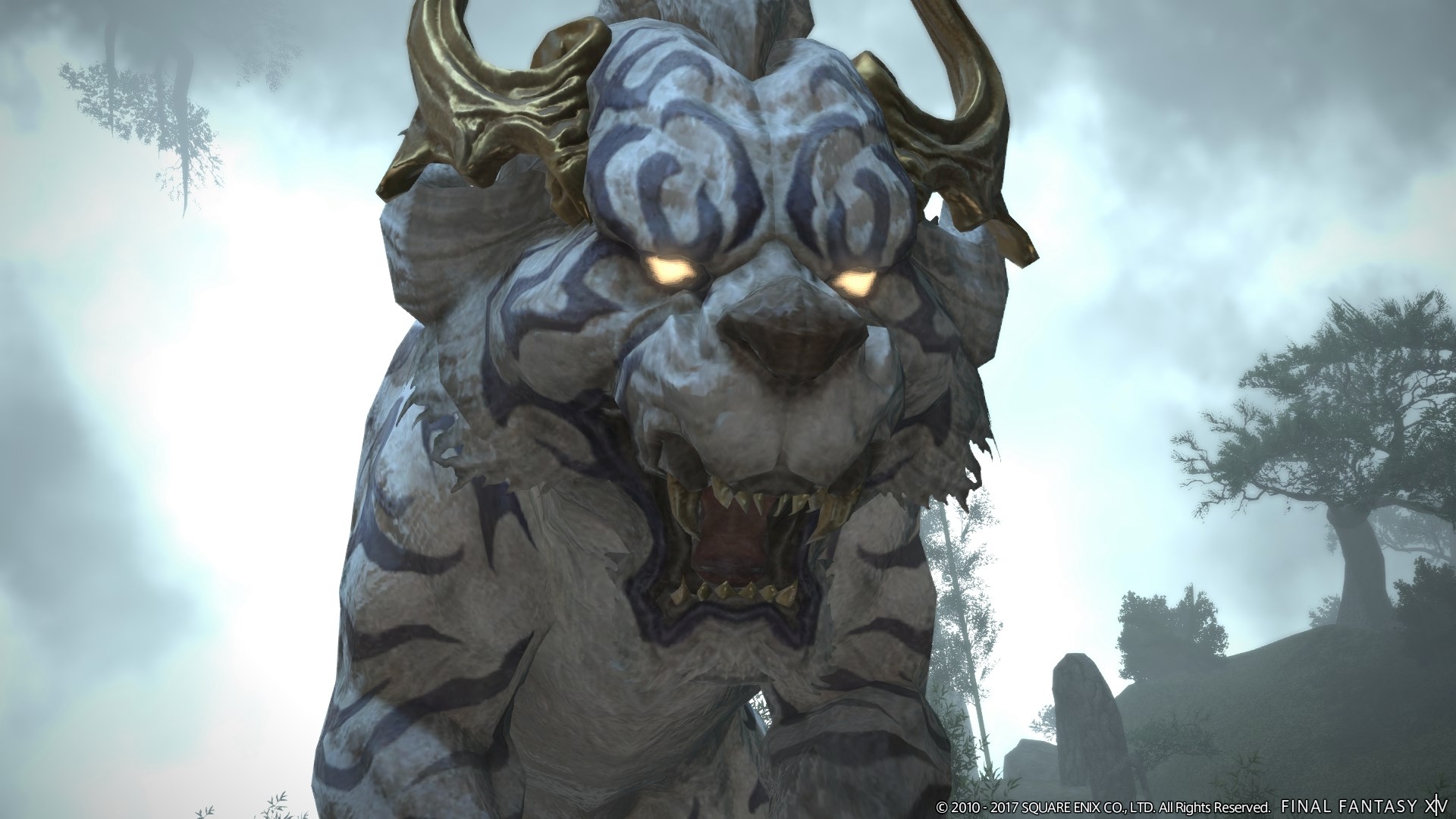
The Thundergust Griffin is the right final boss for a dungeon like this. It is not a machine or a construct or an experiment gone wrong. It is simply a creature that has survived everything the world has thrown at it and is still standing in a storm of its own making. Fighting it does not feel like defeating something. It feels like meeting something on its own terms.
Dawntrail ends here, in the mist, with lightning overhead and solid ground underfoot. That is enough. That has always been enough.