The Meso Terminal Dungeon Guide (FFXIV Dawntrail) – Boss Mechanics & Strategy
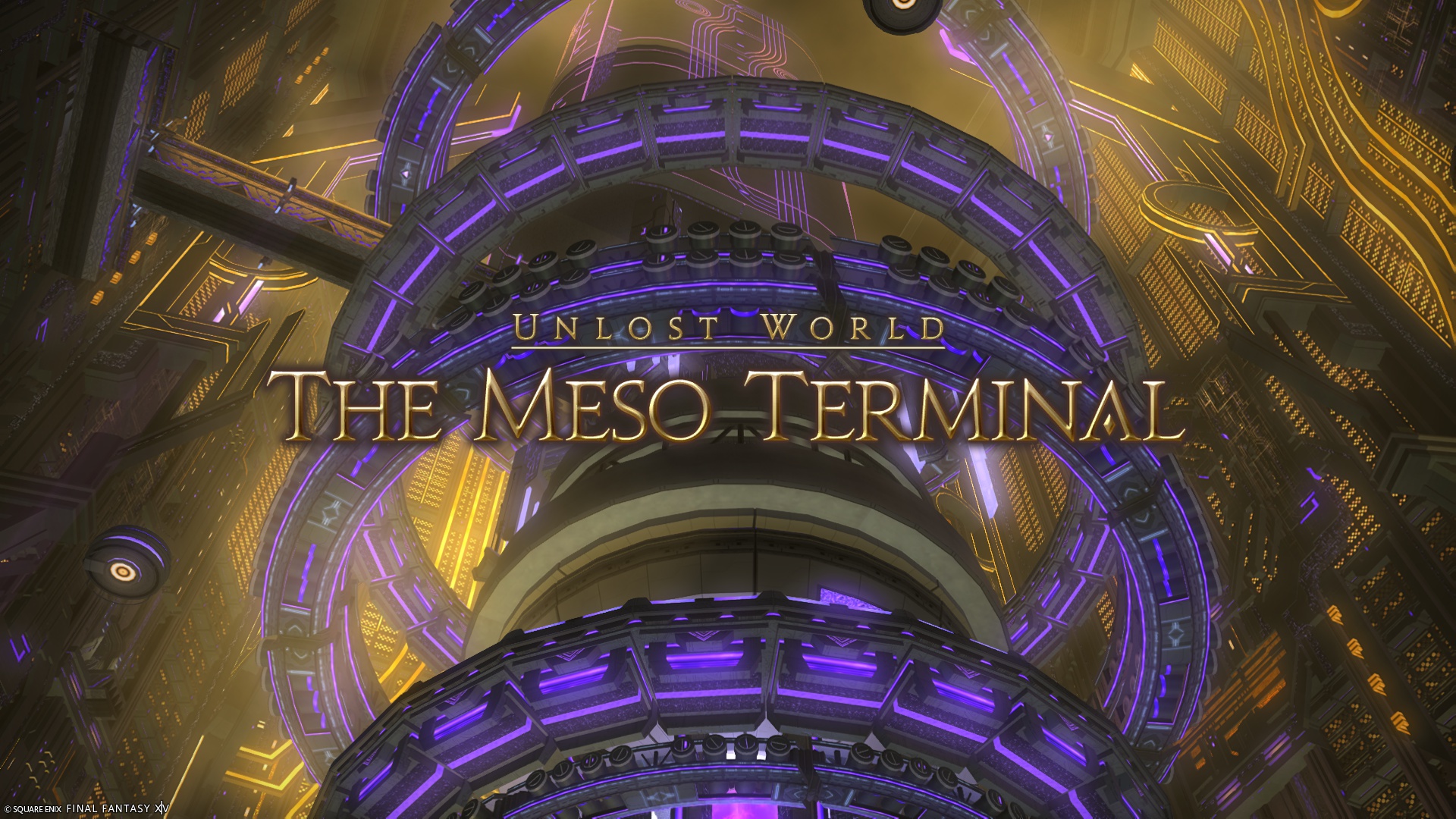
Duty Information
Expansion: Dawntrail
Encounter: The Meso Terminal
Players: 4 Players (1 Tank, 1 Healer, 2 DPS)
Duty Finder Type: Dungeon
Level: 100
Unlock Requirement: A Terminal Invitation
Common Failure Points
- Following the fake knockback telegraph during Sensory Deprivation and being knocked toward the arena edge instead of away from it.
- Forgetting the real circle AoE safe spots after they become blurred during the second Sensory Deprivation and standing in an unsafe location when they resolve.
- Attempting to leave the enclosure during Hooded Headsmen and repeatedly taking Vulnerability Up stacks from the boundary.
- Failing to cleanse Doom from Death Penalty in time during the healer duel, resulting in a death that opens the enclosure and forces a new duel.
- Leaving the Hellmaker add alive too long during the DPS duel and allowing the burn damage ticks to reach soft enrage levels.
- Not interrupting Will Breaker during the tank duel and taking the full damage hit with Physical Vulnerability Up into Relentless Torment.
- Standing on a tethered shade during the first Electray phase instead of an untethered one, and being hit by the first set of line AoEs.
- Misreading the shade trajectory patterns during Keraunography and standing in the path of a following wide line AoE.
Dungeon Overview
The Meso Terminal is a level 100 dungeon introduced in patch 7.3 of Dawntrail. Its three encounters each introduce a structural concept unusual for dungeon content. Chirurgeon General builds its difficulty around a hallucination mechanic that corrupts the player’s own UI indicators — fake telegraphs, blurred AoEs, and broken timers that require players to discard unreliable visual information and focus on what is real. Hooded Headsmen splits the party into four simultaneous solo duels, each with role-specific mechanics, making it one of the most unusual encounters in Dawntrail’s dungeon roster. The Immortal Remains closes the dungeon with a shade-based mechanic system that operates across three distinct arena phases, each introducing a different way the shades telegraph where AoEs will land.
The dungeon’s consistent theme is information filtering under pressure. Each encounter asks players to identify which information is reliable and act on it while discarding or surviving the unreliable information around it. Chirurgeon General makes the UI itself untrustworthy. Hooded Headsmen removes the ability to rely on other party members for support. The Immortal Remains uses visual proxies — shades — instead of standard AoE ground telegraphs, requiring players to read movement and position rather than floor markers.
Looking for difficulty rankings? See the Dawntrail Dungeon Rankings.
Dungeon Objectives
- Clear the lower circuits
- Defeat the Chirurgeon General
- Clear the central circuits
- Defeat the Hooded Headsmen
- Clear the upper circuits
- Defeat the Immortal Remains
Walkthrough Highlights
Discarding Corrupted Information
Chirurgeon General’s Sensory Deprivation mechanic is the dungeon’s clearest expression of its design principle. The game’s own telegraphs become unreliable — fake knockback indicators, blurred AoE shapes, broken timers. The correct response is not to guess which indicator is real but to identify the distinguishing feature of the real one and ignore everything else. In the first use, the real knockback has a distinct origin point. In the second, the circle AoE safe spots were already established before they were blurred — players who memorized them before Sensory Deprivation fires do not need to read the corrupted indicators at all.
Four Simultaneous Solo Encounters
Hooded Headsmen is structurally unlike any other fight in Dawntrail’s dungeons. Each player fights their assigned enemy alone, within a boundary they cannot leave without penalty, using mechanics tuned to their role. The outcome of each duel affects the others — a player who dies releases their enemy to roam freely and potentially force new duels. Each player’s priority is to win their own fight cleanly and quickly, then assist others. Treating it as four independent encounters that happen to share a room is the correct mental model.
Need the unlock path? See All FFXIV Dungeon Unlock Requirements.
Boss Encounters
Note that failing any mechanics in these fights will result in the player who failed them receiving a 1 minute stacking Vulnerability Up debuff.
Chirurgeon General
Key Mechanics
Medicine Field — Partywide magical damage. Also spawns a dangerous AoE at the arena edge.
Dispenser activation — The four intercardinal dispensers activate. Two spawn large circle AoE telegraphs; two spawn smaller ones. Safe spaces are near the small AoEs. A small green knockback telegraph simultaneously appears to the east or west (Pungent Aerosol), resolving when its overhead timer expires and dealing minor magical damage. The circle AoEs resolve after the knockback, giving players who took the push time to adjust into a safe spot.
Biochemical Front — Telegraphed frontal cleave.
Sensory Deprivation (first use) — Partywide magical damage. Applies Insensible to all players, causing hallucinated mechanic indicators. A fake knockback telegraph appears opposite the real one. Overhead timers become broken and unreliable but still appear approximately 5 seconds before a mechanic resolves. The party must identify and track only the real knockback telegraph.
Concentrated Dose — Telegraphed magical tankbuster. Inflicts a 15-second cleansable Poison.
Sensory Deprivation (second use) — Four circle AoE telegraphs and one knockback spawn, then Sensory Deprivation fires. The circle AoEs become blurred and appear to cover the entire arena. A fake knockback telegraph also appears. Players must remember the real circle AoE safe spots from before the blur and the real knockback origin. Either the circle AoEs or the knockback resolves first depending on where the overhead timer appears.
Strategy Notes
The core habit of this fight is memorizing information before Sensory Deprivation corrupts it. For the first use, the knockback telegraphs appear before the hallucination — note the real knockback’s origin point before the fake one appears. The real and fake knockbacks are on opposite sides; identify which side you want to be pushed away from and use that to confirm which telegraph is genuine.
For the second use, the critical window is between the circle AoE telegraphs spawning and Sensory Deprivation firing. When the four circle AoEs and the knockback appear, immediately note the safe spots near the small AoEs and the real knockback origin before the blur applies. Once Sensory Deprivation fires, the blurred AoEs are visually useless — rely entirely on what you memorized. Check the overhead timer location to determine whether the knockback or the circle AoEs resolve first, and handle them in that order using your pre-Deprivation knowledge.
Knockback immune actions remove the knockback variable entirely for both uses, allowing full focus on the circle AoE safe spots. Healers should cleanse the Poison from Concentrated Dose promptly — it applies before the second Sensory Deprivation sequence and sustained Poison damage into that mechanic increases the risk of death.
Failure Points
The most common failure is reacting to the fake knockback telegraph during Sensory Deprivation and being pushed toward the arena edge. The second is failing to memorize the circle AoE safe spots before they blur in the second use and being unable to identify them after Sensory Deprivation fires.
Hooded Headsmen
Key Mechanics
Lawless Pursuit — Each headsman immediately tethers a different player on pull, assigning role-based debuffs. Healers are assigned to the Bloody Headsman (Cell Block α), tanks to the Pale Headsman (Cell Block β), and each DPS to the Ravenous or Pestilent Headsman (Cell Block γ or δ). Players can only damage their assigned enemy.
Shackles of Fate — Each enemy stuns its target and pulls them into a small circular enclosure. Players cannot leave until their opponent is defeated — attempting to exit deals damage, applies a Vulnerability Up stack, and pulls the player back inside.
Dismemberment — Two blades spawn at the edge of each circle leaving gaps, followed by another set at the opposite end. These indicate late-telegraphed line AoEs confined within each enclosure. Dodge through the gaps.
Peal of Judgment — Electrified knives travel through each circle leaving gaps. Being hit inflicts 15-second cleansable Paralysis.
Chopping Block / Execution Wheel — Each enemy uses a telegraphed point-blank AoE (Chopping Block) or donut AoE (Execution Wheel).
Flaying Flail — Three spiked balls spawn above each circle and drop as late-telegraphed small circle AoEs.
Role-specific mechanics:
Death Penalty (healer) — Inflicts a 10-second cleansable Doom. Must be cleansed before expiration or the healer dies.
Will Breaker (tank) — Long cast that must be interrupted to prevent heavy damage and Physical Vulnerability Up. Followed by Relentless Torment, a physical tankbuster.
Hellmaker (DPS) — The floor inflicts persistent Burns damage-over-time, removable by destroying the Hellmaker add. The Headsman continues using Peal of Judgment and Flaying Flail during this. If the Hellmaker survives too long, burn ticks increase significantly toward a soft enrage.
Serial Torture — Combined Dismemberment and Flaying Flail sequence. Resolution order: first set of line AoEs, then spiked ball circle AoEs, then second set of line AoEs, then Chopping Block or Execution Wheel from the headsman.
Head-splitting Roar — Partywide magical damage once enclosures begin opening.
Strategy Notes
Each player’s primary objective is to win their individual duel cleanly and quickly. The general mechanics — Dismemberment, Peal of Judgment, Flaying Flail — are consistent across all four enclosures and follow the same dodge principles: identify the gaps in each set and move through them. Serial Torture requires tracking all four components in order without losing position between transitions.
The role-specific mechanics are the highest-risk moments in each duel. Healers must cleanse Doom from Death Penalty immediately — 10 seconds is sufficient time if the cleanse is not delayed, but a slow reaction or prior debuff complications can make the window dangerously short. Tanks must interrupt Will Breaker without fail — the Physical Vulnerability Up that follows if the cast completes makes Relentless Torment potentially lethal. Use an interrupt ability the moment the cast bar appears. DPS players must switch to the Hellmaker add immediately on spawn and destroy it before the burn damage escalates. Continuing to attack the headsman while the Hellmaker is alive is the most common source of soft enrage pressure in this encounter.
Once a player’s enclosure disappears after defeating their headsman, they should immediately assess which active enclosures have the most need of assistance and enter them to assist. Players who die release their headsman to wander freely — any free or resurrected player will be tethered by it and forced into a new duel.
Failure Points
The most common failures are role-specific: healers failing to cleanse Doom in time, tanks failing to interrupt Will Breaker, and DPS players not prioritizing the Hellmaker add promptly enough. At the party level, the most disruptive outcome is a player death that frees a headsman and forces a second duel, extending the fight and compounding pressure on the remaining active duels.
Memory Meld: The Immortal Remains
Key Mechanics
Recollection — Partywide magical damage.
Memento (first phase) / Electray — The arena transitions. Bygone Aerostats spawn at the south and west and tether shades, indicating two sets of crisscrossing line AoEs. Stand on an untethered shade to avoid the first set. After the first set fires and kills the tethered shades, move to a previously tethered shade’s location to avoid the second set.
Memory of the Storm — Line stack AoE marker on a random player dealing magical damage.
Memento (second phase) — The arena transitions again. Shades appear in groups of five and as isolated singles. A large late-telegraphed circle AoE hits each group of five; a small late-telegraphed circle AoE hits each single shade. Move to the opposite part of the arena from the groups of five. The boss then winds up one arm, indicating a half-room cleave with no ground indicator — read the arm animation to determine which half is safe.
Impression — More shades appear in groups of five or as singles. The boss uses a telegraphed blue knockback circle. Position to be knocked toward a corner containing a single shade, or use knockback immune. Resolve the shade AoEs from the landing position.
Memory of the Pyre — Telegraphed magical tankbuster.
Memento (third phase) / Keraunography — The arena transitions for the final time. Six shades spawn near the north and run toward a convergence point. Two wide late-telegraphed line AoEs follow the shades’ trajectories. The pattern is always a straight line (east-west or north-south) paired with a diagonal line intersecting at the far end. Move to a side of the arena clear of both trajectory paths before the lines fire. This is used again immediately, then followed by the crisscrossing line AoEs from the first phase. The boss then summons two groups of three shades on opposite corners — each group runs toward two locations, followed by line AoEs.
Strategy Notes
The Immortal Remains uses shades as AoE proxies throughout all three phases. The consistent principle is that shades indicate where danger will be — not where safety is. In the first phase, tethered shades mark the line AoE paths; untethered shades are safe for the first set, then the tethered shade locations become safe after they are destroyed. In the second phase, groups of five mark large circle AoE zones; singles mark small ones — both are dangerous, and the opposite side of the arena from the large groups is the safest starting position.
For the half-room cleave in the second phase, there is no ground telegraph — read the arm wind-up animation. The arm that begins glowing or extending marks the cleave side. Move to the opposite half before the animation completes.
For Impression, identify which corners contain a single shade before the knockback fires and angle toward one of them. The knockback pushes players toward the arena edge — a corner with a single shade has a small AoE but significantly more safe space than a corner with a group of five.
For the third phase Keraunography, trace the shade trajectories before the line AoEs appear. The two-line pattern — one straight, one diagonal — always intersects at the far end of the straight line. Identify the side of the arena that neither trajectory crosses and move there. After the second Keraunography and the returning crisscross line AoEs, the two corner shade groups require reading both sets of trajectories simultaneously before the final line AoEs fire.
Failure Points
The most common failure is standing on a tethered shade during the first Electray phase and being hit by the first line AoE set. The second is misreading the shade running trajectories during Keraunography and moving into a line AoE path rather than away from it.
Difficulty Assessment
The Meso Terminal is among the more demanding dungeons in Dawntrail’s patch 7.3 content, with its difficulty distributed unusually across all three encounters. Chirurgeon General is harder on first exposure than its position in the dungeon suggests — the corrupted UI mechanic is disorienting in a way that pure geometric AoE complexity is not. Hooded Headsmen’s difficulty is entirely role-dependent, with the healer and tank duels carrying the highest individual failure risk. The Immortal Remains is mechanically dense across all three phases and requires consistent shade-reading under an arena that changes three times.
The dungeon emphasizes:
- pre-memorization of mechanic information before UI corruption applies (Sensory Deprivation)
- role-specific individual execution under isolated duel conditions (Hooded Headsmen)
- shade-based AoE proxy reading across three distinct arena phases (The Immortal Remains)
- arm animation reading for an untelegraphed half-room cleave (Impression phase)
Groups that communicate on the Sensory Deprivation safe spots before the blur applies, and approach Hooded Headsmen with clear role-specific priorities, will find the dungeon challenging but well-structured. The Immortal Remains rewards players who treat the shades as the primary information source rather than waiting for ground telegraphs that do not always appear.
Previous Dungeon: The Underkeep | Next Dungeon: Mistwake
Guildmaster Notes
The Meso Terminal is a place built around the gap between what is remembered and what is real. The shades in the final fight are not enemies. They are recordings — impressions of people who are no longer there, replaying the moments the Immortal Remains has held onto. Fighting through them does not feel like combat. It feels like interrupting a grief that has gone on too long.
Hooded Headsmen is the dungeon’s most structurally unusual fight, but it is also its most honest. Four players, four rooms, four separate problems. No one can carry you through it. Whatever your role asks of you, that is what is required — no more, no less. There is something clarifying about a fight that gives each player exactly one responsibility and asks them to meet it.
When the Immortal Remains finally falls, the memories do not disappear. They just stop moving. The terminal is quiet. Whatever was being preserved here, the preservation is over.