Castrum Abania Dungeon Guide (FFXIV Stormblood) – Boss Mechanics & Strategy
Duty Information
Expansion: Stormblood
Encounter: Castrum Abania
Players: 4 Players (1 Tank, 1 Healer, 2 DPS)
Duty Finder Type: Dungeon
Level: 69
Unlock Requirement: The Price of Freedom
Common Failure Points
- Firing the commandeered cannon at Magna Roader while it is still in motion during Wild Speed, wasting the shot and allowing the rush pattern to continue indefinitely.
- Failing to soak both towers during Subject Number XXIV’s Thunder Discrete Magick, triggering Electrify for high partywide damage.
- Misreading the element after Elemental Overload and preparing for the wrong set of Serial Magicks mechanics.
- Allowing a 12th Legion Death Claw tether to reach its target during the Inferno add phase, incapacitating the player.
- Failing to kill the 12th Legion Packer before it completes Quick Charge, causing Inferno to immediately upgrade his arm empowerment ahead of schedule.
Dungeon Overview
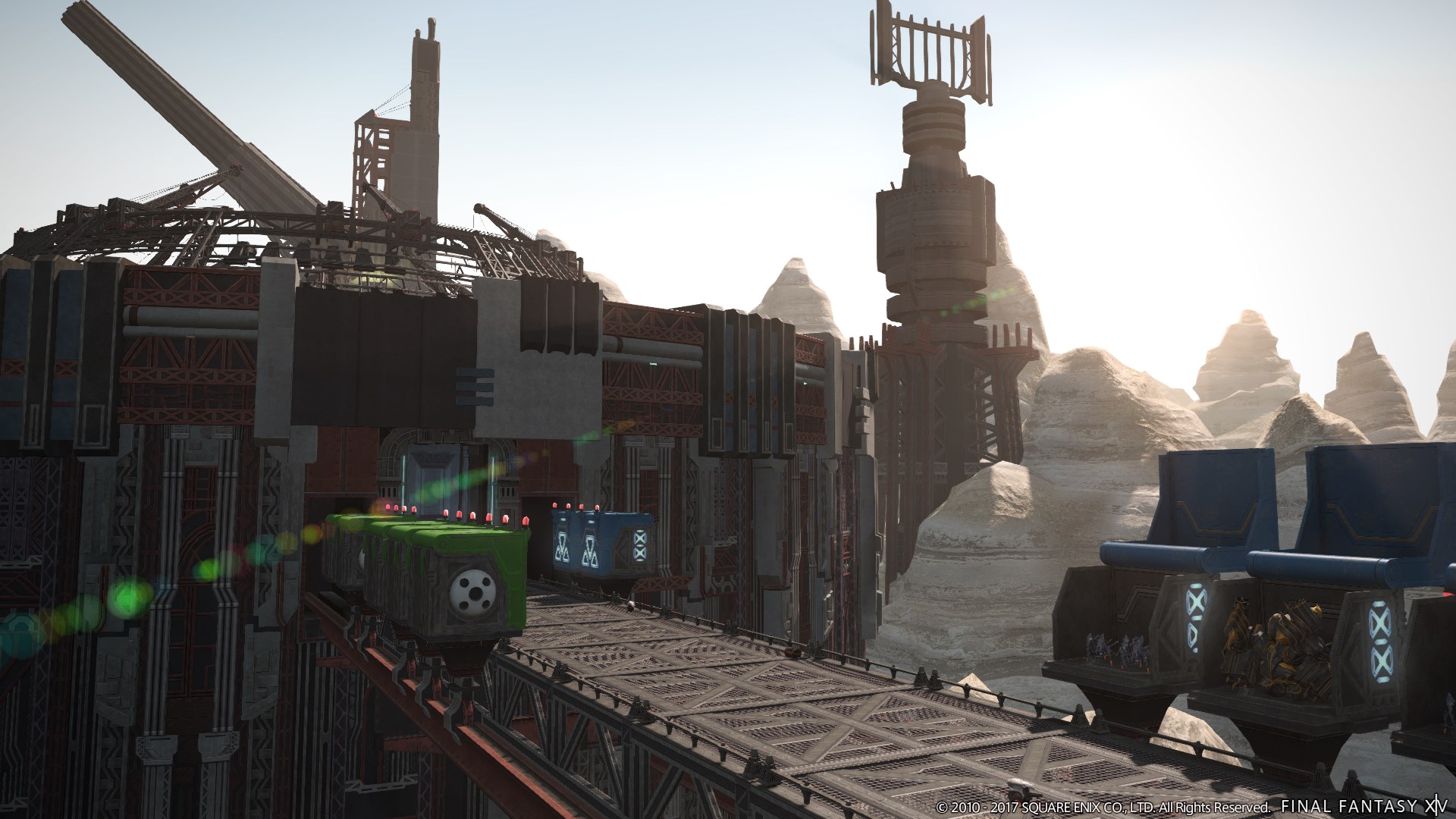
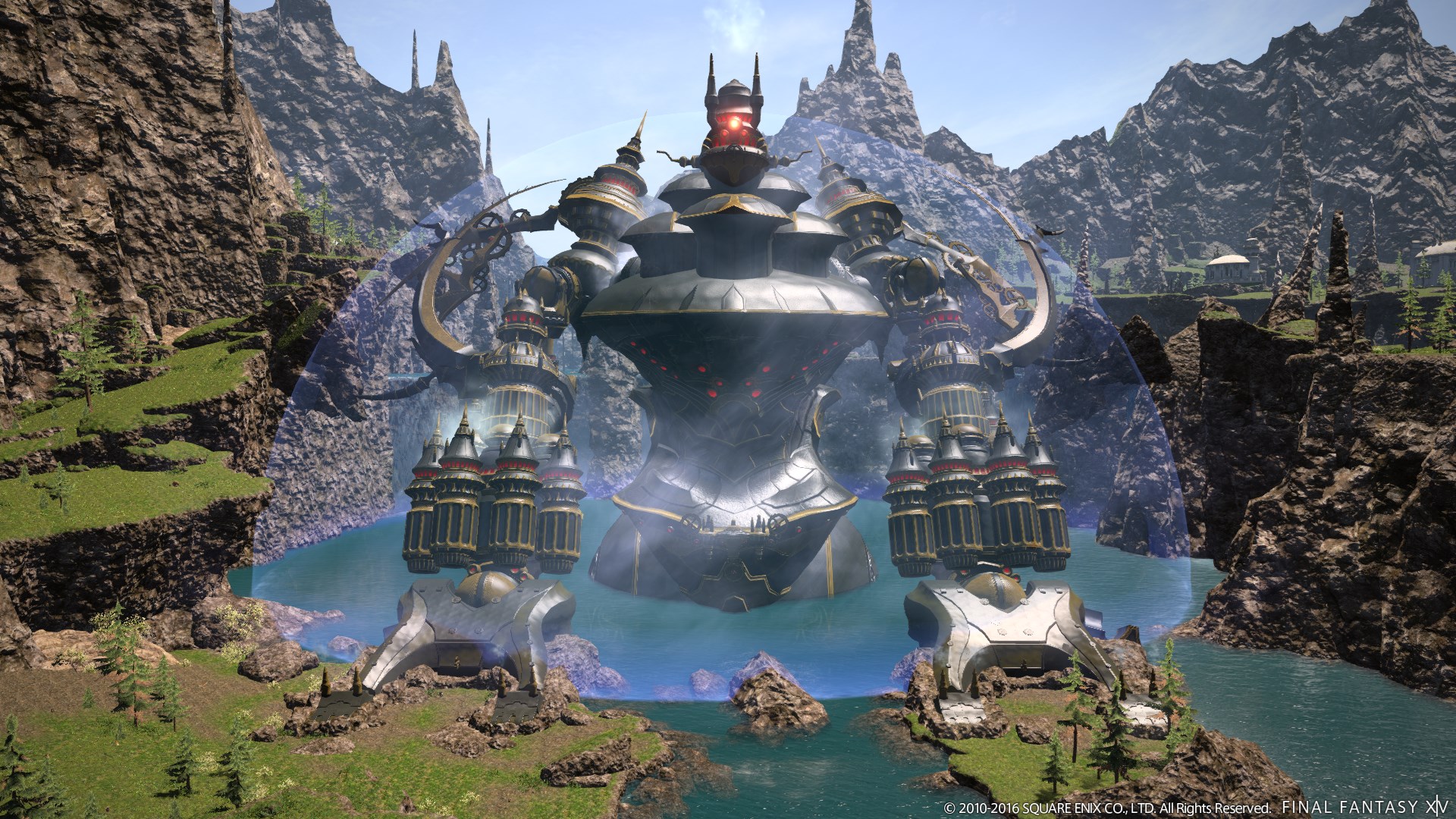
Castrum Abania is a level 69 dungeon introduced in Patch 4.0 with Stormblood, serving as the penultimate story dungeon of the expansion. The dungeon takes place within a heavily fortified Garlean military installation in Ala Mhigo, and the three boss encounters reflect that setting — a hulking magitek war machine, a hypertunement experiment pushed past its limits, and a primal-empowered fighter augmented by the same technology players have spent the dungeon dismantling. The bosses were significantly overhauled in Patch 6.4 alongside the implementation of Duty Support, and the versions described in this guide reflect those updated encounters.
Magna Roader opens the run with an interactive mechanic that requires the party to defeat adds, commandeer arena cannons, and use them to interrupt the boss’s Wild Speed rush pattern. Subject Number XXIV is the dungeon’s most mechanically layered encounter — an elemental rotation fight that signals its upcoming attack set through an aspected partywide hit, then fires off two sequential Discrete Magick casts before resolving into a more demanding Serial Magicks sequence. Reading the element correctly after each Elemental Overload is the entire skill check of this fight. Inferno closes the dungeon with a progressive empowerment structure that places hard priority on add management: every Packer that completes its cast accelerates the fight’s escalation, and Death Claw tethers that reach their targets create incapacitation states that compound badly at an already pressured point in the encounter.
Castrum Abania is the most mechanically demanding dungeon in Stormblood’s main scenario tier, and it earns that distinction through the breadth of what it asks rather than any single punishing moment. Subject Number XXIV’s elemental flexibility means the party must be fluent in three distinct mechanic sets, and Inferno’s add phase introduces the kind of multi-target prioritisation that requires clear communication under time pressure. Groups arriving here from Doma Castle will find the difficulty step notable but manageable with preparation. Need the unlock path? See All FFXIV Dungeon Unlock Requirements.
Duty Support
- Resistance Fighter — Gladiator — Tank
- Alphinaud — Academician — Healer
- Alisaie — Red Mage — DPS
- Resistance Pikedancer — Pikedancer — DPS
Dungeon Objectives
- Clear the storage compound
- Dismantle the Magna Roader
- Clear the testing compound
- Defeat Subject Number XXIV
- Clear the central compound
- Defeat Inferno
Boss Encounters
Magna Roader
Key Mechanics
- Wheel — Tankbuster. Standard mitigation and healing applies.
- Magitek Fire II — Targeted circle AoE on a random player. Move out of the telegraph.
- Magitek Fire III — Partywide AoE damage. Healers top up the party before and after.
- Wild Speed — Magna Roader rushes across the arena in line patterns and becomes invulnerable to direct damage while in motion. Two 12th Legion Optio adds spawn and activate side cannons, bombarding random players with avoidable AoEs. Killing the adds allows a player to commandeer a cannon and fire it at Magna Roader. A successful cannon hit disrupts Wild Speed and ends the phase. Magna Roader must be stationary when fired upon — it cannot be hit while moving.
Strategy Notes
The Magna Roader fight is defined entirely by the Wild Speed phase and how efficiently the party resolves it. Outside of that phase, the encounter is a clean tank-and-spank rotation — Wheel is a standard tankbuster requiring only mitigation and a heal, Magitek Fire II places a predictable circle AoE on a player that is trivially sidestepped, and Magitek Fire III is a manageable partywide hit that healers should anticipate. None of these demand anything beyond baseline attentiveness, and the bulk of the party’s focus should be saved for reading Wild Speed correctly.
When Wild Speed begins, Magna Roader starts rushing across the arena in line patterns and becomes completely invulnerable. Simultaneously, two 12th Legion Optio adds spawn at the sides of the arena and activate the flanking cannons, which begin bombarding random players with avoidable AoEs. The party should dispatch both adds as quickly as possible — their cannon AoEs are disruptive and will continue for as long as the adds are alive. Once an Optio is killed, a player can interact with its cannon and commandeer it, gaining access to a single-use ability to fire on Magna Roader.
The critical rule is timing: Magna Roader cannot be hit by a cannon shot while it is in motion. The rush pattern has visible pause points where the boss stops briefly between charges — that pause window is when the cannon must be fired. Firing during movement wastes the shot and forces the party to wait for another opportunity while Wild Speed continues indefinitely. Watch the boss’s movement pattern, identify the pause, and fire during the stationary window. A clean hit disrupts the phase immediately and allows damage to resume. One successful shot is enough to end Wild Speed, so only one cannon needs to connect.
Failure Points
Wild Speed that runs longer than it should almost always comes down to a mistimed cannon shot fired at a moving Magna Roader. The invulnerability window is absolute — the shot simply does nothing — and with the adds already dead and the arena still being bombarded by their residual AoEs, a wasted shot creates genuine pressure to hold position safely until the boss pauses again. The fix is patience: wait for the stop, then fire. There is no benefit to shooting early.
Groups that are slow to kill the Optio adds will find the cannon AoE bombardment accumulating into a meaningful healing burden over the course of a long Wild Speed phase. The adds are not high-priority targets in the sense that they do not hit hard on their own, but every second they remain alive extends the environmental hazard. Kill them promptly, commandeer the cannon, and hold the shot for the next pause window. The sequence is clean when executed in order.
Subject Number XXIV
Key Mechanics
- Elemental Overload — Partywide AoE damage aspected to fire, ice, or thunder. The element determines all subsequent mechanics until the next Overload. After the full elemental set resolves, the boss becomes staggered and receives Vulnerability Up — use damage cooldowns during this window.
- Fire — Discrete Magick — Three telegraphed 120-degree conal AoEs fired in sequence, followed by a stack marker on a random player (Fire II). Move out of the cones, then stack for the marker.
- Fire — Serial Magicks — Two full sets of three conal AoEs, with a stack marker on a random player resolving alongside them. Navigate both cone sets and stack before the marker detonates.
- Ice — Discrete Magick — Crisscrossing line AoEs covering the arena, followed by a telegraphed circular AoE on each player (Blizzard II). Dodge the line grid, then spread to avoid overlapping the personal circles.
- Ice — Serial Magicks — Two sets of crisscrossing line AoEs fired immediately back to back, followed immediately by personal circular AoEs on each player. Navigate two successive line patterns before spreading for the circles.
- Thunder — Discrete Magick — Two towers spawn opposite each other (Thunder II); one player must soak each tower. Unsoaked towers explode as Electrify for high partywide damage. Followed by a telegraphed line AoE on each player (Sparking Current).
- Thunder — Serial Magicks — Two sets of opposite towers spawn in sequence alongside telegraphed personal line AoEs on each player. Soak both tower sets while managing the spread of personal lines.
Strategy Notes
Subject Number XXIV is an elemental rotation fight, and the single most important skill it tests is reading the element signalled by each Elemental Overload cast. The Overload hits the party for partywide damage and immediately tells the group which mechanic set is coming — fire, ice, or thunder. Every subsequent cast until the next Overload will follow that element’s pattern. Groups that identify the element quickly can prepare their positioning before the first Discrete Magick resolves; groups that miss it will react late to every cast in the sequence.
The fire element set revolves around conal AoE management. The three cones from Discrete Magick are each 120 degrees, covering the arena in thirds — identifying the safe gap between them and moving into it is the primary movement demand. The follow-up Fire II stack marker requires the party to converge immediately after the cones resolve, so the safe gap should be chosen with the incoming stack in mind. In the Serial Magicks version, two full cone sets fire back to back before the stack marker lands, which means the party must navigate the first set, reposition for the second, and then stack before the marker detonates — the timing is tighter but the individual mechanics are identical.
The ice element set operates on a different spatial logic. Discrete Magick lays a crisscrossing grid of line AoEs across the arena, requiring the party to find the open cells in the grid and hold position. This is immediately followed by personal circular AoEs on each player, which means everyone must then spread out of their grid cell into adjacent clear space without stepping into an active line. The Serial Magicks version fires two consecutive line grids before the personal circles, giving the party no pause between the first and second grid — move to a new open cell the moment the first set resolves and hold for the circles.
The thunder element set introduces the fight’s hardest check. Discrete Magick spawns two towers on opposite sides of the arena, each requiring exactly one player to stand inside it. With four players and two towers, two players take the towers and two spread for the follow-up personal line AoEs from Sparking Current. In the Serial Magicks version, two successive pairs of towers appear alongside the personal lines simultaneously — the party must soak both tower sets in sequence while ensuring the personal line AoEs are spread in directions that do not cross into the towers or allies. An unsoaked tower detonates as Electrify, dealing heavy partywide damage. Assign tower responsibilities clearly on a thunder Overload, and execute without hesitation.
After each complete elemental sequence, Subject Number XXIV staggers and gains Vulnerability Up. This window is the primary damage opportunity in the fight — deploy damage cooldowns here and push as much output as possible before the next Elemental Overload begins the cycle again.
Failure Points
Unsoaked thunder towers are the most punishing single failure in this encounter. Electrify is high partywide damage that arrives on top of the fight’s existing healing load, and if two towers are missed simultaneously the combined hit is potentially catastrophic. Tower assignments should be decided the moment a thunder Overload is identified — before the first Discrete Magick fires — and both designated soakers should move immediately. Hesitation and assumed coverage are the two most common causes of missed towers.
The ice Serial Magicks sequence causes the most deaths among players who have not internalised that the personal circles fire immediately after the second line grid with no buffer. Players who are still repositioning after the second grid will find the circles detonating under their feet before they have spread. The correct response is to treat the two line grids as a single unbroken movement problem and arrive in a spread position before the second grid resolves, not after. Reacting to the circles as they appear is too late.
Inferno
Key Mechanics
- Ketu Slash — Tankbuster. Apply mitigation and heal through as needed.
- Rahu Blaster — Targeted column AoE on a random player. Move out of the telegraph.
- Ketu & Rahu — A ground-targeted AoE and a player-targeted AoE resolve simultaneously. Dodge the ground marker and move out of the player AoE.
- Roids — Inferno moves to the back of the arena and receives an arm empowerment from the magitek device. Occurs periodically throughout the fight, with effects that escalate on subsequent uses.
- Empowered Ketu (1st) — Adds a Bleeding debuff to the tank after Ketu Slash.
- Empowered Ketu (2nd) — Adds Vulnerability Up to the tank in addition to Bleeding.
- Empowered Rahu (1st) — Adds a multi-column room-wide AoE and a proximity AoE to Rahu Blaster.
- Empowered Rahu (2nd) — Adds two additional player-targeted AoEs alongside the room-wide and proximity effects.
- Legion Adds — Two 12th Legion Death Claws and one 12th Legion Packer spawn. Each Death Claw tethers to a random player and pursues them — if a Death Claw reaches its tethered target, it incapacitates them. The Packer moves toward the back of the arena and attempts to cast Quick Charge on the magitek device. A successful Quick Charge immediately advances Inferno’s arm empowerment ahead of schedule.
Strategy Notes
Inferno is a progressive fight structured around arm empowerment cycles. Every time Inferno reaches the back of the arena for Roids, his subsequent attacks become more dangerous — the tankbuster gains a persistent bleed and then a Vulnerability Up stack, and the column AoE expands into a room-wide pattern with additional player-targeted hits. The fight is designed to escalate, and that escalation is manageable as long as the Legion Add phase does not accelerate it ahead of its natural pace.
The base rotation — Ketu Slash for the tank, Rahu Blaster for the targeted column dodge, and Ketu & Rahu for the combined ground-and-player AoE — is readable throughout the encounter. The ground marker component of Ketu & Rahu requires the party to identify its position and avoid it while simultaneously moving out of the player-targeted AoE, but neither demand is difficult when the arena is clear. The Rahu Blaster column is narrow and well-telegraphed; a lateral step is sufficient.
The Roids empowerment sequence changes what the tank and healer need to account for. The first Empowered Ketu adds a Bleeding debuff after the tankbuster — healers should anticipate sustained tick damage rather than a single burst and keep the tank topped through the bleed duration. The second adds Vulnerability Up on top of the bleed, making subsequent tankbusters significantly more dangerous. Tank cooldown management becomes critical from the second empowerment onward, and healers should treat every Ketu Slash in the late fight as a high-priority burst heal. The Empowered Rahu escalation meanwhile requires the party to read a multi-column room pattern and a proximity AoE simultaneously — stay away from the boss for the proximity component while identifying which columns are safe in the expanded AoE.
The Legion Add phase introduces the fight’s most demanding priority decision. Two Death Claws spawn and immediately tether to random players, relentlessly pursuing them. Each tethered player must keep distance from their Death Claw — being reached means incapacitation, which removes that player from mechanics and healing for the remainder of the phase. Simultaneously, the Packer spawns and begins its slow walk toward the magitek device at the back of the arena. If the Packer completes Quick Charge, Inferno’s arm empowerment jumps forward immediately, bringing harder mechanics earlier than intended. The correct priority is to kill the Packer first. Its cast is not instant — there is a window to bring it down before Quick Charge resolves — but it requires dedicated damage from players who are simultaneously managing their Death Claw tethers. Tethered players should kite their Death Claws in wide arcs away from the Packer’s path while untethered players or those with more movement freedom focus the Packer down. Once the Packer is dead, the party can converge on the Death Claws and clear them before Inferno returns from the back of the arena.
Failure Points
A Packer that completes Quick Charge is the most consequential failure in this encounter. The immediate empowerment jump brings Inferno’s late-fight attack patterns forward at a point when the party is already managing tether kiting and add positioning — suddenly facing second-tier Empowered Rahu patterns in the middle of the add phase rather than after it creates a compound pressure situation that many groups cannot recover from cleanly. Kill the Packer. Everything else in the add phase is manageable; a completed Quick Charge is not.
Death Claw tether incapacitation is the other consistent add-phase failure. Players who kite poorly — cutting corners, reversing toward the Death Claw, or losing track of their tether while focusing on the Packer — will be caught and incapacitated, reducing the party’s damage output at the worst possible moment and leaving the healer to manage a two-front recovery. The tethered player’s job during the add phase is straightforward: maintain distance. It does not require complex positioning, only consistent awareness of the Death Claw’s location relative to their own.
Difficulty Assessment
Castrum Abania is the mechanical peak of Stormblood’s main scenario dungeon tier. Its first boss is accessible and introduces an interactive phase structure that rewards coordination without demanding precision. Subject Number XXIV is a genuine test of elemental pattern recognition and execution fluency across three distinct mechanic sets — a fight that asks more of each player individually than any prior Stormblood dungeon. Inferno closes the run with a progressive empowerment system and an add phase that requires simultaneous prioritisation under the pressure of Death Claw tether management. The dungeon was substantially revised in Patch 6.4, and its current form is a well-constructed culmination of the mechanical vocabulary Stormblood has been building across the tier.
- Interactive phase management — add priority and cannon timing — during Magna Roader
- Elemental pattern recognition and mechanic-set fluency across all three Subject Number XXIV sequences
- Thunder tower assignment and execution speed under concurrent personal line AoEs
- Add phase prioritisation and tether kiting discipline during Inferno’s Legion Add phase
Groups that take a moment before the Subject Number XXIV pull to confirm they understand all three elemental mechanic sets — and that designate default thunder tower assignments — will find the encounter satisfying and well-paced. The vulnerability window after each elemental sequence provides a clear rhythm to the fight, and groups that exploit those windows efficiently will keep the encounter from dragging. Inferno rewards the same preparation: knowing that the Packer is the primary target in the add phase, and that Death Claw kiting is the individual responsibility of the tethered player, converts a potentially chaotic phase into a manageable sequence of clear priorities.
Groups that enter Subject Number XXIV without a plan for the thunder element will find missed towers a recurring reset condition — Electrify’s partywide damage is punishing, and it arrives on top of the fight’s existing healing pressure. Inferno will similarly punish groups that default to focusing the Death Claws first, as a completed Quick Charge accelerates the fight’s escalation into territory that becomes very difficult to manage without clean tank cooldown discipline already established. This is a dungeon that rewards preparation over improvisation at every stage, and the groups that struggle most are those that treat each boss as a fight to figure out mid-pull rather than a mechanic set to understand beforehand.
Previous Dungeon: Doma Castle | Next Dungeon: Ala Mhigo
Guildmaster Notes
Castrum Abania does not pretend to be anything other than what it is — a machine for producing soldiers and breaking people into more useful shapes. The architecture has no ambiguity in it. Every corridor is a function, every chamber a process, and whatever passed through this place came out changed or did not come out at all. Subject Number XXIV is not an anomaly. He is the dungeon made flesh, the logical conclusion of every choice made within these walls, standing at the end of the testing compound still performing the only role he was ever given.
Inferno is different. There is something in him that was not placed there by Garlean engineering — a fury that predates the augmentation, that the magitek device did not install so much as amplify past the point of return. Walking away from Castrum Abania does not feel like liberation. It feels like closing a door on a room that should never have been built, in a fortress that should never have been filled. Ala Mhigo will remember what happened inside these walls long after the walls themselves are gone.