Mount Ordeals Trial Guide: Rubicante Mechanics and Strategy
Duty Information
Expansion: Endwalker
Encounter: Mount Ordeals
Players: 8 (Tank / Tank / Healer / Healer / DPS / DPS / DPS / DPS)
Duty Finder Type: Trial
Level: 90
Unlock Requirement: Desires Untold
Encounter Overview
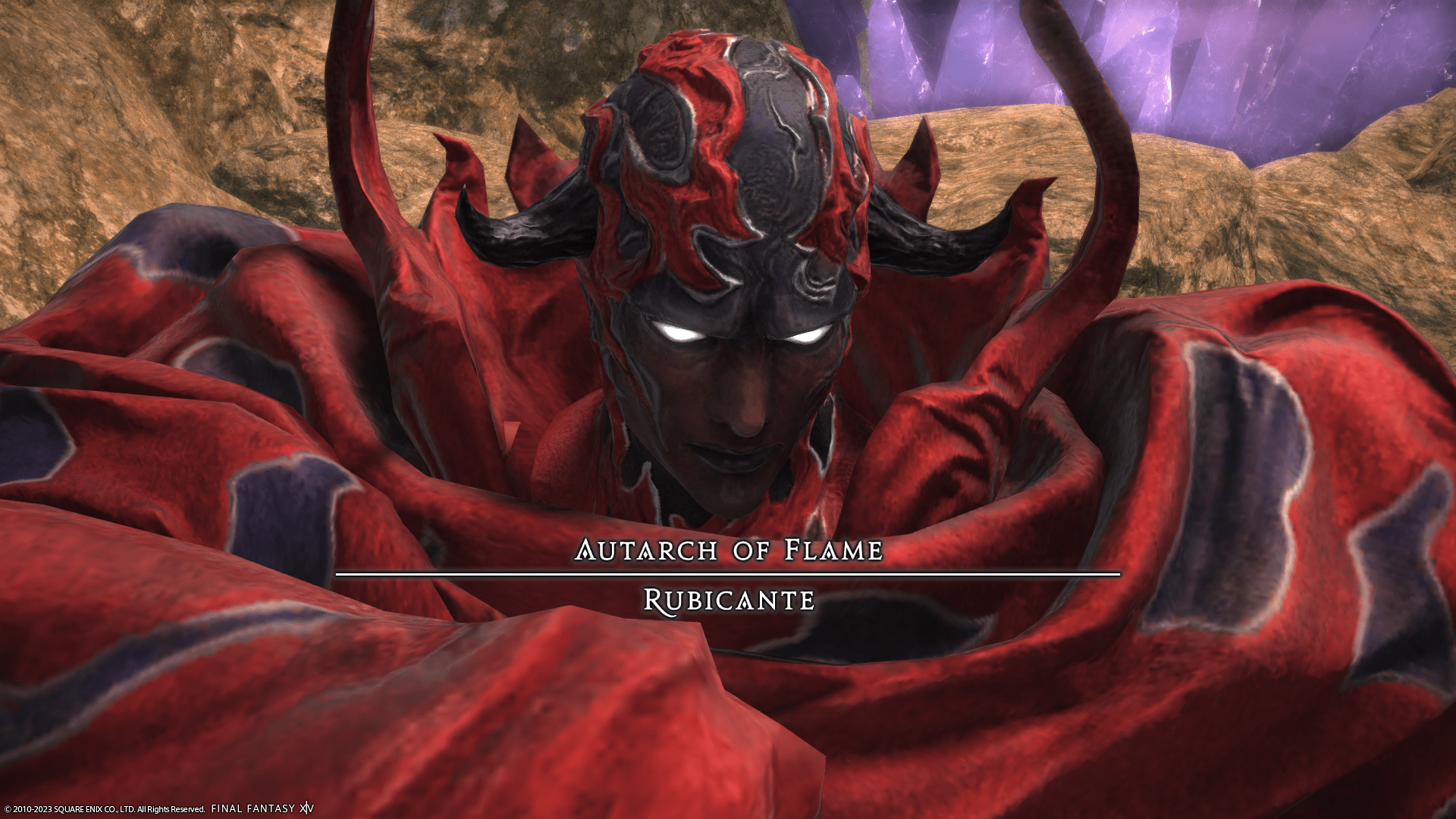
Mount Ordeals is a level 90 Endwalker trial against Rubicante, the Autarch of Flame. This encounter is heavily focused on pattern recognition and pre-positioning rather than raw reaction speed. The fight revolves around solving rotating arena puzzles, handling layered AoEs, and maintaining control during repeated phase transitions.
While the opening phase teaches the core mechanics in a readable format, the encounter quickly escalates with tighter positioning requirements, rotating fuse patterns, and overlapping mechanics that punish hesitation. The lack of knockbacks shifts the difficulty toward spatial awareness and pre-planning, especially during Ordeal of Purgation and phase-two line attacks.
Looking for how this fight compares across the expansion? Check the FFXIV Trial Rankings to see where Mount Ordeals lands in overall difficulty and progression.
Arena Overview
The encounter takes place on a circular arena divided into three concentric rings during key mechanics. Players can fall off the edge, making positioning near the border risky during movement-heavy sequences. Unlike many Endwalker trials, there are no knockbacks, so deaths primarily come from misreading patterns or being locked in unsafe positions.
The arena becomes most dangerous during Ordeal of Purgation, where safe zones are determined by fuse paths and rotating segments. Players should think of the arena as divided into slices and rings, identifying safe quadrants early before movement becomes restricted.
Mechanic Archive
Inferno
A standard raidwide attack used throughout the fight. This sets consistent healing pressure, especially when paired with damage-over-time effects later. Mitigation should be used regularly rather than saved.
Ordeal of Purgation
The defining mechanic of the encounter. Rubicante creates three concentric rings with fuse paths that determine where fireballs will travel. When the fireball reaches the edge, it triggers a large conal AoE from the impacted panel.
Players are inflicted with Penance, which turns into Penitent’s Shackles, rooting them in place. This means positioning must be solved early. Identify the fireball’s path immediately, then move into a safe slice before becoming immobilized. In later variations, the middle ring rotates, shifting the fuse path. Standing near the originally targeted panel is often safest, as the rotation redirects danger away from that position.
Shattering Heat
A tankbuster with clear telegraphing. Tanks should mitigate and position away from the party. Because this often appears near other mechanics, early movement is safer than greed.
Arch Inferno
Creates a persistent AoE in the center along with rotating AoEs on the outer ring. Later versions add targeted AoEs on players. The safest approach is controlled movement along a predictable path rather than reacting late. Stay aware of rotation direction and avoid drifting into future danger zones.
Conflagration
A line AoE through the center, typically layered with Arch Inferno. Position slightly off-center to maintain flexibility for dodging both mechanics without overcommitting movement.
Radial Flagration
Wide cone AoEs covering most of the arena. Identify the safe wedge early and move minimally. Overadjusting often leads to getting clipped by adjacent cones.
Adds Phase
Rubicante summons multiple Flamesent along with a Greater Flamesent. The Greater Flamesent applies stacking Burns through repeated raidwide damage. Prioritize killing it first if healing becomes strained.
Players must also dodge random AoEs and conal attacks from smaller adds. Tanks should be ready for Shattering Heat during this phase as well. Efficient target focus and clean AoE dodging are key to preventing overwhelm.
Blazing Rapture
A heavy raidwide after the adds phase that also applies a damage-over-time effect. This is a major recovery checkpoint. Healers should stabilize the group quickly before phase two begins.
Flamerake
Spinning indicators determine the direction of a line AoE through the boss that cascades outward. The correct play is counterintuitive: start in a safe spot, then move into the previously unsafe area after the first wave passes.
Soulscald
Line AoEs target each player, followed by extended follow-up lines in the same positions. Spread out initially, then avoid returning to previous positions. Players who backtrack will be caught by the second wave.
Dualfire
A large tankbuster cleave on both tanks. Tanks must separate and mitigate properly. The party should stay well clear of both cleave zones.
Sweeping Immolation
A combination of a half-room cleave and spread markers. Resolve the cleave first, then spread quickly without collapsing into each other. This tests awareness of both boss orientation and party positioning simultaneously.
Encounter Flow
Phase One
The encounter opens with Inferno before transitioning quickly into Ordeal of Purgation, the core mechanic of the fight. Players must immediately identify the fireball’s path along the fuse lines and move into a safe slice before becoming immobilized by Penitent’s Shackles. The key here is early recognition, not last-second dodging.
Following this, Rubicante introduces Shattering Heat and layered AoEs such as Arch Inferno, Conflagration, and Radial Flagration. These sequences test controlled movement and positioning discipline. Players should avoid overcorrecting and instead move with purpose through safe lanes.
At low health, the fight transitions into the adds phase. The party should prioritize the Greater Flamesent to reduce stacking damage-over-time pressure, while maintaining awareness of random AoEs and tankbusters. After clearing the adds, Blazing Rapture signals the transition into phase two.
Phase Two
Rubicante gains new abilities and increases pressure through layered line mechanics. Flamerake introduces directional cascades that require players to move into previously unsafe zones, while Soulscald punishes players who return to old positions.
Tank coordination becomes more important during Dualfire, requiring clean separation and mitigation. Meanwhile, Sweeping Immolation forces players to resolve a cleave and spreads simultaneously, testing both awareness and positioning discipline.
The fight then loops between Phase One and Phase Two patterns with increasing intensity. Success comes from consistency—recognizing patterns early, minimizing unnecessary movement, and maintaining clean positioning through repeated mechanics.
[tavern_related_encounters]