The Heroes’ Gauntlet Dungeon Guide – FFXIV Shadowbringers
Duty Information
Expansion: Shadowbringers
Encounter: The Heroes' Gauntlet
Players: 4 Players (1 Tank, 1 Healer, 2 DPS)
Duty Finder Type: Dungeon
Level: 80
Item Level: 460
Unlock Requirement: The Converging Light
Common Failure Points
- Misreading the boss repositioning on Spectral Thief and dodging the old location instead of the new one.
- Letting tethered zombies connect during Spectral Necromancer or standing in leftover bleed puddles.
- Handling Falling Rock incorrectly on Spectral Berserker by stacking players together instead of stacking with each personal rock.
- Remaining inside the crater after Wild Rampage and building too many A Bit Berserk stacks.
Dungeon Overview
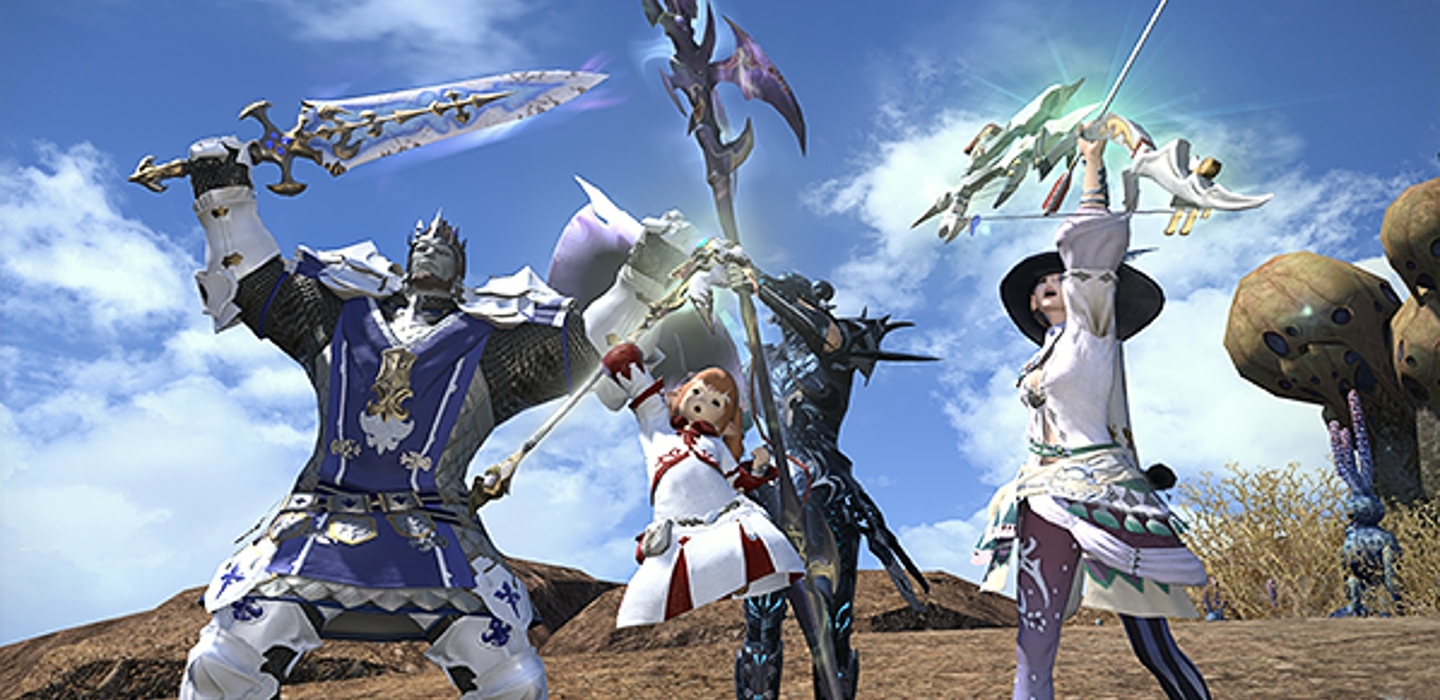
The Heroes’ Gauntlet is one of the defining late-Shadowbringers dungeons, combining cinematic presentation with a sharp jump in execution pressure. The duty sends the party through a collapsing reflection of familiar heroic ideals, and its boss encounters reflect that intensity with layered movement checks, tether handling, and punishing arena control mechanics.
Unlike the more forgiving early expansion dungeons, The Heroes’ Gauntlet expects players to react cleanly to repositioning bosses, dodge overlapping telegraphs, and manage personal responsibility without relying on recovery space from the healer. Mistakes stack quickly here, and a single bad read can destabilize the whole group.
This is one of the strongest examples in Shadowbringers of a dungeon that feels much closer to trial-style execution than ordinary leveling content.
Looking for difficulty rankings? See the Shadowbringers Dungeon Rankings.
Dungeon Objectives
- Arrive in the Mount Argai Mines
- Clear the Mount Argai Mines
- Arrive in the Summer Ballroom
- Clear the Summer Ballroom
- Arrive in the Illuminated Plaza
- Defeat the Spectral Berserker
Walkthrough Highlights
Trash Pressure Is Real Here
The enemy packs in The Heroes’ Gauntlet are not especially gimmicky, but they hit hard enough that tanks should still respect pull pacing and mitigation timing. Mixed spectral packs can create more incoming pressure than expected if the group enters them without cooldowns ready.
Boss Execution Drives the Difficulty
The real challenge of this dungeon is concentrated in the bosses. Each encounter escalates personal responsibility in a different way: reposition tracking on the Thief, tether and puddle control on the Necromancer, and plus-shaped arena management on the Berserker.
Need the unlock path? See All FFXIV Dungeon Unlock Requirements.
Boss Encounters
Spectral Thief
Key Mechanics
Spectral Dream — Tankbuster.
Chicken Knife — Line AoEs from each corner aimed toward each party member.
Dash — The boss teleports to a marked location and then unleashes a circle AoE there.
Shadowdash — The boss and its shadow each teleport to marked locations and resolve either circle or line AoEs from those new positions.
Spectral Whirlwind — Raidwide damage.
Spectral Gust — Personal AoE markers on all players that require spreading.
Strategy Notes
The key to this fight is remembering that the boss moves before the dangerous hit goes off. Many players dodge the telegraph where the boss was standing instead of where it is about to appear, which is exactly how Spectral Thief catches people.
For Chicken Knife, hold clean spacing and avoid drifting across another player’s line. For Spectral Gust, spread decisively instead of hesitating in the middle.
Failure Points
Most deaths here come from late reactions to Dash or Shadowdash, especially when players focus on the original cast position instead of the destination marker.
Spectral Necromancer
Key Mechanics
Twisted Touch — Tankbuster.
Chaos Storm — Raidwide damage.
Absolute Dark II — Massive cone AoE that inflicts cleansable Doom.
Necromancy — Summons tethered zombies, with one assigned to each player.
Walking zombies — Light-tethered zombies that eventually die and explode with Necroburst.
Crawling zombies — Smoky-tethered zombies that try to catch their target and inflict Rigor Mortis.
Pain Mire — Large circular AoEs that leave behind dangerous bleed puddles.
Dark Deluge — Personal circle AoEs on each player.
Strategy Notes
Absolute Dark II must be dodged cleanly, since eating it creates Doom pressure immediately. During Necromancy, each player should focus on controlling their own tether first. The walking zombies are about spacing and timing, while the crawling zombies are about keeping distance before they surge in.
The arena gets much harder once Pain Mire puddles are left behind, so players need to think ahead and preserve safe lanes rather than drifting randomly. This boss rewards disciplined movement far more than panic-kiting.
Failure Points
The fight usually collapses when players lose track of their tethered zombie and then have nowhere safe to move because bleed puddles were dropped poorly.
Distant Ideal: Spectral Berserker
Key Mechanics
Beastly Fury — Raidwide damage. The first cast also fills the outer edges and corners of the arena with bleed puddles, turning the room into a plus shape.
Wild Anguish — Stack marker that inflicts temporary Magic Vulnerability Up.
Raging Slice — Repeating frontal line AoEs. Two the first time, then three afterward.
Wild Rage — Instakill circle with knockback that leaves behind a crater.
Falling Rock — Each player gets their own falling rock, followed by fast stack hits.
Wild Rampage — Massive damage avoided by standing inside the crater.
A Bit Berserk — A stacking debuff gained by standing in the crater too long.
Truly Berserk — At 8 stacks, the player loses control and begins auto-attacking the boss while taking severe self-damage.
Strategy Notes
This fight is the main reason The Heroes’ Gauntlet scores so highly. Once the arena becomes a plus shape, your movement options are limited and every mechanic becomes more punishing. The party needs to respect lane discipline during Raging Slice and move cleanly for Wild Rage so the crater forms in a usable place.
The most important correction here is Falling Rock: players do not stack on each other. Each player stacks with their own rock marker so the follow-up resolves properly without overloading the group.
For Wild Rampage, everyone must step into the crater to survive, then leave it immediately once the hit resolves. Remaining inside too long leads to A Bit Berserk stacks, which can quickly turn into a wipe if someone hits Truly Berserk.
Failure Points
Most wipes happen when the party mishandles the crater sequence — either by not entering it for Wild Rampage or by lingering inside long enough to stack Berserk effects.
Notable Enemies
- Spectral Paladin
- Spectral Monk
- Spectral Black Mage
- Spectral White Mage
- Spectral Samurai
- Spectral Bard
- Spectral Dragoon
- Chicken Knife
- Spectral Ink Mage
- Necrobomb
Difficulty Assessment
The Heroes’ Gauntlet is one of the hardest dungeons in Shadowbringers because nearly every major encounter mechanic carries real punishment for failure. It is not just mechanically dense — it also limits recovery space by combining vulnerability pressure, bleed zones, and personal responsibility mechanics that cannot be solved by one strong player carrying the group.
The dungeon emphasizes:
- boss reposition tracking
- tether control and arena management
- sequence memory under pressure
- personal execution during layered movement checks
Among Shadowbringers dungeons, this is one of the clearest examples of a duty where clean mechanics matter more than raw damage output.
Previous Dungeon: Anamnesis Anyder | Next Dungeon: Matoya’s Relict
Guildmaster Notes
The Heroes’ Gauntlet feels like a procession through memory, but not the comforting kind. These are ideals sharpened into weapons, echoes of heroism stripped of warmth and turned into trials.
Each battlefield carries the sense that you are not merely fighting monsters, but confronting distorted reflections of what strength is supposed to look like. By the time the Berserker rises, the lesson is clear: even noble images become dangerous when they are emptied of the souls that once gave them meaning.
There are dungeons that test your strength. This one tests whether your footing holds when the entire world around you narrows.