Alexandria Dungeon Guide (FFXIV Dawntrail) – Boss Mechanics & Strategy
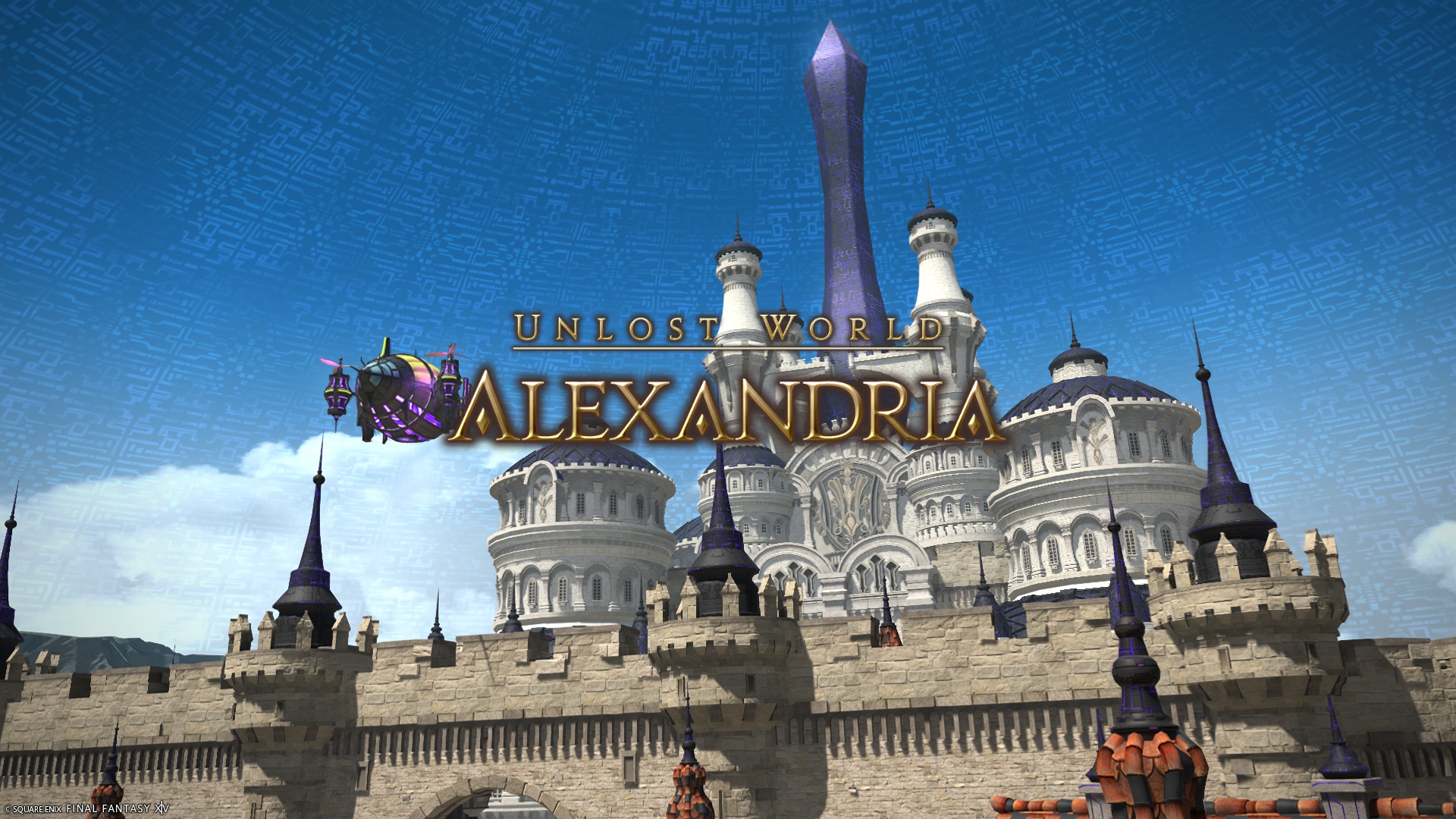
Duty Information
Expansion: Dawntrail
Encounter: Alexandria
Players: 4 Players (1 Tank, 1 Healer, 2 DPS)
Duty Finder Type: Dungeon
Level: 100
Unlock Requirement: Dawntrail
Common Failure Points
- Misreading the node AoE indicators during Foreign Entity Removal and stepping into a plus or donut AoE in the wrong order.
- Failing to account for the simultaneous Immune Response cleave during the second Foreign Entity Removal sequence.
- Misidentifying the safe half during Disassembly’s triangle AoE and being caught when Amalgam reassembles.
- Being hit by baited circle AoEs during the third Disassembly and then failing to reposition for the triangle and spread combination.
- Standing on the wrong side during Partition or Reconfigured Partition and being caught by the half-room cleave.
- Failing to kill the Lightning Generators before the Charge gauge reaches 100 during Eliminator’s Subroutine add phase.
- Not spreading after the knockback during Impact and overlapping Light of Salvation AoEs.
- Being caught by the Elimination Claw line AoE during the final Subroutine after resolving the donut safe spot.

Dungeon Overview
Alexandria is a level 100 dungeon introduced in patch 7.0 of Dawntrail — the capstone dungeon of the expansion’s launch content. Its three encounters represent the full expression of Dawntrail’s dungeon design philosophy: sequential AoE reading under time pressure, layered geometric hazard combinations, and a final boss that stacks multiple simultaneous mechanical demands behind a hard DPS check.
Each fight escalates the complexity of the one before it. Antivirus X introduces ordered node resolution with simultaneous cleave management and rewards players who can track a sequence under Sprint pressure. Amalgam layers triangle safe zones with line AoEs, spread markers, and baited circles across three distinct Disassembly phases. Eliminator builds to a finale that combines every mechanic type introduced across the dungeon — half-room cleaves, donut AoEs, directional line AoEs, knockbacks, and spread markers — into a single resolution window, preceded by an add phase that wipes the party if DPS is insufficient.
Alexandria is not the dungeon to learn Dawntrail’s mechanics. It is the dungeon where everything learned across the tier is tested at once. Groups arriving with clean habits will find it the most satisfying fight in the expansion. Groups still developing those habits will find it unforgiving.
Looking for difficulty rankings? See the Dawntrail Dungeon Rankings.
Dungeon Objectives
- Clear the Dream She Lived
- Defeat Antivirus X
- Clear the Dream She Lost
- Defeat Amalgam
- Clear My Dream Everlasting
- Defeat Eliminator
Walkthrough Highlights
Sequential Resolution Under Active Pressure
Antivirus X’s node mechanic demands that players track a resolution order, read two different AoE types from green indicators, and dodge each in sequence — all while the boss layering in Immune Response cleaves during the later phase. The mechanic is not difficult in isolation, but the combination of late telegraphs, an explicit ordering sequence, and a simultaneous cleave makes it one of the more cognitively demanding first-boss mechanics in Dawntrail. Sprint is recommended for the second Foreign Entity Removal.
Stacked Mechanical Resolution in the Finale
Eliminator’s final Subroutine is the dungeon’s most complex moment: a half-room cleave, a donut AoE, and a directional line AoE that hits the donut’s initial safe spot all resolve in rapid sequence. Each component is individually readable, but the combination requires identifying the single cell that satisfies all three conditions before committing. Groups should approach it as one layered puzzle rather than three separate mechanics.
Need the unlock path? See All FFXIV Dungeon Unlock Requirements.
Boss Encounters
Note that failing any mechanics in these fights will result in the player who failed them receiving a 1 minute stacking Vulnerability Up debuff.
Antivirus X
Key Mechanics
Immune Response (front) — Telegraphed wide frontal conal AoE covering the area in front of the boss. Also spawns a dangerous AoE around the arena edge. The sides and rear are safe.
Immune Response (sides/rear) — The cleave now hits the sides and behind the boss. The front is safe.
Foreign Entity Removal (first use) — Spawns five untargetable purple nodes around the boss on the cardinals and intercardinals. A purple connecting line indicates the resolution order starting from the northwest or northeast. Each node displays a green indicator: a plus sign means a plus-shaped AoE (Pathocross Purge), a circle means a donut AoE (Pathocircuit Purge). AoEs have late ground telegraphs and must be dodged in resolution order. During the final node, the boss simultaneously casts another Immune Response.
Quarantine — Telegraphed tankbuster AoE (Disinfection) combined with a stack marker on a random player. The tank must stay out while the rest of the party stacks.
Foreign Entity Removal (second use) — Same node mechanic, but the boss now uses Immune Response twice during the sequence. Resolution order: Node 1 → Node 2 + Immune Response → Node 3 → Node 4 → Node 5 → Immune Response. Sprint is recommended to cover the required repositioning distance.
Cytolysis — Partywide damage.
Strategy Notes
Foreign Entity Removal is the fight’s defining mechanic and requires reading two pieces of information simultaneously: the resolution order from the purple connecting line, and the AoE type from each node’s green indicator. Establish both before the first node fires. Plus nodes require standing away from the cross lines; donut nodes require standing close to the node itself or far from it, inside or outside the ring.
For the first use, the Immune Response that fires during the final node is the additional layer — know in advance whether it is a front or side/rear cleave and factor it into your position for the last dodge.
For the second use, the two Immune Response casts interrupt the node sequence at Node 2 and after Node 5. Sprint is strongly recommended to maintain the repositioning pace across all five nodes and two cleaves. Pre-plan the route through the nodes before the sequence begins rather than reading each indicator as it arrives.
Failure Points
The most common failure is misreading a node’s green indicator under time pressure and stepping into the wrong AoE type. The second is failing to account for the Immune Response cleave direction during the node sequence and being hit while repositioning between nodes.
Amalgam
Key Mechanics
Electrowave — Partywide magical damage. Also spawns a dangerous AoE at the arena edges.
Disassembly (first use) — Partywide magical damage. The boss divides and becomes a smaller node. A triangle outlined in electricity covers half the arena as a late-telegraphed AoE. The boss reassembles afterward.
Centralized Current — An electric line through the boss’s facing direction indicates a late-telegraphed line AoE in that direction. The sides of the boss’s hitbox are safe.
Split Current — Two electric lines indicate line AoEs hitting both sides of the boss simultaneously. The front and rear are safe.
Disassembly (second use) — Triangle AoE as before, now combined with three electric portals to the north that indicate line AoEs. Players must identify the position that avoids both the triangle and the portal lines simultaneously. Each player also receives a spread marker (Static Spark).
Amalgamight — Telegraphed physical tankbuster.
Disassembly (third use) — Triangle AoE again, now also causing three sets of baited circle AoEs to appear beneath players. Players must move to bait the circles away from safe zones before the triangle, portal line, and spread combination resolves.
Superbolt — Stack marker AoE dealing magical damage.
Ternary Charge — Telegraphed point-blank AoE followed by two telegraphed concentric donut AoEs.
Strategy Notes
The triangle AoE from Disassembly is the fight’s recurring positional anchor. Each use adds another layer on top of it — first portal lines, then baited circles — but the triangle safe half remains the starting point for every solve. Identify the safe half of the arena as soon as the triangle outline appears and use that as your base position from which to handle the additional mechanics.
For the second Disassembly, trace each portal line from the north to find where it intersects with the arena. The safe position must be in the triangle’s safe half and clear of all three line paths. Spread from that position for Static Spark.
For the third Disassembly, the baited circles arrive first. Move deliberately to pull them away from the triangle safe half and away from the space needed for the portal lines and spread. Once the circles are placed and begin telegraphing, move into the safe position that avoids all three layers.
Ternary Charge follows a standard in-then-out resolution — move in close as the point-blank detonates, then move back out as the donut rings clear.
Failure Points
The most common failure is being caught by the portal line AoEs during the second Disassembly after correctly identifying the triangle safe half but not accounting for line coverage within it. The second is baiting circle AoEs into the safe zone during the third Disassembly and blocking the position needed for the subsequent combination.
Bleeding-edge Technology: Eliminator
Key Mechanics
Disruption — Partywide magical damage. Also spawns a dangerous AoE at the arena edges.
Partition — The boss’s sword glows and fires a late-telegraphed half-room cleave to the right of the arena.
Reconfigured Partition — The sword switches direction and cleaves the left of the arena instead.
Subroutine (first use) — The Elimination Claw moves to the east or west wall and charges a line AoE (Terminate) through its facing direction. The boss simultaneously casts Reconfigured Partition, combining the line AoE and the half-room cleave. Two corners are safe.
Subroutine (second use) — The Elimbit node converges lasers near the north or south wall, indicating a donut AoE (Halo of Destruction). The boss simultaneously casts Partition, leaving only half of the donut’s interior safe. After resolution, each player receives a spread marker (Electray) inflicting Lightning Resistance Down II — overlap is lethal.
Overexposure — Line stack marker on a random player.
Subroutine (add phase) — The boss becomes untargetable. Six Lightning Generators spawn and must be killed before the Charge gauge reaches 100 or the subsequent Holo Ark wipes the party. Simultaneously, the Elimbit uses donut AoEs and the Elimination Claw uses line AoEs with the same indicators as before. The Elimbit also fires Light of Salvation, hitting all players — spread to reduce overlap damage. A line stack marker may also appear depending on DPS pace.
Impact — A blue knockback circle appears on one side of the arena. Knockback immune actions prevent the push. Each player is simultaneously targeted with Light of Salvation and must spread after landing.
Elimination — Partywide magical damage. Three sets of purple lines appear on the arena and explode sequentially as line AoEs.
Subroutine (final use) — Combines all three previous Subroutine AoEs simultaneously: Partition half-room cleave, Halo of Destruction donut, and Terminate line AoE from the Elimination Claw. Resolve the cleave and donut safe zone first, then move out of the Elimination Claw line AoE, which hits the initial donut safe spot.
Strategy Notes
The add phase is a hard DPS check with no margin. Six Lightning Generators must die before the Charge gauge fills. Assign kill order before the phase begins if possible, use AoE where available, and do not stop for mechanics that can be dodged while attacking. Holo Ark is a party wipe if any generator survives — treat the gauge as a timer and prioritize it above all else.
For the first and second Subroutine uses, build the habit of identifying the two-component safe zone before committing to a position. The first Subroutine requires finding a corner that is clear of both the Elimination Claw line and the half-room cleave. The second requires finding the half of the donut interior that the Partition cleave does not cover, then spreading from that zone for Electray.
The final Subroutine is the fight’s culmination. Three overlapping AoEs resolve in sequence. Identify the half-room cleave direction and the donut position first — their combined safe zone is where you stand for the first two resolutions. When the donut clears, the Elimination Claw line AoE fires directly into that zone. Move out of the claw’s path before it resolves. The full sequence requires one position for the first two mechanics and an immediate exit from that position for the third.
For Impact, use knockback immune if available. If not, pre-position so the push direction carries you to open space rather than the arena edge, then spread immediately upon landing for Light of Salvation.
Failure Points
The most common wipe is failing the Lightning Generator DPS check and being killed by Holo Ark. The second is being caught by the Elimination Claw line AoE during the final Subroutine after holding the donut safe position too long.
Difficulty Assessment
Alexandria is the hardest dungeon in Dawntrail’s patch 7.0 lineup and one of the most mechanically demanding level-cap dungeons in the expansion. It does not introduce new mechanical concepts so much as it combines every concept established across the tier — ordered sequence resolution, geometric AoE layering, knockback management, spread discipline, and a hard DPS check — into a single cohesive escalation across three fights.
The dungeon emphasizes:
- ordered node AoE resolution with simultaneous cleave management (Foreign Entity Removal)
- layered geometric safe zone identification across three escalating phases (Disassembly)
- multi-component simultaneous AoE resolution (Subroutine combinations)
- hard DPS check execution under active mechanical pressure (Lightning Generators)
Groups that arrive with clean habits from the earlier Dawntrail dungeons and communicate on the final Subroutine’s layered resolution will find Alexandria a fitting and satisfying conclusion to the tier. It is a dungeon that rewards everything the expansion’s content has been building toward.
Previous Dungeon: Origenics | Next Dungeon: Tender Valley
Guildmaster Notes
Alexandria is a dream. Not a pleasant one — a dream that knows it is ending and refuses to let go. The enemies here are not guarding something. They are preserving it. There is a difference, and the dungeon understands it.
Eliminator is the clearest expression of that. It does not fight you out of malice. It fights you because that is what it was built to do, and it will keep doing it until it cannot. There is something almost dignified about that — a machine fulfilling its purpose to the last.
When Alexandria ends, Dawntrail’s opening chapter closes with it. The dungeon does not send you out with fanfare. It sends you out having earned the next part of the story. That is the only credential it offers, and it is enough.