Everkeep Trial Guide: Zoraal Ja Mechanics and Strategy
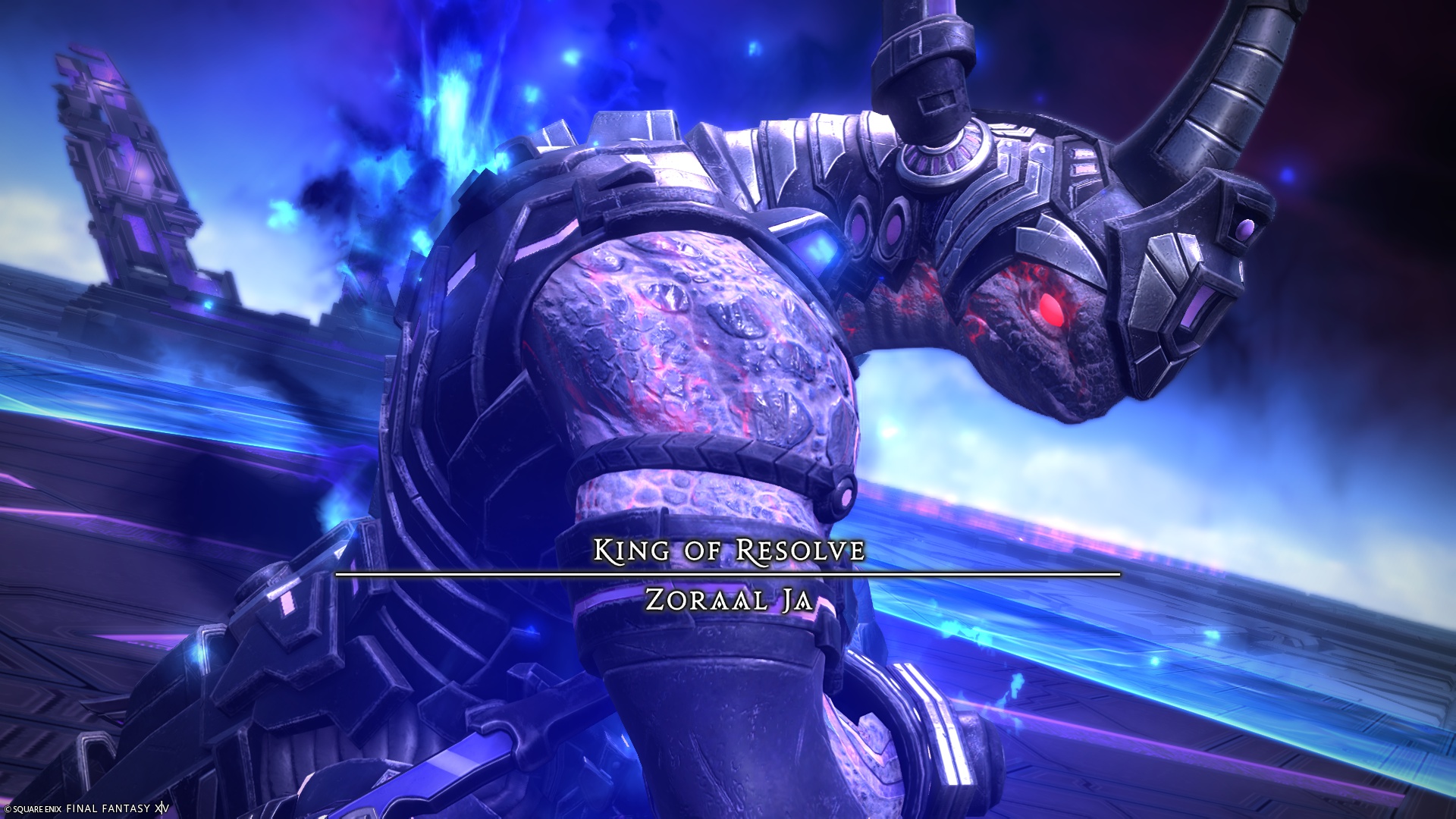
Duty Information
Expansion: Dawntrail
Encounter: Everkeep
Players: 8 (Tank / Tank / Healer / Healer / DPS / DPS / DPS / DPS)
Duty Finder Type: Trial
Level: 99
Unlock Requirement: The Reslilient Son
Encounter Overview
Everkeep is a level 99 Dawntrail trial against Zoraal Ja, the King of Resolve. This encounter evolves from a straightforward Phase 1 into a highly structured Phase 2 focused on spatial manipulation, tether mapping, and layered AoE resolution.
Compared to earlier Dawntrail trials like Worqor Lar Dor, Everkeep introduces significantly more complex positioning requirements. Most wipes occur during Phase 2 mechanics such as Gateway and Blade Warp, where players must correctly map external mechanics into the central arena.
For a full comparison across all trials, see the FFXIV Trial Rankings.
Arena Overview
The encounter begins on a circular arena with a damaging outer border. In Phase 2, the arena transforms into a smaller 4×4 grid with additional outer platforms used for mechanic projection.
Understanding how outer platform mechanics translate into the central arena is the key to success. Players should orient themselves to rows and columns rather than relying on instinctive movement.
Mechanic Archive
Soul Overflow
Raidwide magical damage used frequently.
Treat this as a reset point—heal quickly and prepare for immediate follow-up mechanics.
Double-edged Swords
Sequential front and rear cleaves.
Stay near the boss hitbox edge so you can pivot quickly without overmoving.
Patricidal Pique
Tankbuster.
Tanks should mitigate early and avoid drifting into party space.
Calamity’s Edge
Spawns geyser AoEs after raidwide damage.
Move immediately after AoEs appear—late movement overlaps with other mechanics.
Vorpal Trail
Line AoEs from walls that converge and expand.
Start slightly off-center and adjust once—multiple movements will walk you into returning lines.
Phase Transition
Boss transforms at ~30% and restores HP.
Reset positioning immediately—Phase 2 begins quickly.
Smiting Circuit
Point-blank or donut AoE based on sword position.
Watch sword placement, not cast bar—reacting visually is faster.
Dawn of an Age
Raidwide that transitions to the grid arena.
Micro-strategy: Pre-position near your assigned quadrant before the grid appears.
Vollok
Square AoEs from swords placed in patterns.
Identify the empty quadrant first, then move. Trying to weave between tiles leads to deaths.
Sync
Outer platform AoEs are mirrored into the center.
Mentally “project” the outside pattern inward before moving. Do not wait for it to appear.
Gateway
Tethers link outer platforms to central rows/columns.
Follow the tether lines, not the AoEs. The tether determines where danger will appear.
Blade Warp / Forged Track
Line AoEs projected from outer platforms into the arena.
Solve tether mapping first, then position. Players who try to dodge visually instead of logically will fail consistently.
Half Full
Half-room cleave.
Move early to the safe half—late movement overlaps with other mechanics.
Half Circuit
Combination of in/out and left/right cleaves.
Resolve in/out first, then adjust left/right. Trying to solve both at once causes mispositioning.
Duty’s Edge
Multi-hit line stack.
Stack tightly and mitigate across hits—healing after the final hit is safer than during.
Advanced Vollok Patterns
Large sword patterns covering most of the arena.
Commit to the safe quadrant early. Hesitation leaves no valid path.
Encounter Flow
Phase One
The fight opens with Soul Overflow and Double-edged Swords, establishing basic positioning and movement discipline.
Vorpal Trail and Calamity’s Edge introduce overlapping AoEs, requiring controlled movement and awareness.
Phase Two
Dawn of an Age transitions the arena into a grid, introducing the fight’s core mechanics. Players must interpret outer platform patterns and resolve them within the central arena.
Gateway and Blade Warp form the primary execution check. Players must correctly map tethers and projected AoEs. Most wipes occur here due to incorrect interpretation rather than slow reaction time.
Vollok and Half Circuit add layered positioning requirements, forcing players to resolve multiple mechanics in sequence.
Final Phase
The encounter repeats Phase 2 mechanics with increased complexity and overlap.
Success comes from consistency—accurate tether reading, early positioning, and minimal unnecessary movement.